
Microgreens do not keep for long.
They are cut seedlings, so they start to fade the day they leave the tray. A pack that looked bright on Saturday can be limp by Wednesday. So how long do microgreens last, and how can you tell when a pack is past its best? The answer depends on two things you can check: how cold they stay and which crop is in the pack. This guide gives the day counts from extension advice and lab studies. It names the crop and temperature behind each number and shows when to toss them.
Key Takeaway
Eat microgreens within 3 to 5 days of harvest and keep them in the fridge (New Mexico State University, n.d.). Out of the fridge, cut microgreens last only a day or two. Throw out any pack that turns slimy, smells off or goes yellow.
Below: shelf life in the fridge and on the counter, how crop and fridge temperature change it, the signs of spoilage and when to throw a pack out.
Microgreens 411
Find a microgreens grower near you
Greens that travel less start fresher in your fridge. Find my local grower →
Table of Contents
- How long do microgreens last in the fridge?
- Can microgreens sit out at room temperature?
- Do some microgreens last longer than others?
- Why does fridge temperature matter so much?
- What are the signs microgreens have gone bad?
- When should you throw microgreens out?
- Wrap-up: how long do microgreens last, in short
- Frequently asked questions
- References
How long do microgreens last in the fridge?
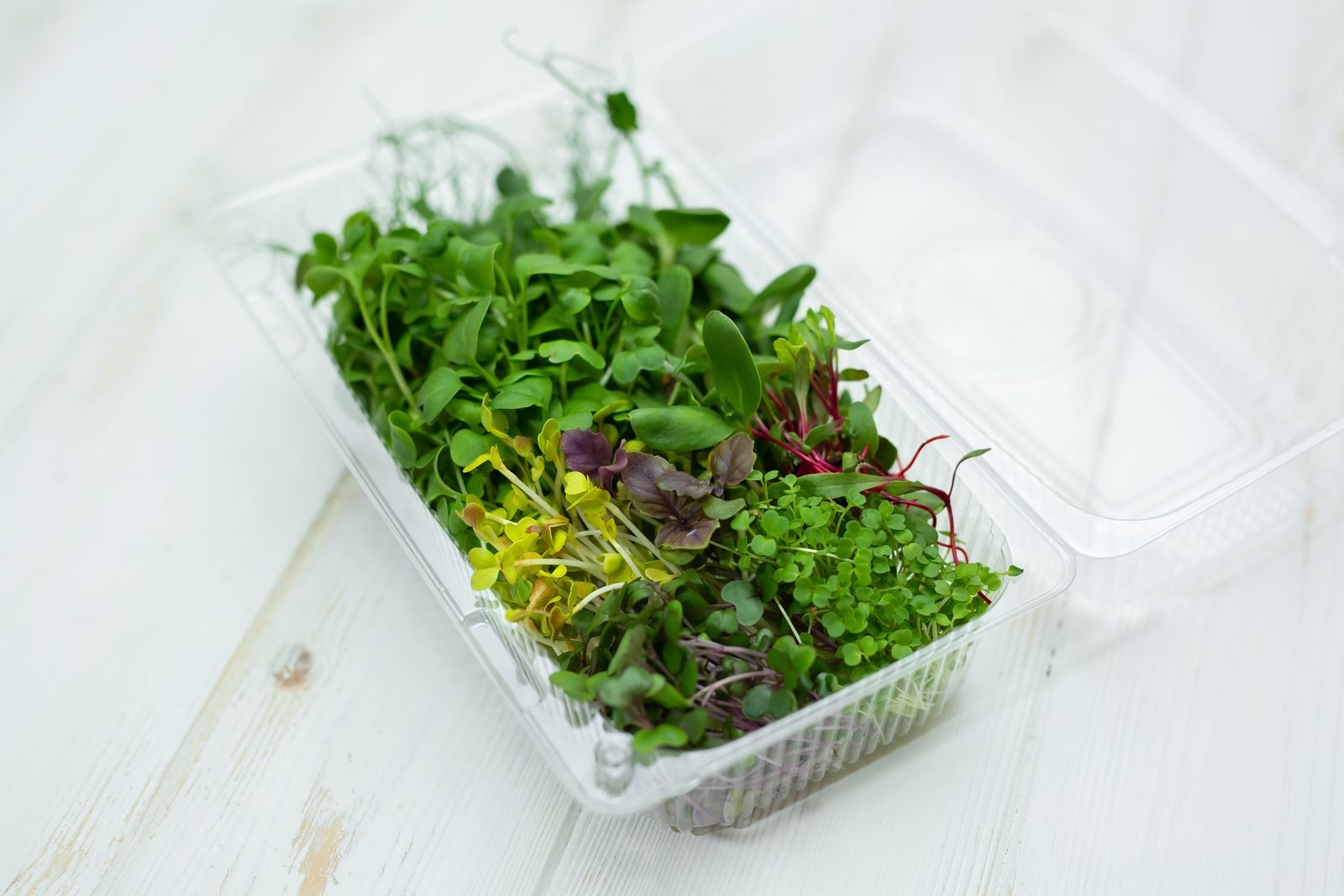
Plan on 3 to 5 days from harvest. New Mexico State University tells consumers to eat microgreens no later than 3 to 5 days after they are cut (New Mexico State University, n.d.). The clock starts at harvest, not at the store. If a pack sat on a shelf for two days, you have less time left at home.
Lab studies show longer numbers under ideal cold. Mustard microgreens sealed in plastic bags at 5°C (41°F) kept “good-fair” quality for 14 days (Dayarathna et al., 2023). Arugula microgreens held at 5°C (41°F) were safe to eat for 10 days in every package type tested (Komeroski et al., 2024).
Those results come from steady lab cold and freshly cut greens. A home fridge opens and closes all day, and store packs are already a few days old. So treat the lab figures as a ceiling, not a promise. The extension advice is the safer plan for everyday buying.
The table sums up the numbers by crop and temperature. Each lab figure comes from one study, so expect your own packs to vary.
| Crop and storage temperature | How long quality held |
|---|---|
| Mustard at 5°C (41°F) | 14 days (lab study) |
| Radish at 4°C (39°F) | About 21 days (lab study) |
| Arugula or red cabbage at 4°C (39°F) | About 14 days (lab study) |
| Any microgreen in a home fridge | Eat within 3 to 5 days of harvest |
Can microgreens sit out at room temperature?
Only briefly. New Mexico State University says microgreens go bad very quickly at room temperature. Once cut from their roots, don’t expect them to last more than a day or two outside a refrigerator (New Mexico State University, n.d.).
Lab work shows how fast that decline is. In the mustard study, samples kept at 20°C (68°F) and 25°C (77°F) had lost quality on every sensory trait by day 2. The researchers judged them inedible and did not ask tasters to eat them (Dayarathna et al., 2023).
Tartary buckwheat microgreens told a similar story. After 2 days at those same temperatures, a trained panel rated their off-odor as moderate. Samples kept colder had only a slight off-odor at that point (Yan et al., 2022).
So the trip home counts. A warm car or a sunny porch eats into microgreens shelf life fast. Put them in the fridge as soon as you get home. If you order online, try to be there when the box arrives. Our delivery guide covers what to check when a box lands on your step.
Do some microgreens last longer than others?
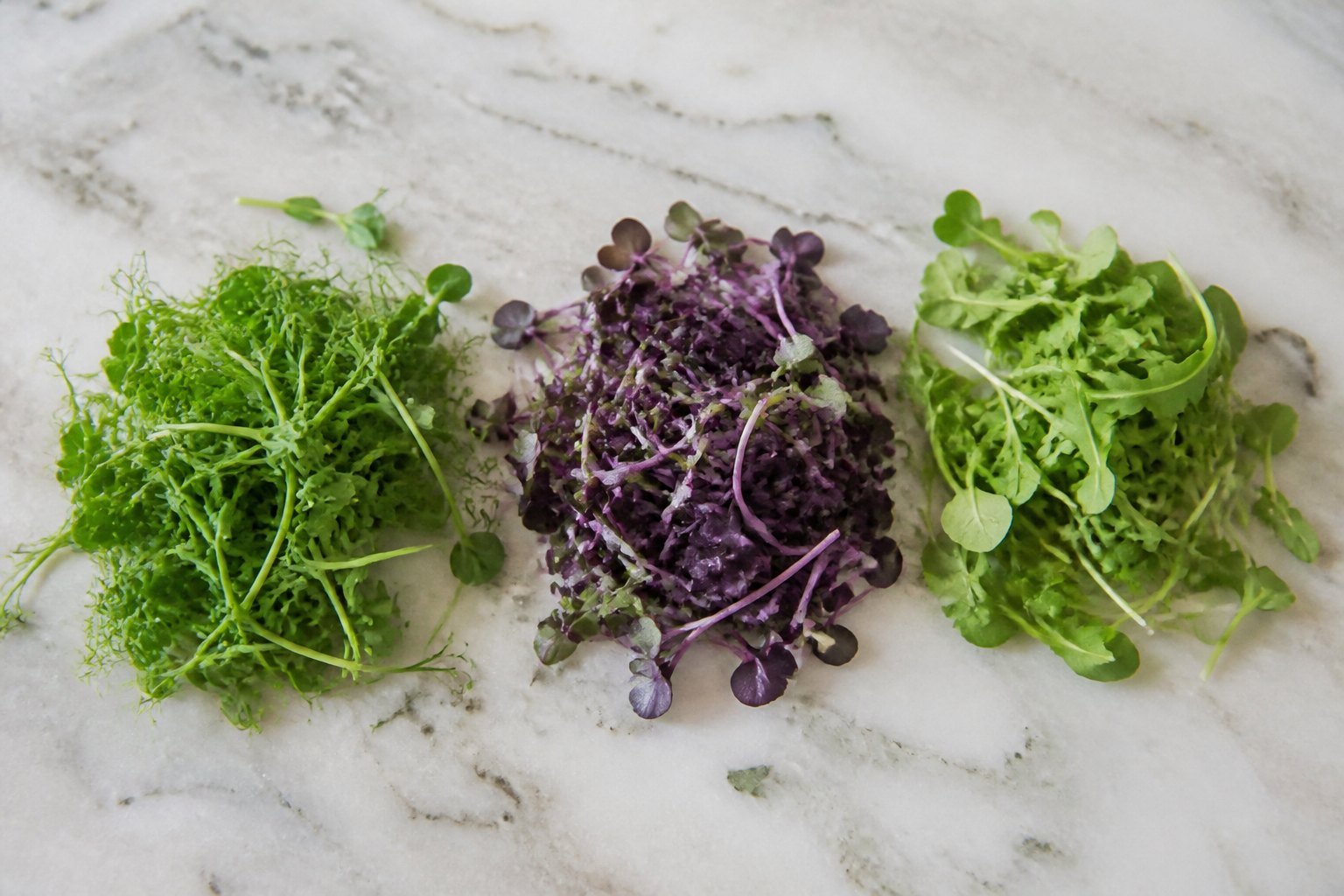
Yes, the crop matters even at the same temperature. A 2012 study tracked three crops stored at 4°C (39°F) and rated how they looked each week. Radish microgreens lasted about 21 days. Arugula and red cabbage lasted about 14 days (Berba & Uchanski, 2012).
The same study measured how fast each crop “breathed” after harvest. Red cabbage and arugula had the highest respiration rates at harvest, and that matched a faster drop in looks. From week two on, respiration spiked, possibly from decay organisms (Berba & Uchanski, 2012).
Some crops are fragile from the start. Researchers describe Tartary buckwheat microgreens as having an extremely short shelf life. In one study, their off-odor score at 5°C (41°F) climbed to between moderate and strong by day 8 (Yan et al., 2022).
Few studies test crops head to head, so treat these as rough guides. If you want to know how long do microgreens last for a crop you buy often, ask your grower which of their crops fade first.
Why does fridge temperature matter so much?
Cold slows the processes that spoil microgreens. The mustard study’s authors explain that low temperature cuts the rate of respiration, tissue aging and the growth of spoilage microbes (Dayarathna et al., 2023).
Small changes made big differences. Mustard at 5°C (41°F) held good-fair quality for 14 days. At 10°C (50°F) it stayed good-fair for only 4 days, and at 15°C (59°F) it kept high quality for just 2 days. By day 7 at that temperature, the panel rated it unacceptable (Dayarathna et al., 2023). The 2012 study saw the same pattern. At 10°C (50°F), arugula and red cabbage fell to about 7 days and radish to about 14 (Berba & Uchanski, 2012).
The FDA advises keeping perishable produce in a clean refrigerator at about 4°C (40°F) or colder. It suggests checking with a fridge thermometer (U.S. Food and Drug Administration, 2024). If you want a real answer to how long do microgreens last in your kitchen, that cheap thermometer tells you more than a guess. Our storage guide covers containers and the best spot in the fridge.
What are the signs microgreens have gone bad?
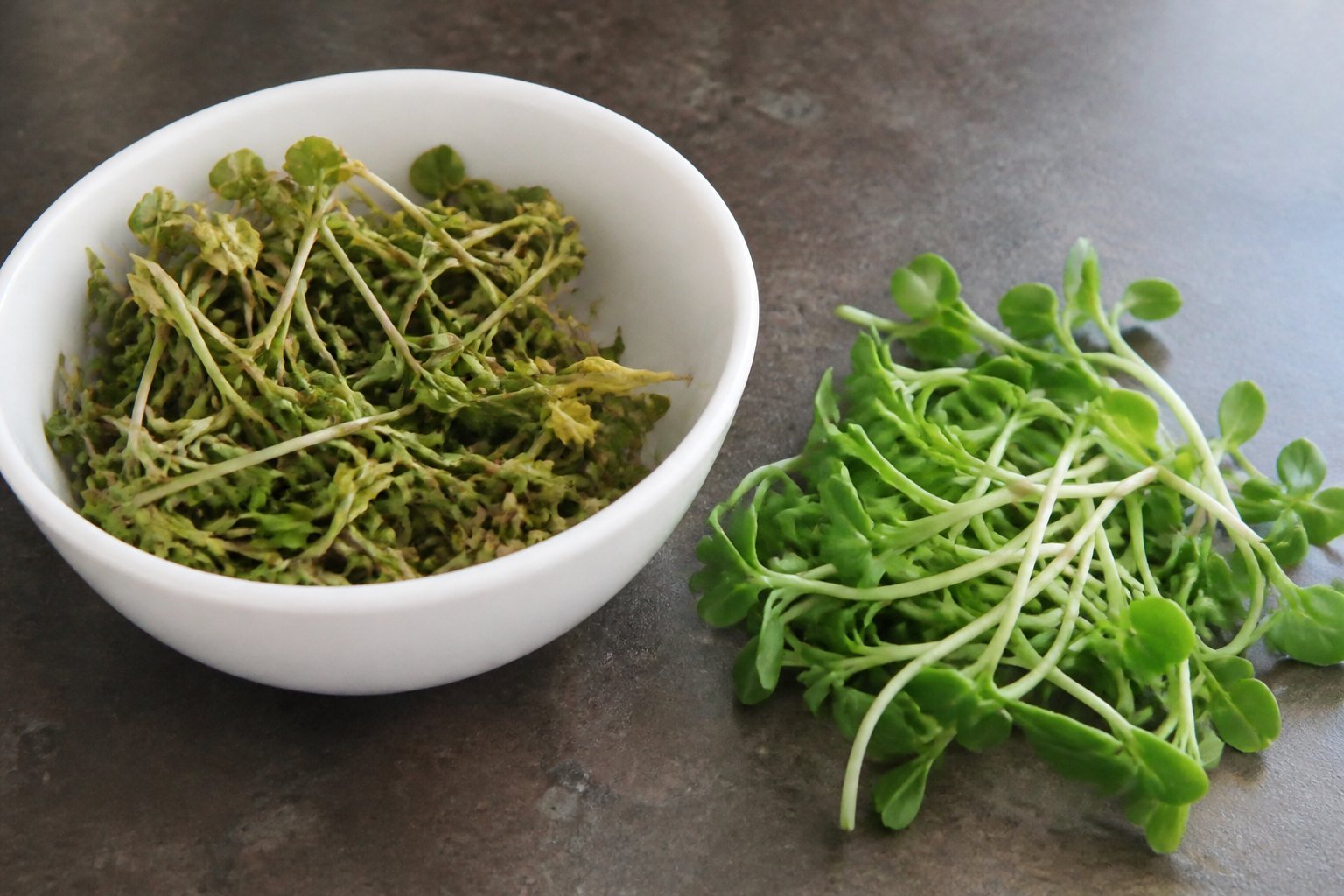
Yellow leaves, slime and an off smell are the main warnings. In the mustard study, samples kept at 10°C (50°F) for 14 days showed yellow leaves on about a quarter and slime on about a quarter. They had a slight off odor too, and their overall quality had dropped to fair-poor (Dayarathna et al., 2023).
Each sign has a cause. Yellowing comes from chlorophyll breaking down, and it lowers how appealing the greens look to buyers (Dayarathna et al., 2023). Off smells come from fermentation and microbial growth as oxygen inside the pack runs low (Yan et al., 2022).
Wetness is a warning as well. New Mexico State University says microgreens should be kept dry, since a moist setting suits the bacteria that can cause foodborne illness (New Mexico State University, n.d.). Water pooled in the bottom of a clamshell is a reason to look closer.
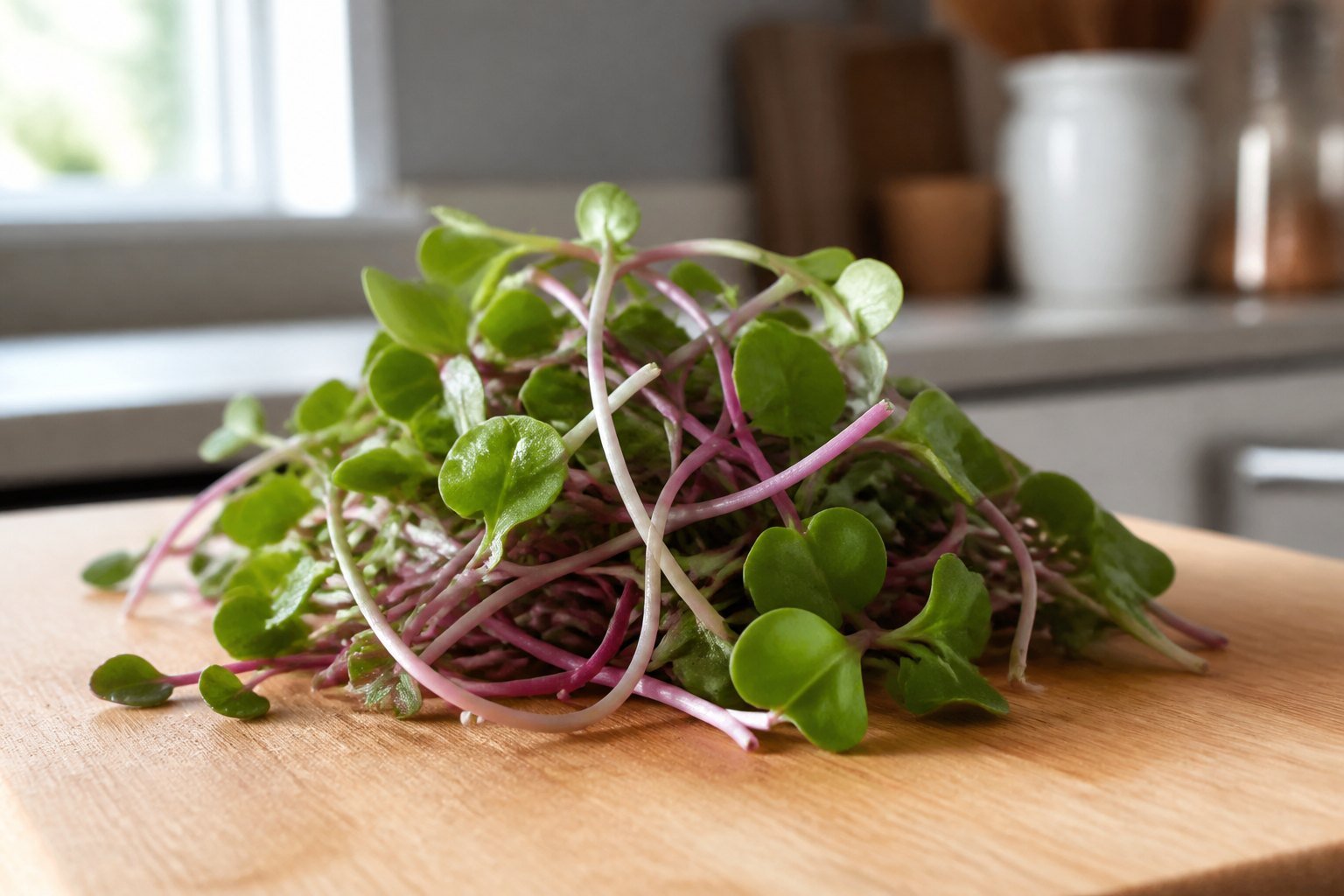
Wilting alone is a different matter. At 5°C (41°F), a quarter of mustard samples had wilted by day 14. They still rated good-fair, with no yellow leaves or slime (Dayarathna et al., 2023). Limp greens have lost quality. Slimy, smelly or yellow greens are spoiling.
When should you throw microgreens out?
Throw them out when they look rotten, feel slimy or smell off, whatever the date says. The FDA’s advice for all produce is to cut away damaged or bruised areas and throw away any produce that looks rotten (U.S. Food and Drug Administration, 2024).
Watch the calendar too. Once you pass 3 to 5 days from harvest, you are outside the eating window New Mexico State University gives, though the greens may still look fine (New Mexico State University, n.d.). Dates and senses work together on how long do microgreens last at your house.
Don’t try to revive tired greens with an early rinse. The same source says washing too soon damages the delicate tissue. It adds moisture that can feed bacteria and shorten shelf life, so wash right before you eat (New Mexico State University, n.d.). Our washing guide walks through the method.
If you don’t know when a pack was cut, ask. A local grower can tell you the harvest day for each batch. The Microgreens 411 directory lists growers by area so you can find one near you.
Wrap-up: how long do microgreens last, in short
Plan on 3 to 5 days from harvest in the fridge. On the counter, expect a day or two at most. Colder storage helps a lot, and radish holds up longer than arugula or red cabbage. Lab studies report longer runs under steady cold.
Toss any pack that turns slimy, smells off or goes yellow. Limp greens are past their best but not spoiled.
Want greens with more days left in them? Search your town in the Microgreens 411 directory to find growers who can tell you when your greens were cut. Coverage varies by region, so some areas have few listings so far.
Microgreens 411
Find a microgreens grower near you
Greens that travel less start fresher in your fridge. Find my local grower →
Frequently asked questions
Do microgreens lose nutrients as they sit in the fridge?
Some nutrients drop over time. A 2020 review by USDA and University of Maryland scientists says harvested microgreens dry out, wilt, decay and lose certain nutrients quickly (Turner et al., 2020). In the mustard study, antioxidant activity held steady at the coldest setting, though that was a lab measure, not a test in people (Dayarathna et al., 2023).
Can microgreens get too cold?
For some crops, yes. The mustard study’s authors note that buckwheat microgreens held at 1°C (34°F) leaked more from their cells by day 14, a sign of tissue damage. They add that radish microgreens kept quality for 28 days at 1°C (34°F) with no chilling injury (Dayarathna et al., 2023).
Do microgreens dry out in the fridge?
A little, but not much when sealed. Mustard microgreens in thick polyethylene bags lost less than 6% of their weight over two weeks at 5°C (41°F) and 10°C (50°F). In the warmest rooms tested, weight loss jumped within a single day (Dayarathna et al., 2023).
Why are microgreens usually sold close to where they grow?
Short shelf life is a big reason. The same 2020 review says the rapid quality loss after harvest keeps prices high and limits trade mostly to local sales (Turner et al., 2020). Longer-lasting greens could reach larger markets, the authors of a 2012 study add (Berba & Uchanski, 2012).
Do growers treat microgreens to make them last longer?
Researchers have tested several methods. One review lists calcium treatments, modified atmosphere packaging, temperature control and light (Turner et al., 2020). In a lab study, Tartary buckwheat microgreens washed with chlorine dioxide plus citric acid kept quality longer in cold storage (Yan et al., 2022). These are grower and lab methods, not home steps.
How do researchers decide microgreens have spoiled?
Mostly with trained panels and lab tests. In the mustard study, 15 panelists rated freshness, color, off-odor, sliminess and flavor on a 5-point scale. The lab tracked weight loss, chlorophyll and leakage from damaged cells (Dayarathna et al., 2023). The 2012 study used weekly visual ratings plus respiration readings (Berba & Uchanski, 2012).
References
Berba, K. J., & Uchanski, M. E. (2012). Post-harvest physiology of microgreens. Journal of Young Investigators, 24(1). https://www.jyi.org/2012-july/2017/9/12/post-harvest-physiology-of-microgreens
Dayarathna, N. N., Gama-Arachchige, N. S., Damunupola, J. W., Xiao, Z., Gamage, A., Merah, O., & Madhujith, T. (2023). Effect of storage temperature on storage life and sensory attributes of packaged mustard microgreens. Life, 13(2), 393. https://doi.org/10.3390/life13020393
Komeroski, M. R., Beninca, T., Portal, K. A., Malheiros, P. S., Klug, T. V., Flores, S. H., & Rios, A. O. (2024). Postharvest quality of arugula (Eruca sativa) microgreens determined by microbiological, physico-chemical, and sensory parameters. Foods, 13(19), 3020. https://doi.org/10.3390/foods13193020
New Mexico State University. (n.d.). Eating microgreens. All About Microgreens. https://all-about-microgreens-d.nmsu.edu/consumers.html
Turner, E. R., Luo, Y., & Buchanan, R. L. (2020). Microgreen nutrition, food safety, and shelf life: A review. Journal of Food Science, 85(4), 870–882. https://doi.org/10.1111/1750-3841.15049
U.S. Food and Drug Administration. (2024, March 5). Selecting and serving produce safely. https://www.fda.gov/food/buy-store-serve-safe-food/selecting-and-serving-produce-safely
Yan, H., Li, W., Chen, H., Liao, Q., Xia, M., Wu, D., Liu, C., Chen, J., Zou, L., Peng, L., Zhao, G., & Zhao, J. (2022). Effects of storage temperature, packaging material and wash treatment on quality and shelf life of Tartary buckwheat microgreens. Foods, 11(22), 3630. https://doi.org/10.3390/foods11223630