

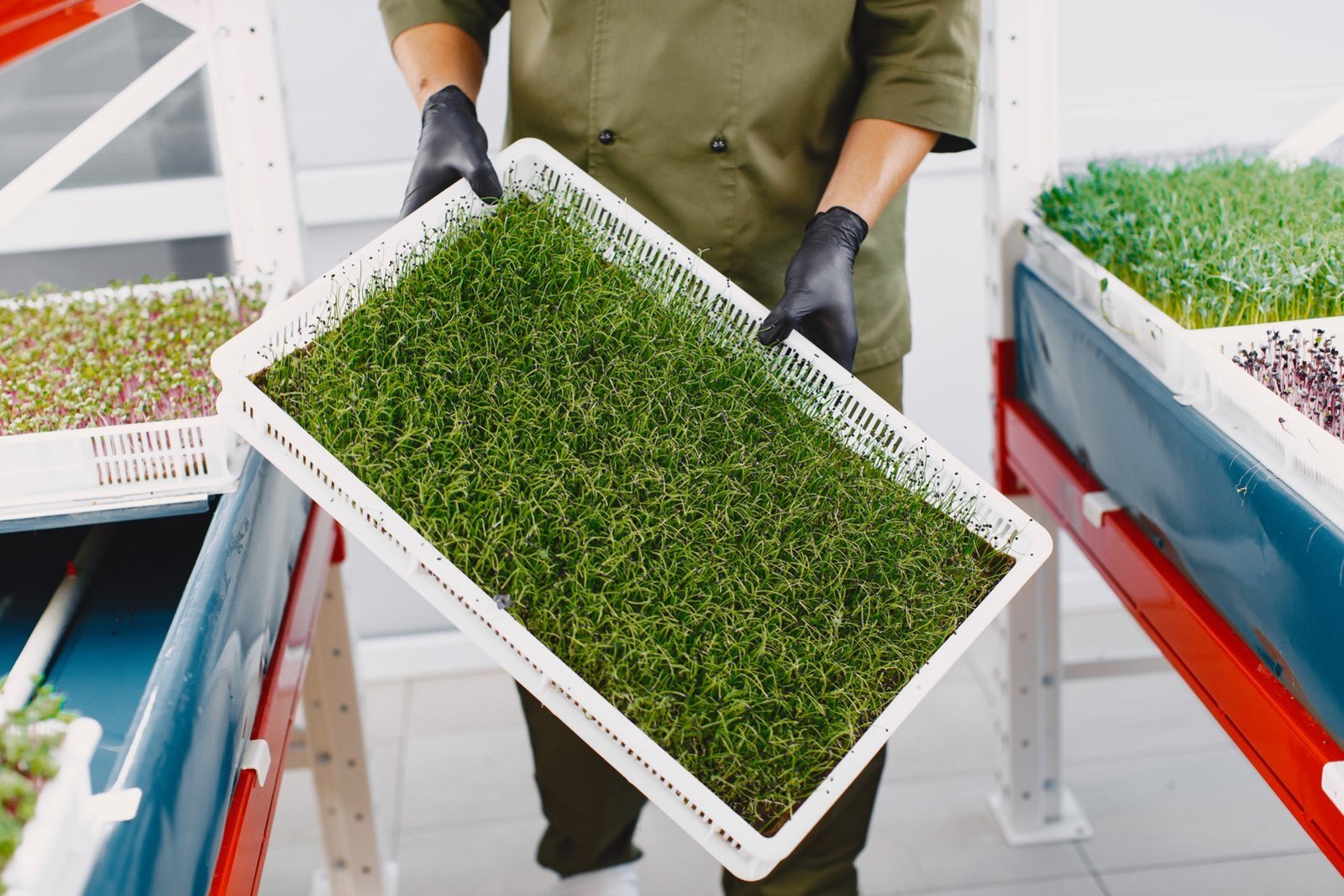
Ounce for ounce, microgreens are pricey.
The pack is light, the plants are tiny, and they grew in about two weeks. So why are microgreens so expensive? Most of the price comes from how little a tray yields, how much hand work goes into each cut and how fast the greens spoil. This guide walks through real cost figures from Penn State Extension and USDA researchers. By the end you will know what you pay for in each pack. You will know how to get more value from the next one you buy.
Key Takeaway
Microgreens cost more per pound mostly from low yield and hand labor. Penn State Extension measured an average harvest of about 0.30 lb per tray and found harvest to be the slowest job (Sánchez & Berghage, 2025). Cut greens spoil in days, so they can’t be shipped far or stored long.
Below: what a tray costs and yields, where the labor goes, how shelf life adds cost, what growers charge and how to get your money’s worth.
Microgreens 411
Find a microgreens grower near you
Greens that travel less start fresher in your fridge. Find my local grower →
Table of Contents
- Why are microgreens so expensive to produce?
- How much does one tray of microgreens yield?
- Why does harvest labor add so much?
- How does short shelf life push the price up?
- What do growers charge for microgreens?
- How can you get your money’s worth from microgreens?
- Wrap-up: why are microgreens so expensive
- Frequently asked questions
- References
Why are microgreens so expensive to produce?
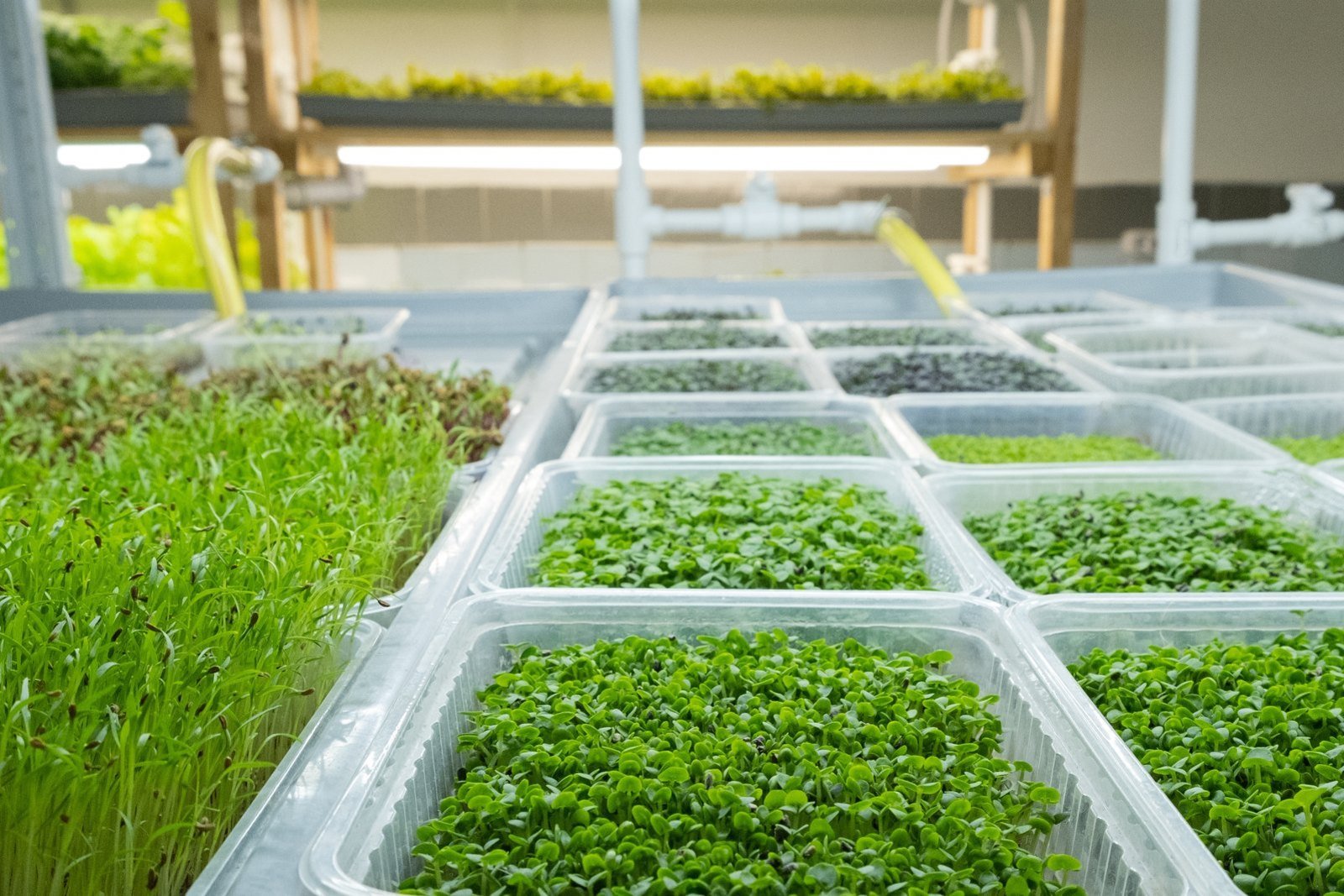
A grower gets very little weight from each tray, and most of that weight is cut by hand. Penn State Extension tracked the costs of a greenhouse crop grown by students in its hydroponics and aquaponics course. The average harvest was about 0.30 lb (136 g) from one 10-row seeding flat (Sánchez & Berghage, 2025).
Each tray still needs seed, growing mix, fertilizer, bench space and several minutes of work. Penn State estimates $0.67 per tray for trays, mix and fertilizer. Seed runs from $0.47 to over $2.21 per tray, depending on the crop. Greenhouse overhead adds $0.40 to $0.80, and labor for a scissors harvest adds about $1.90 at $12 an hour (Sánchez & Berghage, 2025).
Add those up and one tray costs roughly $3.44 to $5.58 to produce. Spread over 0.30 lb, that is about $11 to $19 a pound. The farm has not yet paid for a market stall, a delivery run or its own profit.
The table shows where the money goes on one tray.
| Cost per tray (Penn State estimate) | Amount |
|---|---|
| Trays, growing mix and fertilizer | $0.67 |
| Seed, depending on the crop | $0.47 to over $2.21 |
| Greenhouse overhead for 1 to 2 weeks | $0.40 to $0.80 |
| Labor at $12 an hour, scissors harvest | About $1.90 |
How much does one tray of microgreens yield?
Not much, and the amount swings widely by crop. Penn State averaged yields over 14 to 28 crop cycles in 2016 and 2017, in a greenhouse with no extra lighting. Red Rain mustard gave the most, at 201 g (0.44 lb) per tray. Cilantro gave the least, at 46.8 g, or about a tenth of a pound (Sánchez & Berghage, 2025).
So a grower needs about four trays of cilantro to match the weight of one tray of that mustard. Ruby red chard came in at 70.6 g and red cabbage at 106.1 g. Leafy crops such as mizuna and pac choi landed near 170 to 177 g (Sánchez & Berghage, 2025).
That spread can explain why two kinds sell at different prices in the same market. A low-yield crop takes the same bench space and the same planting time, yet it gives less weight to sell. Part of the answer to why are microgreens so expensive, then, is the plant itself.
Seed adds to the gap. Penn State based its seed costs on a 10 g seeding rate per tray (Sánchez & Berghage, 2025). For a crop with costly seed, that cost repeats on every flat.
Why does harvest labor add so much?
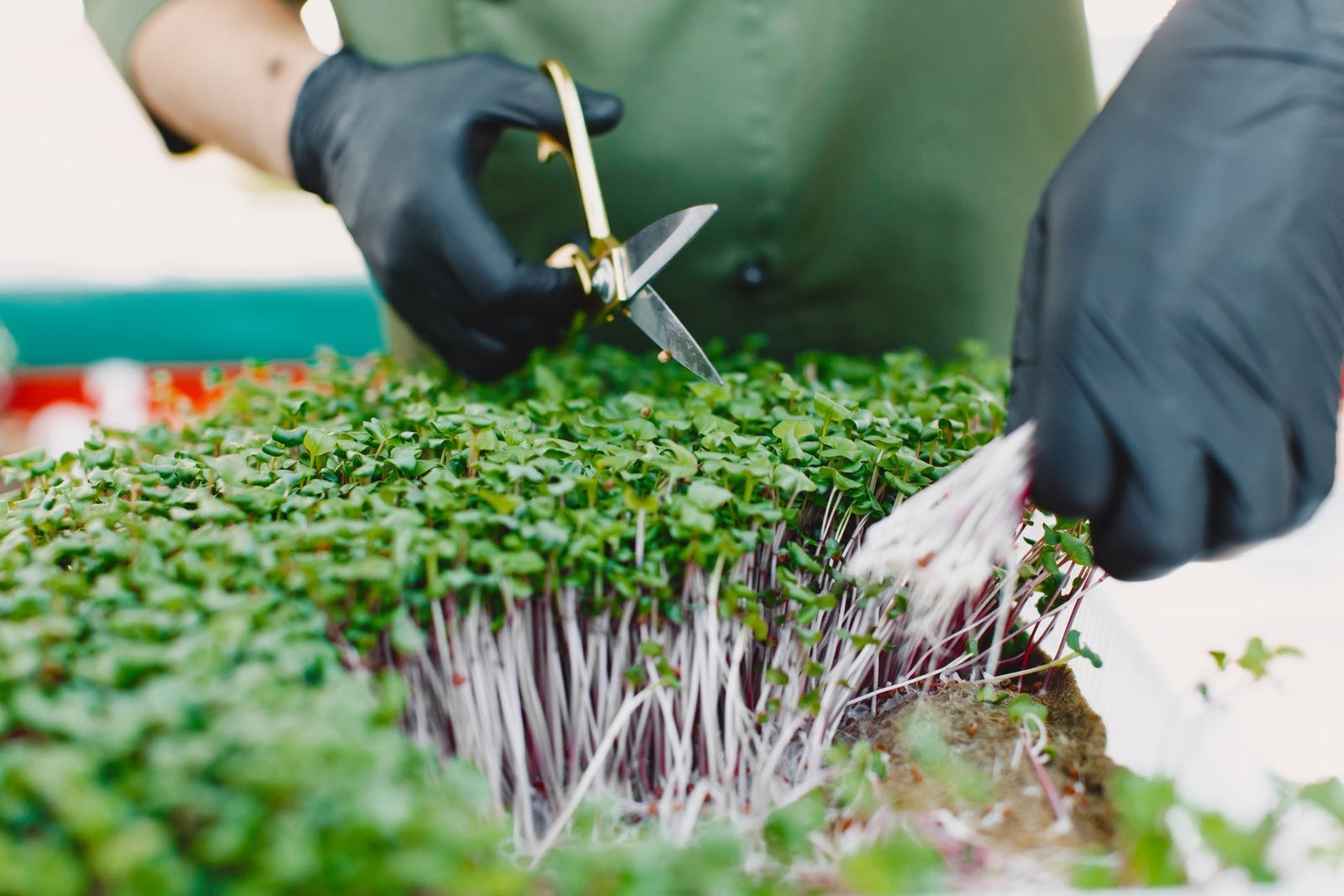
Harvest is the slowest part of the job. Penn State says harvest is the most time-consuming step in producing microgreens (Sánchez & Berghage, 2025).
The course timed each task per tray. Planting took about 3.3 minutes, watering and feeding took half a minute, and packing and distribution took 1.7 minutes. Cutting with scissors took 4 minutes, longer than any other task (Sánchez & Berghage, 2025).
Those minutes repeat on every tray, and a tray gives only about a third of a pound. A grower who wants to sell 10 lb in a week is cutting more than 30 trays. That adds up fast, even at the $12 hourly rate Penn State used for its estimate.
Tools change the math. When students tried an electric garden clipper, harvest took 1.3 minutes per tray instead of 4. Labor for that step fell from $0.80 to $0.28 per tray (Sánchez & Berghage, 2025). Not every small farm owns one. So when people ask why are microgreens so expensive, a big share of the answer is time spent with scissors.
How does short shelf life push the price up?
Cut microgreens spoil quickly, and that cost lands on the price tag. A review by USDA researchers says the fast drop in quality after harvest “keeps prices high and restricts commerce to local sales” (Turner et al., 2020). Once cut, the greens dehydrate, wilt and decay.
Cold slows that down. Penn State says dark storage at 5°C (41°F) can stretch shelf life to 10 to 14 days. At room temperature, the same greens last only 2 to 4 days (Sánchez & Berghage, 2025). A USDA study on buckwheat microgreens noted that short shelf life has limited their commercial use (Kou et al., 2013).
For a grower, that means cold storage, cold transport and small, frequent harvests. Packs that sit too long can’t be sold, and the farm carries that loss. For a crop that lasts days, long shipping routes make little sense.
So the answer to why are microgreens so expensive includes the fridge, not just the farm. Our guide to how long microgreens last shows how to stretch a pack at home.
What do growers charge for microgreens?
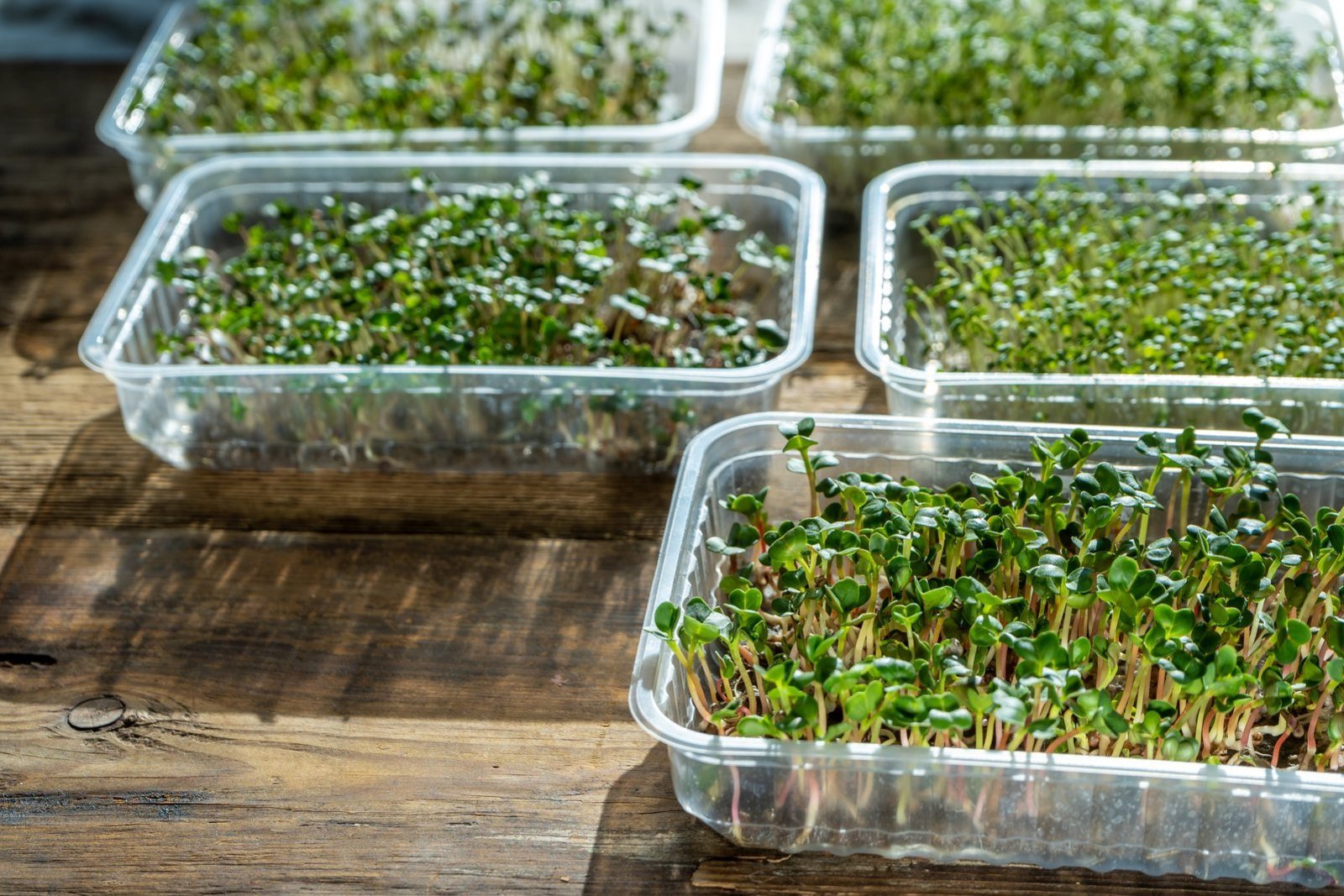
Prices vary by farm, crop and market, so no single number fits. Penn State’s guide, updated in December 2025, gives two examples. One is $1.75 for a half-ounce bag sold direct. The other is $40 a pound in 14-gallon totes sold wholesale (Sánchez & Berghage, 2025).
That direct price works out to $3.50 an ounce, or $56 a pound. The wholesale price is lower per pound, since the buyer takes large totes instead of small bags. Neither figure is a national average. They are examples from one extension guide.
Now set those prices against the cost math. A tray that costs $3.44 to $5.58 and yields 0.30 lb brings in about $12 at $40 a pound. Sold in half-ounce bags at $1.75, the same tray brings in closer to $17. What is left has to cover rent, delivery, marketing, unsold packs and the grower’s pay.
Local prices change with crops and seasons, so ask growers near you. Our microgreens price guide covers what shoppers pay per ounce and per pound. You can compare nearby farms in the Microgreens 411 directory.
How can you get your money’s worth from microgreens?
Buy only what you can use in a few days, and keep it cold. Cut microgreens lose quality fast, so the best value is the pack you finish (Turner et al., 2020).
Check the date first. In a 2021 online survey of 660 people, 89% of microgreen buyers looked for a use-by or best-by date (Kelley, 2025). Pick the freshest pack you can find and put it in the fridge as soon as you get home. Our storage guide explains the steps.
Buying close to the source can help with freshness. Greens that travel a short distance spend fewer of their few good days in transit. A local farm can often tell you when it cut them. Our guide to where to buy microgreens compares stores, markets and farms.
Then use the whole pack. A small handful adds flavor and color to eggs, sandwiches, soup or a grain bowl. Plan two or three meals around one pack, and less of it ends up in the trash.
Wrap-up: why are microgreens so expensive
Microgreens cost more per pound for plain reasons. Each tray yields about a third of a pound, harvest is slow hand work and cut greens spoil in days. Penn State’s figures put the cost of producing them near $11 to $19 a pound before delivery or profit.
You can still get good value. Buy small amounts, keep them cold and use them within a few days.
Want fresher greens from a nearby farm? Search your town in the Microgreens 411 directory to find growers near you. Coverage varies by region, so some areas have few listings so far.
Microgreens 411
Find a microgreens grower near you
Greens that travel less start fresher in your fridge. Find my local grower →
Frequently asked questions
Do shoppers pay more for some microgreen colors?
In a 2022 online survey, Tennessee grocery shoppers rated photos of kale and radish microgreens. They were willing to pay 66 cents more for green microgreens than for light purple ones (Kelley, 2025). Color is one of several things buyers weigh at the shelf.
Should you wash microgreens before you store them?
No. Penn State notes that over half of the buyers in one survey washed microgreens before storing them, which can increase microbial growth. Rinse them only just before you eat them, and store them dry (Kelley, 2025).
Have microgreens caused foodborne illness outbreaks?
A 2020 review by USDA researchers found no foodborne illness outbreaks linked to microgreens at that time. It did count seven recalls, which shows the risk is real (Turner et al., 2020). Check current FDA recall notices for anything newer.
Do microgreens lose nutrients after harvest?
Yes, some of them. The same USDA review says harvested microgreens quickly lose certain nutrients. Researchers have tested calcium treatments, special packaging, temperature control and light to slow that loss and keep quality longer (Turner et al., 2020).
How long can buckwheat microgreens keep?
Under the best packaging and storage conditions in a USDA study, buckwheat microgreens kept acceptable quality for up to 21 days. The researchers advised storing them at 5 to 10°C (41 to 50°F) to hold quality (Kou et al., 2013).
How often do regular buyers purchase microgreens?
Penn State summarizes a 2021 survey of microgreen buyers. In it, 56% of respondents bought them weekly, and many looked for certified organic options. About a third, 34%, had grown microgreens themselves (Kelley, 2025).
References
Kelley, K. (2025, June 4). Marketing microgreens. Penn State Extension. https://extension.psu.edu/marketing-microgreens
Kou, L., Luo, Y., Yang, T., Xiao, Z., Turner, E. R., Lester, G. E., & Wang, Q. (2013). Postharvest biology, quality and shelf life of buckwheat microgreens. LWT Food Science and Technology, 51(1), 73–78. https://www.ars.usda.gov/research/publications/publication/?seqNo115=279279
Sánchez, E., & Berghage, R. (2025, December 16). Growing microgreens. Penn State Extension. https://extension.psu.edu/growing-microgreens
Turner, E. R., Luo, Y., & Buchanan, R. L. (2020). Microgreen nutrition, food safety, and shelf life: A review. Journal of Food Science, 85(4), 870–882. https://doi.org/10.1111/1750-3841.15049