
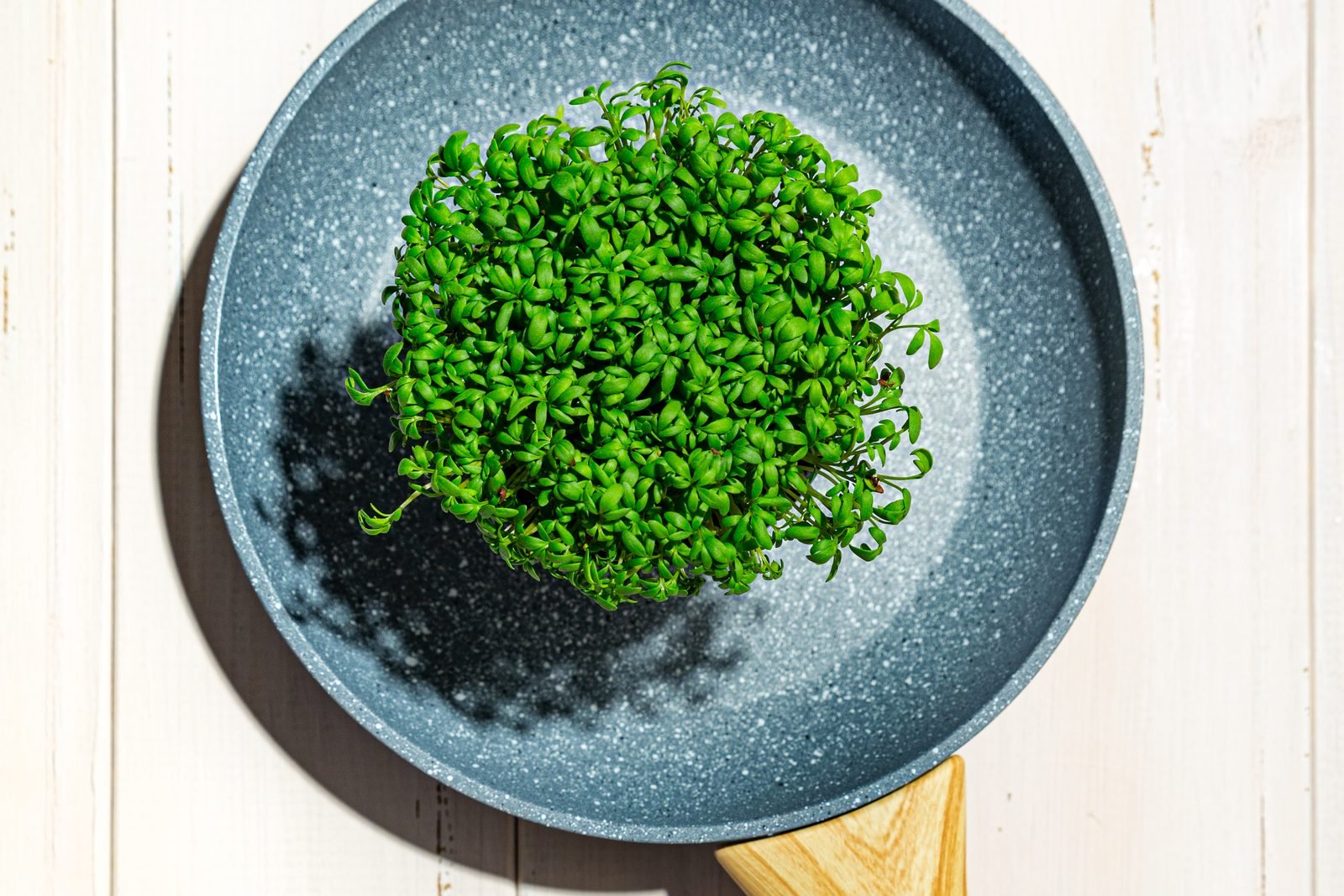
Yes, you can cook microgreens.
Most people eat them raw, piled on salads and sandwiches. Still, a pack in the fridge does not have to stay cold. Pea shoots wilt into a stir-fry in about a minute, and a handful of greens can soften on hot soup. So can you cook microgreens without losing what made them worth buying? Mostly, if you keep the heat short. Heat changes their crunch fast, and lab studies show it changes some nutrients too. This guide covers what heat does, which kinds hold up and how to add them to warm food.
Key Takeaway
Yes. Cooking is optional, but sturdy kinds like pea shoots can be stir-fried until they wilt, usually within a minute (Cornell Cooperative Extension Warren County, 2021). Heat softens tender greens fast and lowers some nutrients in lab tests, so most cooks add microgreens at the very end.
Below: what heat does to texture and nutrients, what the broccoli studies found, which kinds hold up best and how to add them to hot food.
Microgreens 411
Find a microgreens grower near you
Greens that travel less start fresher in your fridge. Find my local grower →
Table of Contents
- Can you cook microgreens, or should you eat them raw?
- What does heat do to the texture of microgreens?
- Does cooking destroy the nutrients in microgreens?
- What about sulforaphane in broccoli microgreens?
- Which microgreens hold up best to heat?
- How do you add microgreens to hot food?
- Wrap-up: can you cook microgreens?
- Frequently asked questions
- References
Can you cook microgreens, or should you eat them raw?
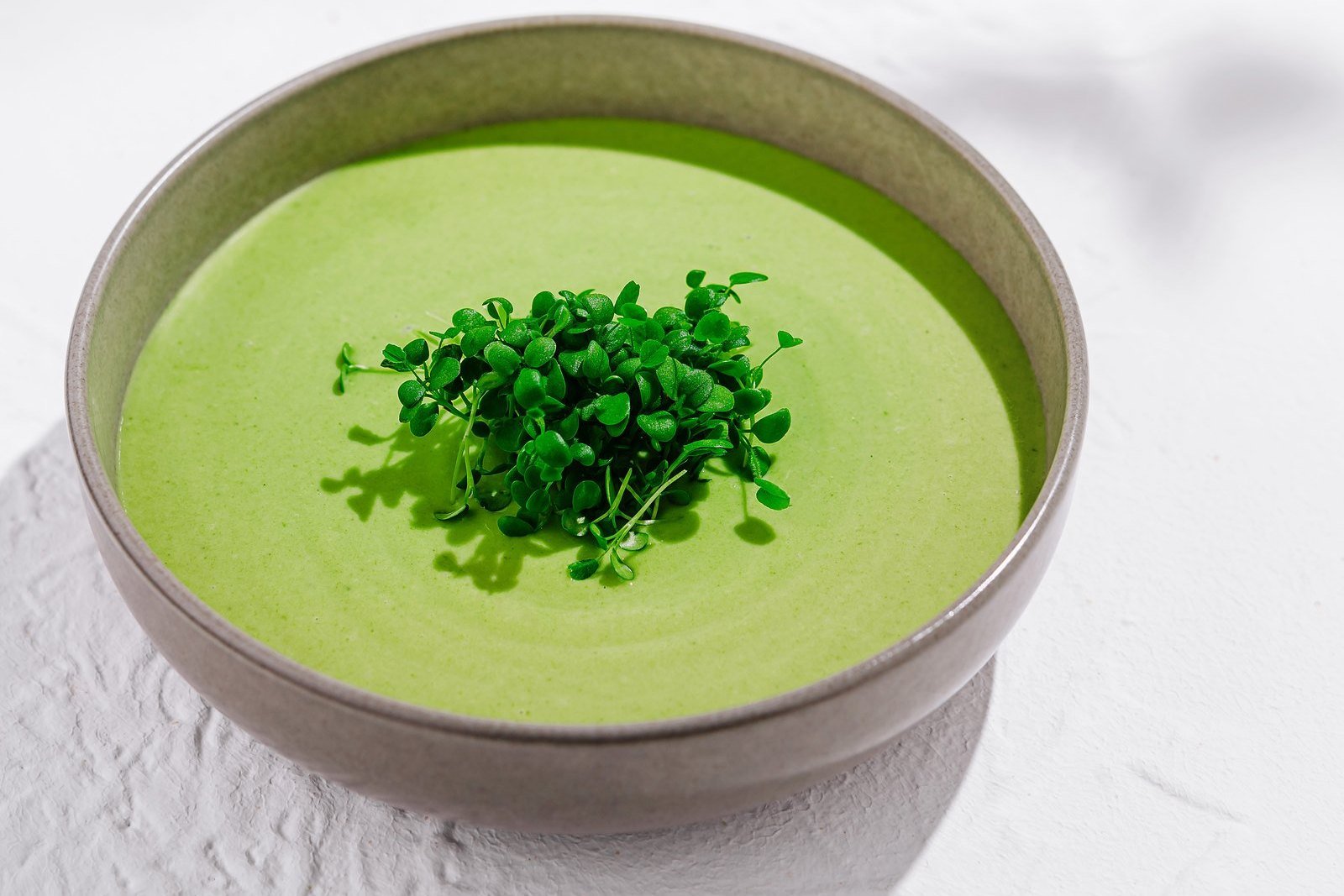
You can do either. Cooking is not required, and most people eat microgreens raw. New Mexico State University suggests adding them to a salad or a sandwich, or using them as a topping on a dinner entrée (New Mexico State University, n.d.-a).
Heat is an option, not a rule. Cornell Cooperative Extension says pea shoots can be eaten raw or cooked, and it shares a quick stir-fry recipe (Cornell Cooperative Extension Warren County, 2021). A seed company’s guide makes the same point for other kinds. It says most varieties are excellent raw and sturdier pea shoots can be lightly sautéed (Przybiński, 2026).
So the honest answer is “yes, some of them, briefly.” Raw keeps the crunch and color you paid for. A short burst of heat trades some of that for a softer, milder bite.
Cooking does not replace washing. NMSU says microgreens are about as risky as any fresh produce that is eaten raw. Its advice is to wash them right before you eat them (New Mexico State University, n.d.-a).
The table sums up what lab studies found when these greens, or their grown-up relatives, met heat.
| Crop and heat | What researchers measured |
|---|---|
| Broccoli, boiled | About 34% of vitamin C lost |
| Broccoli, steamed | About 22% of vitamin C lost |
| Broccoli florets and sprouts, heated to 60°C (140°F) | More sulforaphane formed |
| Pea microgreens, baked into bread | Quercetin held steady; carotenoids depleted |
What does heat do to the texture of microgreens?
It softens them in seconds. Microgreens are young plants with thin leaves and tender stems. In the Cornell stir-fry, pea shoots go into a pan on high heat and usually start to wilt within a minute. The recipe says to turn the heat off at that point and serve (Cornell Cooperative Extension Warren County, 2021).
People asking can you cook microgreens often worry about mush, and the worry is fair. The MP Seeds guide says putting microgreens in soup will take the crisp away. It adds that sautéing or lightly wilting them can mellow out spiciness and leave a more tender bite (Przybiński, 2026). That is a grower’s kitchen view, not a lab test.
Color can change with longer heat. When German researchers baked pea and lupin microgreens into wheat bread, the carotenoids and chlorophylls were depleted. The baking turned some chlorophyll into a breakdown product called pheophytin (Klopsch et al., 2018).
So if bright green matters on the plate, keep the heat short or add the greens last. A minute in the pan and a few minutes in a bread oven are very different things.
Does cooking destroy the nutrients in microgreens?
Some, not all, and it depends on the nutrient and the method. Very few studies have cooked microgreens themselves. Pea microgreen bread showed no drop in quercetin, a plant flavonoid, compared with the raw greens. Some kaempferol compounds dropped slightly (Klopsch et al., 2018). For pak choi and kale microgreens, breadmaking lowered the plant compounds the team measured (Klopsch et al., 2019).
Most cooking data comes from grown broccoli. One Italian study found boiling cut vitamin C by 34% and steaming by 22% (Galgano et al., 2007). A Chinese study compared five home methods. Steaming kept the most glucosinolates, and stir-frying lost the most (Yuan et al., 2009).
Heat is not all loss. Boiling, steaming and microwaving broccoli raised the measured levels of lutein, beta-carotene and two forms of vitamin E. The authors linked this to easier extraction with longer heating (Hwang & Kim, 2013).
These tests measured food in a lab, not effects in people. No trial tested whether cooked microgreens do less for your health than raw ones. Our nutrition guide covers what the raw-greens research does and does not show.
What about sulforaphane in broccoli microgreens?
Gentle heat may help it form, but the key study used broccoli florets and sprouts, not microgreens. Broccoli holds a compound called glucoraphanin. Sulforaphane forms from it when the tissue is crushed or chewed and an enzyme called myrosinase goes to work (Matusheski et al., 2004).
In that lab study, heating florets or sprouts to 60°C (140°F) before grinding raised sulforaphane formation. Heating to 70°C (158°F) and above lowered it in florets, but not in sprouts (Matusheski et al., 2004). Harder cooking is a different story. Boiling and steaming left no detectable sulforaphane in grown broccoli (Galgano et al., 2007).
This matters for microgreens. A 2025 review says cabbage-family sprouts and microgreens contain significantly more glucosinolates than mature vegetables (Michalczyk, 2025).
So can you cook microgreens from the broccoli family and keep their sulforaphane? Nobody has tested that on microgreens directly, and no trial tested it in people. If that compound is why you buy them, skip boiling and long steaming. Those were the two methods that left none in grown broccoli.
Which microgreens hold up best to heat?
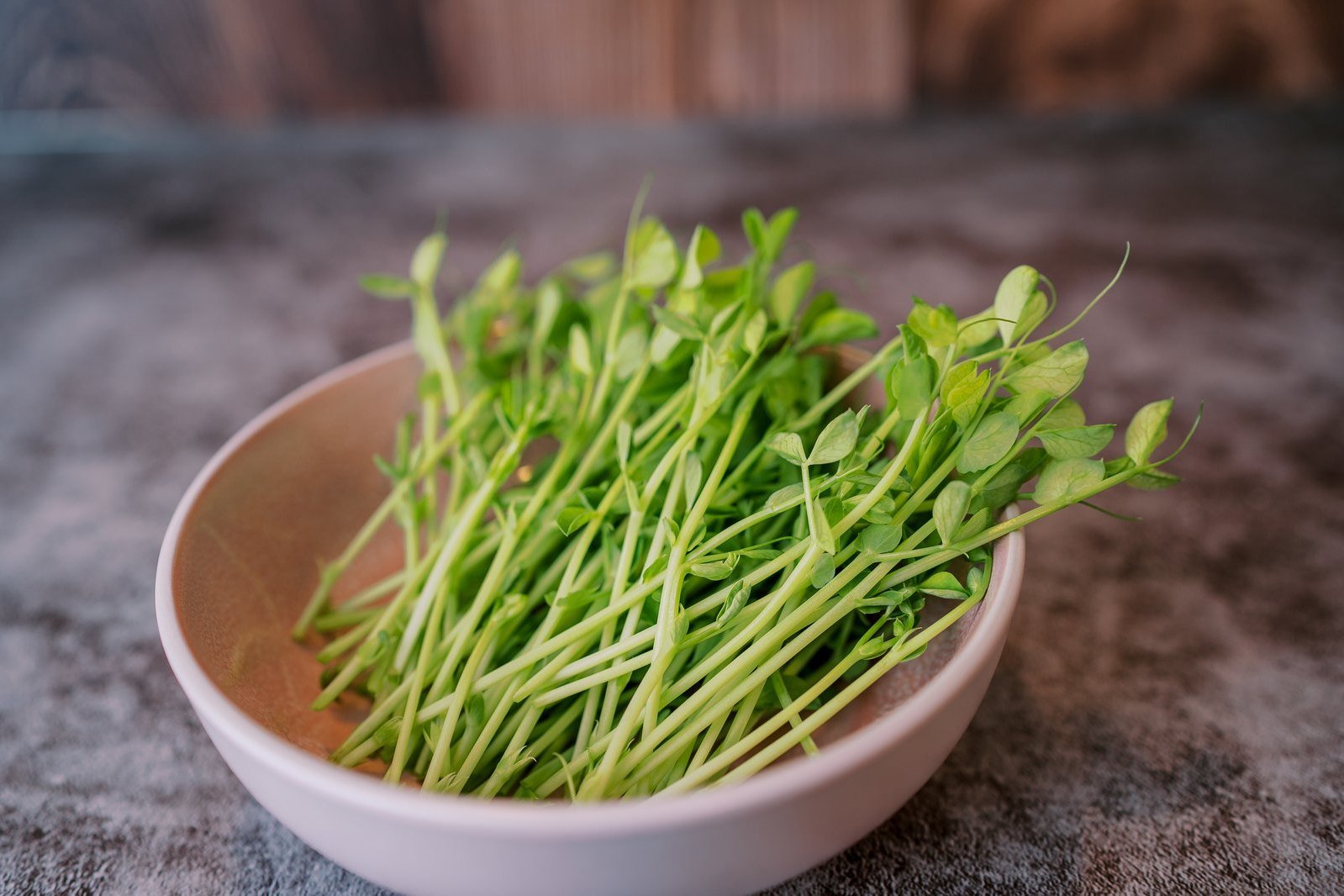
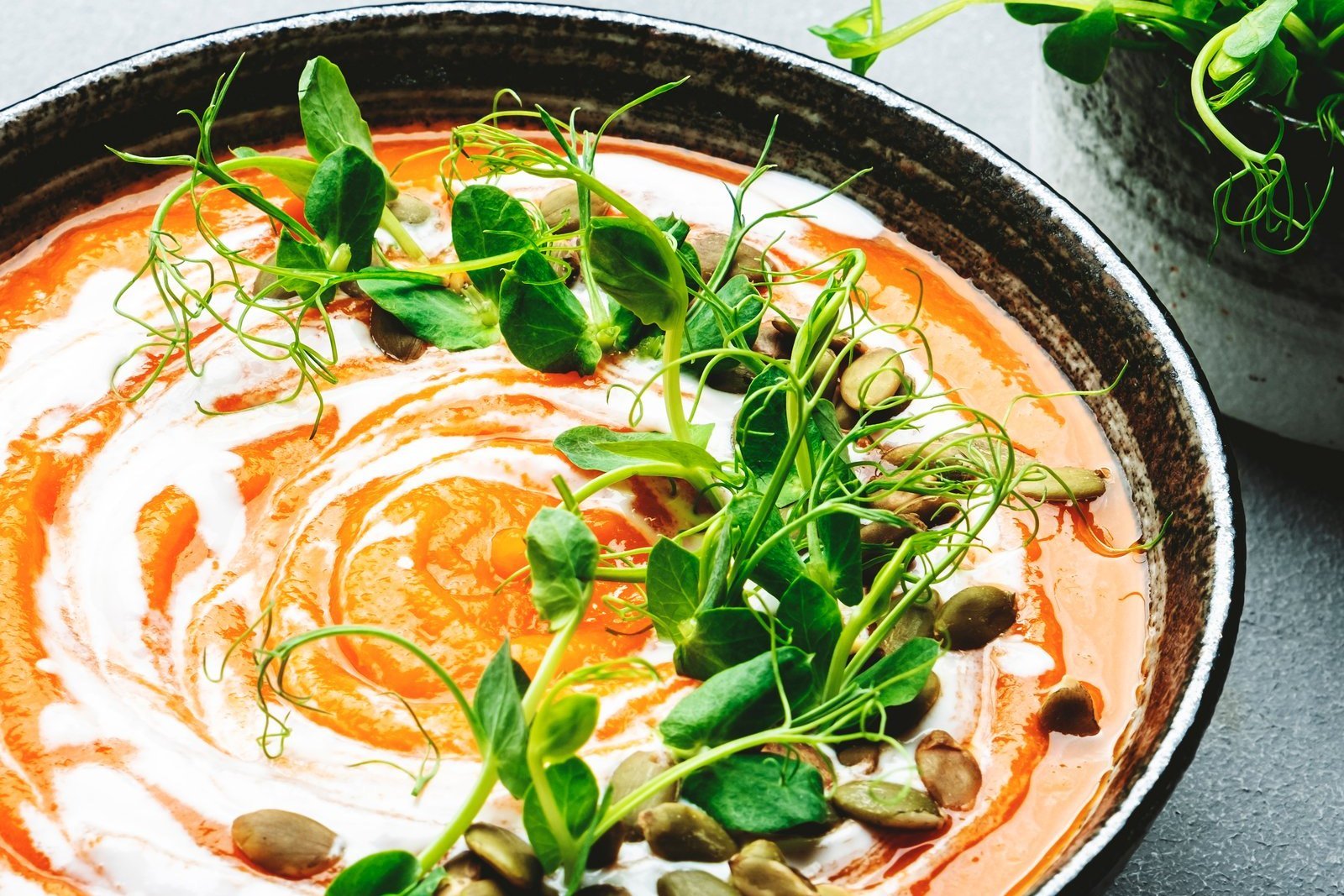
Pea shoots are the sturdiest common choice. Cornell’s stir-fry uses a full pound of them, cooked on high with garlic, ginger, soy sauce and a little sugar (Cornell Cooperative Extension Warren County, 2021). Sproutpeople, a seed seller, gives a similar wok method and says to stir-fry pea shoots for a minute or two (Sproutpeople, n.d.).
Sunflower shoots can take a quick toss, but not much more. The MP Seeds guide groups sturdier pea shoots and sunflower microgreens as the kinds to briefly sauté or add to a stir-fry (Przybiński, 2026). Sproutpeople warns that sunflower greens wilt very fast, so cook them only barely (Sproutpeople, n.d.).
Small cabbage-family greens sit in the middle. The same seed guide suggests stirring broccoli, radish and mustard into eggs, soups or warm grains during the final minute. Delicate basil, coriander, beet and amaranth are best scattered over the finished dish (Przybiński, 2026).
Want more ideas for each kind? Our everyday meals guide matches each kind to the dishes it suits, raw or warm.
How do you add microgreens to hot food?
Add them at the end, off the heat or close to it. The MP Seeds guide gives simple timing. For soups and curries, add microgreens after you switch off the heat or put them straight into the bowl. Fold them into omelets and scrambled eggs during the final 30 to 60 seconds (Przybiński, 2026).
For pasta, pizza and roasted vegetables, the guide says to add them after cooking. For a stir-fry finish, toss sturdy shoots briefly rather than simmering them (Przybiński, 2026). Cornell’s method is a good model for a light sauté. Cook the garlic and ginger first, add the shoots, then turn off the heat once they wilt (Cornell Cooperative Extension Warren County, 2021).
Treat them as raw produce until they hit the pan. That means a rinse right before cooking, the same as for a salad (New Mexico State University, n.d.-a).
Cooking microgreens works best when they are fresh. Search the Microgreens 411 directory for a grower near you who sells pea or sunflower shoots. Our recipes page has full dishes to try them in.
Wrap-up: can you cook microgreens?
Yes, you can, and you never have to. Most people eat microgreens raw. Pea shoots handle a quick stir-fry best. Tender kinds do better stirred in at the end or scattered over the finished dish. Heat softens texture fast. In lab tests it lowers some nutrients and raises others, and boiling caused the biggest losses in broccoli. Wash them right before use either way.
Want fresh pea shoots or broccoli greens to try? Search your town in the Microgreens 411 directory to find growers near you. Coverage varies by region, so some areas have few listings so far.
Microgreens 411
Find a microgreens grower near you
Greens that travel less start fresher in your fridge. Find my local grower →
Frequently asked questions
Can you put microgreens in a smoothie?
Yes. Cornell Cooperative Extension lists smoothies among the ways to use pea shoots (Cornell Cooperative Extension Warren County, 2021). Blending skips heat entirely. A seed company guide suggests pea, sunflower or broccoli for smoothies and steers away from the spicy kinds outside of a vegetable cocktail (Przybiński, 2026).
Should you wash microgreens long before you cook them?
No. NMSU advises washing them when you prepare the meal, not earlier. Early washing damages their fragile tissue and adds moisture that can let bacteria grow and shorten shelf life (New Mexico State University, n.d.-b). Rinse and dry them as one step of making the dish.
How long can you keep microgreens before cooking them?
NMSU says to eat microgreens no later than 3 to 5 days after harvest. Cut greens rarely last more than a day or two outside a refrigerator (New Mexico State University, n.d.-b). So buy only what you plan to cook or eat within that window, and keep the pack cold.
Can you dry microgreens into a powder?
Researchers have tried it. One lab study dried radish microgreens at 40°C (104°F), 50°C (122°F) and 60°C (140°F). Drying at 50°C (122°F) kept the most anthocyanins and phenolics (Gunjal et al., 2025). That was a lab dryer, not a home kitchen, and no trial tested the powder in people.
Does microwaving keep more vitamin C than boiling?
In grown broccoli, yes. The same Italian study found microwaving and pressure cooking each kept more than 90% of the vitamin C (Galgano et al., 2007). Nobody has run that exact test on microgreens, so treat the result as a useful clue and not a firm rule.
Is cooking advice for sprouts the same as for microgreens?
No. They are different products. NMSU explains that sprouts are eaten whole, and microgreens are cut above the growing medium with the roots left behind. A University of Arkansas survey found only 49% of consumers knew the difference (New Mexico State University, n.d.-a). Check the label before you cook.
References
Cornell Cooperative Extension Warren County. (2021, December 13). Stir fried pea shoots. https://warren.cce.cornell.edu/food-nutrition/recipes/side-dishes/stir-fried-pea-shoots
Galgano, F., Favati, F., Caruso, M., Pietrafesa, A., & Natella, S. (2007). The influence of processing and preservation on the retention of health-promoting compounds in broccoli. Journal of Food Science, 72(2), S130–S135. https://doi.org/10.1111/j.1750-3841.2006.00258.x
Gunjal, M., Khalangre, A., Tosif, M. M., Singh, J., Kaur, S., Ullah, R., & Rasane, P. (2025). Effect of convective drying temperature and tray load density on bioactive compounds, antioxidant properties, and functional quality of radish Sango microgreens. Food Chemistry, 488, 144810. https://doi.org/10.1016/j.foodchem.2025.144810
Hwang, E.-S., & Kim, G.-H. (2013). Effects of various heating methods on glucosinolate, carotenoid and tocopherol concentrations in broccoli. International Journal of Food Sciences and Nutrition, 64(1), 103–111. https://doi.org/10.3109/09637486.2012.704904
Klopsch, R., Baldermann, S., Voss, A., Rohn, S., Schreiner, M., & Neugart, S. (2018). Bread enriched with legume microgreens and leaves: Ontogenetic and baking-driven changes in the profile of secondary plant metabolites. Frontiers in Chemistry, 6, 322. https://doi.org/10.3389/fchem.2018.00322
Klopsch, R., Baldermann, S., Hanschen, F. S., Voss, A., Rohn, S., Schreiner, M., & Neugart, S. (2019). Brassica-enriched wheat bread: Unraveling the impact of ontogeny and breadmaking on bioactive secondary plant metabolites of pak choi and kale. Food Chemistry, 295, 412–422. https://doi.org/10.1016/j.foodchem.2019.05.113
Matusheski, N. V., Juvik, J. A., & Jeffery, E. H. (2004). Heating decreases epithiospecifier protein activity and increases sulforaphane formation in broccoli. Phytochemistry, 65(9), 1273–1281. https://doi.org/10.1016/j.phytochem.2004.04.013
Michalczyk, M. (2025). Methods of modifying the content of glucosinolates and their derivatives in sprouts and microgreens during their cultivation and postharvest handling. International Journal of Food Science, 2025, 2133668. https://doi.org/10.1155/ijfo/2133668
New Mexico State University. (n.d.-a). All about eating and growing microgreens. All About Microgreens. https://all-about-microgreens-d.nmsu.edu/
New Mexico State University. (n.d.-b). Eating microgreens. All About Microgreens. https://all-about-microgreens-d.nmsu.edu/consumers.html
Przybiński, M. (2026, August 31). How to prepare, cook and eat microgreens: A complete guide. MP Seeds. https://mpseeds.eu/how-to-prepare-cook-and-eat-microgreens
Sproutpeople. (n.d.). Pea shoot stir fry. https://sproutpeople.org/blogs/recipes/pea-shoot-stir-fry
Yuan, G.-F., Sun, B., Yuan, J., & Wang, Q.-M. (2009). Effects of different cooking methods on health-promoting compounds of broccoli. Journal of Zhejiang University Science B, 10(8), 580–588. https://doi.org/10.1631/jzus.B0920051