
One pack of microgreens can feed more meals than you think.
Most people buy a clamshell for one salad. The rest fades in the fridge. These microgreens recipes fix that. Each uses kitchen staples and takes about 10 minutes. You get a bright salad, two quick breakfasts, a green pesto and a grain bowl that works for lunch or dinner. The last section shows how to match the greens to the dish. That way a spicy radish pack and a mild pea shoot pack both get used up. Every safety tip has a source behind it.
Key Takeaway
The easiest microgreens recipes add the greens raw, right before serving: a salad with lemon vinaigrette, avocado toast, eggs, pesto or a grain bowl. Penn State says microgreens are normally eaten raw (Di Gioia, 2024). Rinse them just before you use them, and match mild kinds to delicate food and spicy kinds to rich food.
Below: five simple recipes, a quick table and a guide to picking the right microgreens for each dish.
Microgreens 411
Find a microgreens grower near you
Greens that travel less start fresher in your fridge. Find my local grower →
Table of Contents
- How do you make a simple microgreens salad?
- How do you make avocado toast with radish microgreens?
- How do you finish scrambled eggs with microgreens?
- How do you make pesto with pea shoots or basil microgreens?
- How do you build a grain bowl topped with microgreens?
- How do you pick microgreens for a recipe?
- Wrap-up: microgreens recipes made simple
- Frequently asked questions
- References
How do you make a simple microgreens salad?
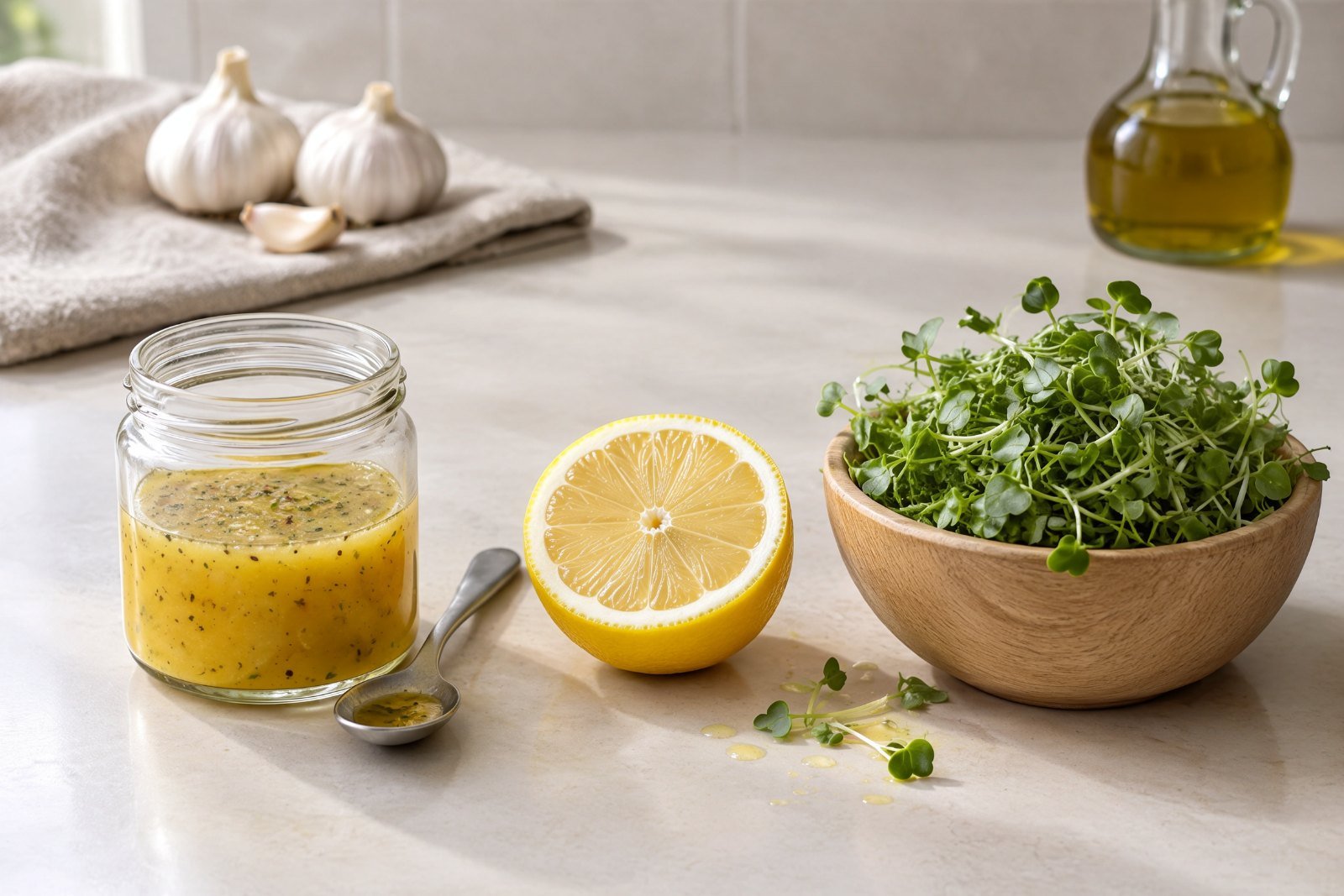
Toss a few big handfuls of mild microgreens with a quick lemon dressing, and serve it right away. This is the base for many microgreens recipes, and it takes about 10 minutes. Penn State notes that microgreens are normally eaten raw, and salads top its list of uses (Di Gioia, 2024).
Ingredients: 3 loose cups (about 60 g) mild microgreens such as sunflower or pea shoots, 1 small cucumber, 3 tablespoons olive oil, 1 tablespoon lemon juice, 1 teaspoon honey, a pinch of salt and pepper.
Shake the oil, lemon juice, honey, salt and pepper in a small jar until it looks creamy. Slice the cucumber thin. Rinse the microgreens under running water and pat them dry with a clean cloth or paper towel, as the FDA advises for produce (U.S. Food and Drug Administration [FDA], 2024).
Put the greens and cucumber in a wide bowl. Add half the dressing and toss gently with your hands. Taste a leaf, then add more dressing only if it needs it. The leaves are thin and go limp under too much. Serve it within a few minutes, before the greens start to wilt.
| Recipe | Microgreens to try, and time |
|---|---|
| Salad with lemon vinaigrette | Sunflower, pea shoots or a mild mix; about 10 minutes |
| Avocado toast or eggs | Radish, arugula or broccoli; about 10 minutes |
| Pea shoot or basil pesto | Pea shoots or basil; about 10 minutes |
| Grain bowl or soup topper | Any mild or spicy kind; 5 minutes with cooked grains |
How do you make avocado toast with radish microgreens?
Mash a ripe avocado onto toast, then pile radish microgreens on top for a peppery crunch. It’s breakfast in about 10 minutes. Of all the microgreens recipes here, this one needs the least cooking.
Ingredients: 2 slices whole grain bread, 1 ripe avocado, 1 teaspoon lemon juice, a pinch of salt, a pinch of red pepper flakes, 1 loose cup (about 20 g) radish microgreens.
Toast the bread until the edges are crisp. Halve the avocado, scoop it into a bowl and mash it with the lemon juice and salt. Spread it thick on the warm toast and sprinkle on the pepper flakes.
Rinse and dry the radish microgreens just before you use them. New Mexico State University says to wash microgreens when you prepare the meal and not any sooner. Early washing adds moisture and can shorten their life (New Mexico State University, n.d.). Our washing guide walks through the rinse step by step.
Pile the greens high and eat the toast right away. If radish is too hot for you, swap in broccoli. Oregon State University Extension groups broccoli with the mild microgreens and radish with the spicy ones (Oregon State University Extension Service, 2021).
How do you finish scrambled eggs with microgreens?

Cook the eggs the way you like them, then scatter microgreens on top once the pan is off the heat. Food Hero, a program of Oregon State University Extension, lists a veggie omelet and skillet eggs among its recipes that taste great with microgreens added (Food Hero, n.d.-a).
Ingredients: 4 large eggs, 2 tablespoons milk, 1 tablespoon butter, a pinch of salt and pepper, 1 loose cup (about 20 g) microgreens such as broccoli, arugula or a mix, 2 tablespoons crumbled feta (optional).
Whisk the eggs, milk, salt and pepper in a bowl. Melt the butter in a pan over medium-low heat and pour in the eggs. Stir slowly with a spatula so soft curds form.
Take the pan off the heat when the eggs still look a little wet. They finish cooking on the plate. Spoon them out, add the feta and top each plate with a handful of rinsed microgreens.
Breakfast is an easy place to start with microgreens recipes, since eggs pair with mild and spicy kinds alike. Wondering about stirring the greens into the pan instead? Our cooking guide covers what heat does to them.
How do you make pesto with pea shoots or basil microgreens?
Blend pea shoots or basil microgreens with nuts, cheese, garlic and oil for a bright green sauce. It takes about 10 minutes and keeps the greens raw. Penn State lists ravioli and pierogi fillings among its ideas for microgreens (Sánchez & Berghage, 2025). A pesto puts them on pasta in a similar way.
Ingredients: 2 packed cups (about 50 g) pea shoots or basil microgreens, 1/3 cup (40 g) toasted walnuts or pine nuts, 1/3 cup (30 g) grated Parmesan, 1 small garlic clove, 1 tablespoon lemon juice, 1/3 cup olive oil, a pinch of salt.
Pulse the nuts and garlic in a food processor until fine. Add the rinsed greens, cheese, lemon juice and salt, then pulse until chopped.
With the machine running, pour in the oil in a thin stream until the pesto looks smooth. Taste it and add salt if needed.
Toss it with hot pasta off the heat, or spread it on a sandwich. Pea shoots give a milder sauce, and basil tastes closer to classic pesto. This is one of the few microgreens recipes that uses a whole pack at once, so nothing goes to waste.
How do you build a grain bowl topped with microgreens?
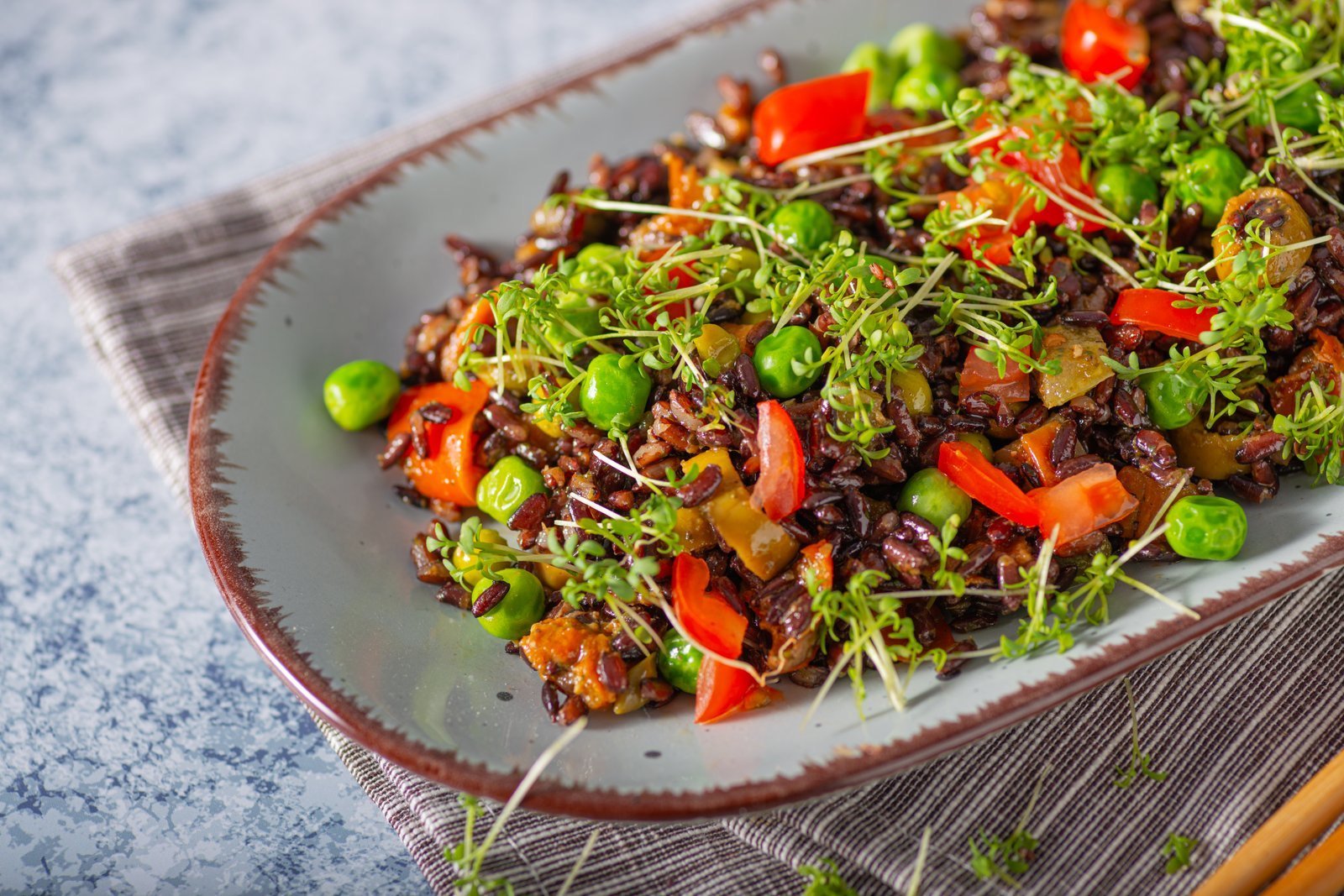
Layer cooked grains, vegetables and a protein, add dressing, then top the bowl with microgreens. Food Hero’s mix and match grain bowl names microgreens as one of its crunchy toppings (Food Hero, n.d.-b). The amounts below follow its template for 4 bowls.
Ingredients: 2 cups cooked brown rice or quinoa, 2 cups chopped raw or cooked vegetables, 12 ounces (340 g) cooked chicken, tofu or beans, 1/4 to 1/2 cup dressing, 2 loose cups (about 40 g) microgreens.
Spoon about 1/2 cup of grain into each bowl. Arrange the vegetables and protein on top or around the edges. Drizzle each bowl with 1 to 2 tablespoons of dressing. Add a handful of microgreens just before you eat.
Food Hero says to refrigerate leftovers within 2 hours (Food Hero, n.d.-b). Pack them without the greens, then add fresh ones when you serve the bowl again.
The same finish works on soup. Food Hero suggests microgreens on top of its skillet corn chowder for more flavor and texture (Food Hero, n.d.-c). Penn State adds tacos and pizza to the list (Sánchez & Berghage, 2025). Few microgreens recipes are this flexible.
How do you pick microgreens for a recipe?
Match the flavor of the greens to the food on the plate. Oregon State University Extension sorts common kinds into two groups. Broccoli, cabbage, cilantro, chard, kale, peas and sunflower are mild. Arugula, mustard greens and radish are spicy (Oregon State University Extension Service, 2021).
Mild kinds suit food with a light flavor, like eggs, salads and pesto. Spicy kinds stand up to rich food, like avocado, cheese or a creamy soup. A mixed pack is a safe choice for grain bowls. Our flavor guide ranks the common kinds from mild to hot.
Freshness matters more than variety. New Mexico State University says to eat microgreens no later than 3 to 5 days after harvest and to keep them dry (New Mexico State University, n.d.). So buy close to the day you plan to cook, and ask the grower when the tray was cut. The Microgreens 411 directory lists local growers who can tell you.
The best microgreens recipes start with greens you will use that week. Want ideas beyond these five dishes? Our everyday meals guide has more.
Wrap-up: microgreens recipes made simple
Microgreens fit easily into food you already make. A lemony salad, avocado toast, soft eggs, a quick pesto and a grain bowl each take about 10 minutes.
The rule for every dish is the same. Rinse the greens just before you use them, and add them last so they stay crisp. Pick mild kinds for delicate dishes and spicy ones for rich food. Then buy only what you will eat within a few days.
Greens from a nearby farm start fresher. Search your town in the Microgreens 411 directory to find growers near you. Coverage varies by region, so some areas have few listings so far.
Microgreens 411
Find a microgreens grower near you
Greens that travel less start fresher in your fridge. Find my local grower →
Frequently asked questions
Can you make a microgreens salad ahead for a party?
Prep the dressing and other parts ahead, but keep the greens cold until serving. New Mexico State University says microgreens cut from their roots rarely last more than a day or two outside a refrigerator (New Mexico State University, n.d.). Set out small batches and refill the bowl.
Do you need to wash microgreens labeled ready to eat?
No. The FDA says you can use produce marked pre-washed or ready-to-eat without further washing. If you choose to rinse it anyway, keep it away from unclean surfaces and utensils so it does not pick up germs from your kitchen (FDA, 2024).
Which seedlings should never go into a recipe?
Oregon State University Extension says to avoid eggplant, pepper, tomato and tomatillo seeds for microgreens (Oregon State University Extension Service, 2021). Stick to kinds that growers and stores sell as microgreens. If a label lists a plant you do not know, ask the seller before you cook with it.
Can kids help make these recipes?
Yes. Oregon State University Extension says microgreens are easy for kids’ hands to rinse and sprinkle on meals, which can get them cooking and tasting (Oregon State University Extension Service, 2021). Topping toast or a grain bowl is a good first job for a young cook.
How do you store microgreens left over after cooking?
Oregon State University Extension says the best plan is to use them right away. To store them, wrap the greens in a paper towel, place them in a plastic bag and keep them in the refrigerator for 1 to 2 days (Oregon State University Extension Service, 2021).
Where can you find more tested recipes with microgreens?
Food Hero, run by Oregon State University Extension, keeps a recipe list for microgreens. It includes veggie patties, a tofu scramble, a bruschetta salad and a summer vegetable and pasta salad, each with prep time and a nutrition label (Food Hero, n.d.-a).
References
Di Gioia, F. (2024, March 28). The ABCs of microgreens. Penn State Extension. https://extension.psu.edu/the-abcs-of-microgreens
Food Hero. (n.d.-a). Microgreens [Recipe category]. Oregon State University Extension Service. https://foodhero.org/recipes/recipe-categories/microgreens
Food Hero. (n.d.-b). Mix and match grain bowl. Oregon State University Extension Service. https://foodhero.org/recipes/mix-and-match-grain-bowl
Food Hero. (n.d.-c). Skillet corn chowder. Oregon State University Extension Service. https://foodhero.org/recipes/skillet-corn-chowder
New Mexico State University. (n.d.). Eating microgreens. All About Microgreens. https://all-about-microgreens-d.nmsu.edu/consumers.html
Oregon State University Extension Service. (2021, February 10). Microgreens. https://extension.oregonstate.edu/imported-publication/microgreens
Sánchez, E., & Berghage, R. (2025, December 16). Growing microgreens. Penn State Extension. https://extension.psu.edu/growing-microgreens
U.S. Food and Drug Administration. (2024, March 5). Selecting and serving produce safely. https://www.fda.gov/food/buy-store-serve-safe-food/selecting-and-serving-produce-safely