

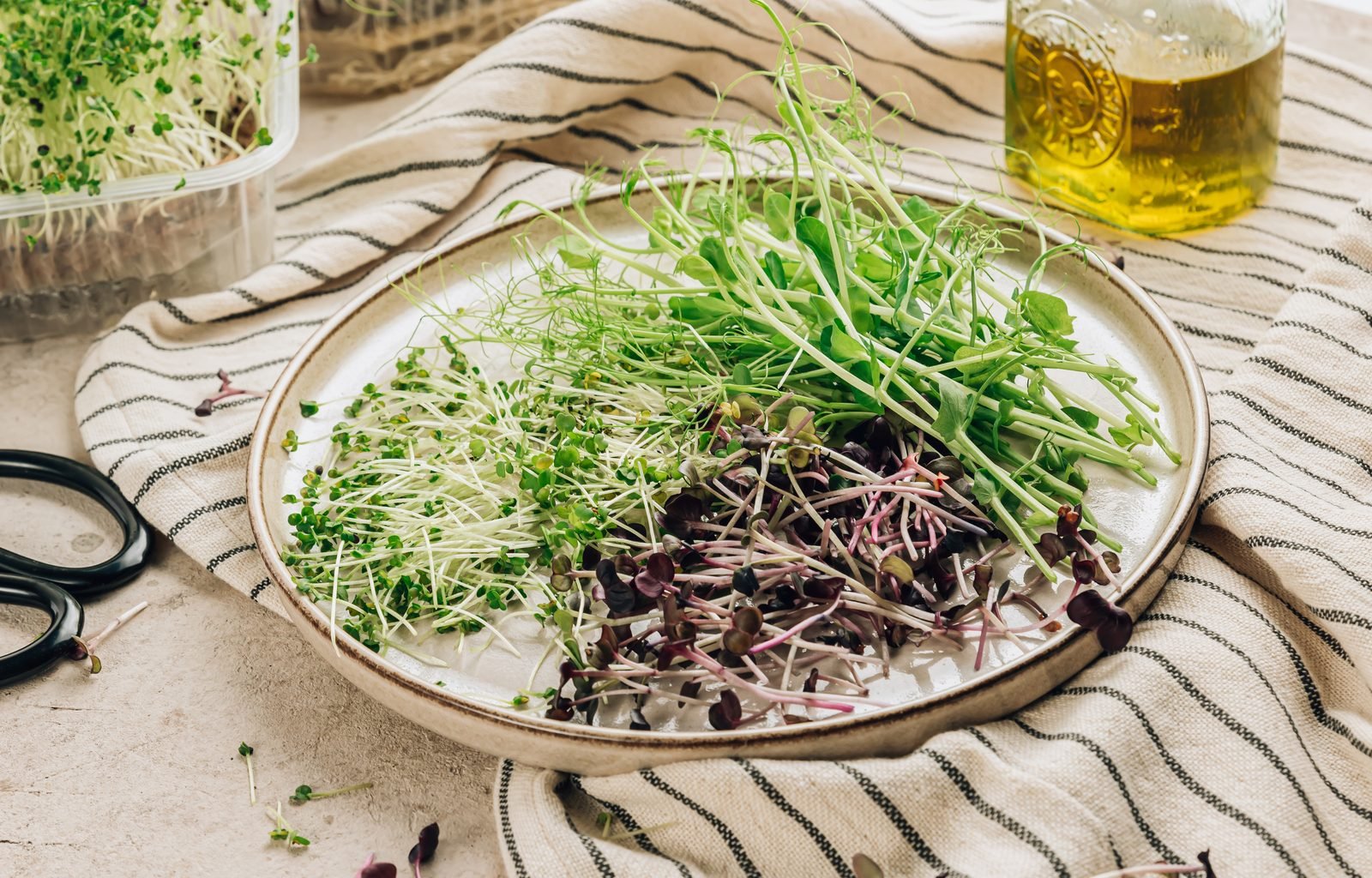
A pack of microgreens can go a long way.
The trouble is knowing where to put it. Many people buy one clamshell, sprinkle a few greens on a salad and forget the rest in the fridge. A few days later the pack is limp. It doesn’t have to go that way. This guide covers how to use microgreens at each meal, how much to add, when to add it and which kinds suit which foods. It ends with how to finish a pack before it wilts, with a source behind each claim.
Key Takeaway
Eat them raw and add them last. Penn State says microgreens are normally eaten raw in salads, appetizers and sandwiches, with meat or fish, or on pizza (Di Gioia, 2024). A small handful per plate is plenty. Plan to finish a pack within 3 to 5 days of harvest.
Below: the simplest way to start, ideas by meal, how much to use and when, flavor pairings and how to finish a pack.
Microgreens 411
Find a microgreens grower near you
Greens that travel less start fresher in your fridge. Find my local grower →
Table of Contents
- What is the easiest way to use microgreens?
- Which ways to eat microgreens work at breakfast and lunch?
- How can you use microgreens at dinner and snack time?
- How much should you use, and when do you add them?
- Which microgreens go with which foods?
- How do you use up a pack before it spoils?
- Wrap-up: how to use microgreens every day
- Frequently asked questions
- References
What is the easiest way to use microgreens?
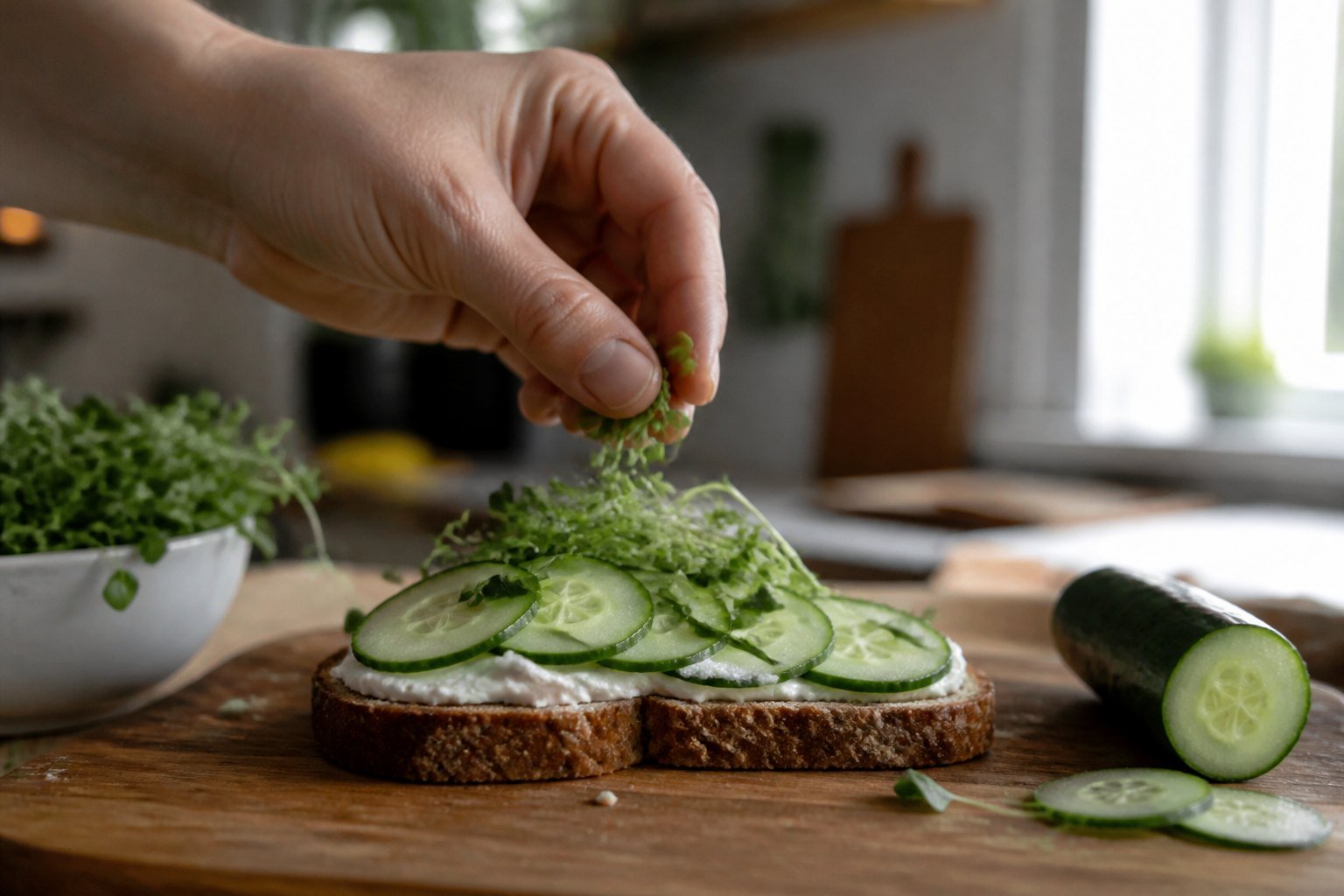
The simplest way is raw, on top of food you already eat. Penn State Extension says microgreens are normally consumed raw. It names salads, appetizers and sandwiches, adds meat and fish dishes, and even suggests them as a pizza topping (Di Gioia, 2024).
A second Penn State guide says the potential for using them in meals is endless. Its short list adds tacos and the fillings of ravioli, pierogis and empanadas (Sánchez & Berghage, 2025). So learning how to use microgreens is less about recipes and more about habit. Keep the pack near the front of the fridge and reach for it when a plate looks plain.
The same guide tells the story of a grower who sells microgreens as convenience food. He tells buyers to take a handful and put it on sandwiches, hamburgers or tacos (Sánchez & Berghage, 2025). That is a good model for a first week. No cooking and no new dishes, just a handful added at the table.
The table below shows easy spots to start at each meal.
| Meal | Easy ways to add microgreens |
|---|---|
| Breakfast | On eggs, avocado toast or a breakfast wrap |
| Lunch | In sandwiches, wraps, tacos and salads |
| Dinner | On pizza, beside meat or fish, over a curry bowl |
| Snacks | On crackers with cheese or mixed into a dip |
Which ways to eat microgreens work at breakfast and lunch?
Start with the meals you make most often. For many people that is eggs in the morning and a sandwich at noon.
Breakfast is an easy place to begin. A pinch of mild greens on scrambled eggs, an omelet or avocado toast adds color and crunch. Pea shoots and sunflower are good picks here, since they lack the bite of radish or mustard. You can tuck a few into a breakfast burrito or wrap too. None of this needs a recipe.
Lunch is where Penn State’s examples fit best. Sandwiches and salads both appear on its list (Di Gioia, 2024). Tacos appear in the second guide (Sánchez & Berghage, 2025). Layer a handful of greens under the top slice of bread, or swap them in where you would use lettuce. In a wrap, add them just before you roll it.
These are the most common ways to eat microgreens for a reason. The greens stay raw and crisp, and you can use as much or as little as you like. If you pack lunch the night before, keep the greens in a separate container. Add them right before you eat.
How can you use microgreens at dinner and snack time?
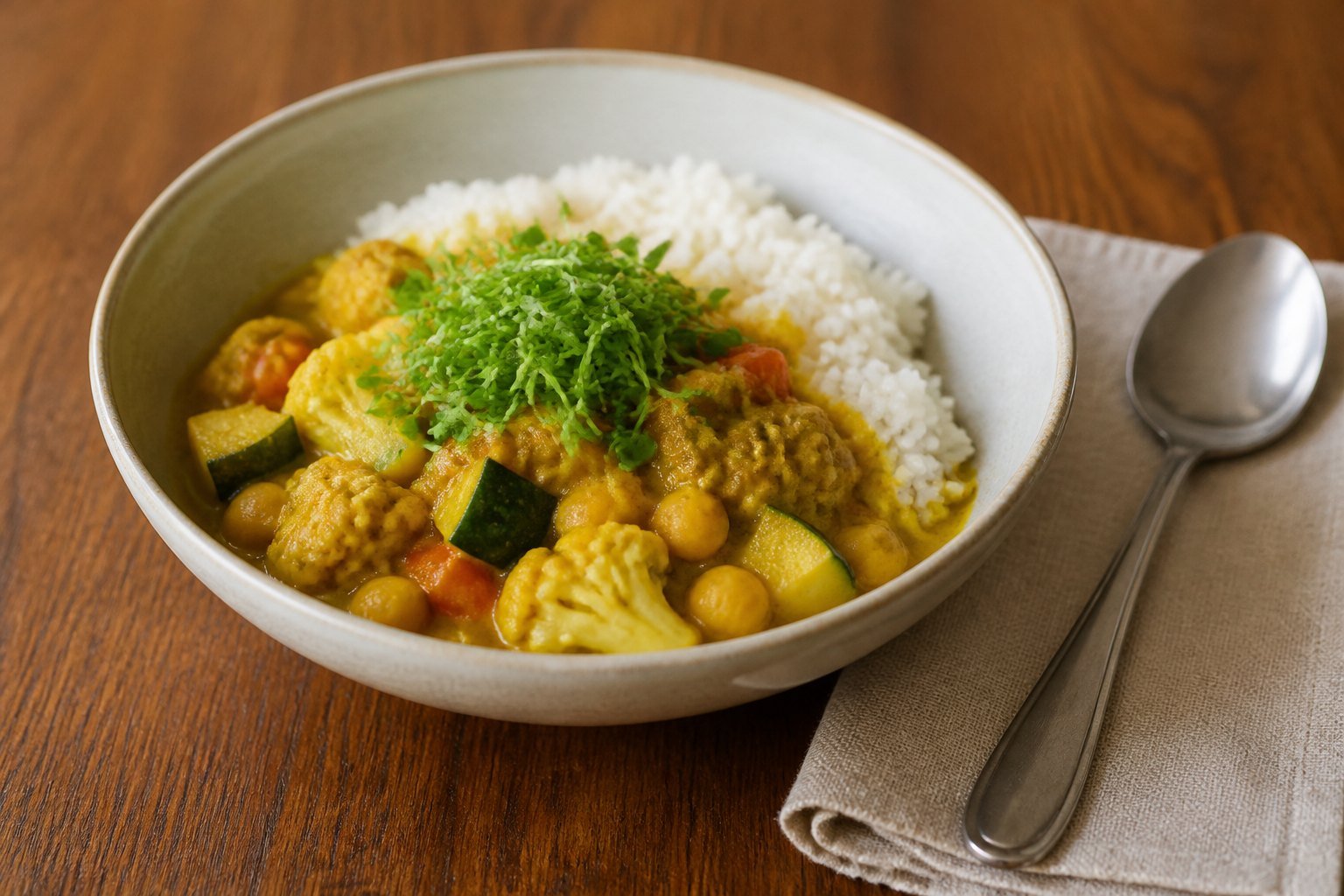
At dinner, use them as a fresh topping on the cooked food. Penn State suggests serving microgreens with meat or fish and on pizza (Di Gioia, 2024). Put them on the pizza after it comes out of the oven, not before.
Dinner is where other cuisines come in. A Penn State marketing guide notes that social media now inspires home cooks to use microgreens beyond basic salad toppings and garnishes. Its examples include fenugreek microgreens in Indian curries and rock chive microgreens to add a garlic flavor (Kelley, 2025). Spoon a curry into a bowl, then scatter the greens on top. A stew, chili or noodle bowl takes them the same way.
Snacks are the overlooked meal. A few greens on crackers with cheese, hummus or cottage cheese make a quick bite. Penn State lists appetizers among the classic uses, so a small plate for guests counts too (Di Gioia, 2024).
If you want more than a topping, see our microgreens recipes for full dishes. Knowing how to use microgreens at every meal makes a pack easier to finish.
How much should you use, and when do you add them?
A small handful per plate is a good start, added at the very end. There is no official serving size for microgreens, so let taste guide you. Mild kinds can go on by the handful. Spicy kinds work better as a pinch.
For a rough sense of scale, USDA MyPlate counts 2 cups of raw leafy greens as 1 cup of vegetables (U.S. Department of Agriculture, n.d.). Microgreens are not on that list, and a topping is far less than 2 cups. Think of them as one vegetable among many. Penn State says a mix of microgreen species can add a variety of colors and nutrients to a weekly healthy diet, in line with the Dietary Guidelines for Americans (Di Gioia, 2024).
Timing matters as much as amount. Microgreens are normally eaten raw (Di Gioia, 2024), and New Mexico State University calls them very delicate (New Mexico State University, n.d.). So add them after the pan comes off the heat, right before the plate goes to the table. This is the core of how to use microgreens well. If you want to try them cooked, our cooking guide covers that.
Which microgreens go with which foods?
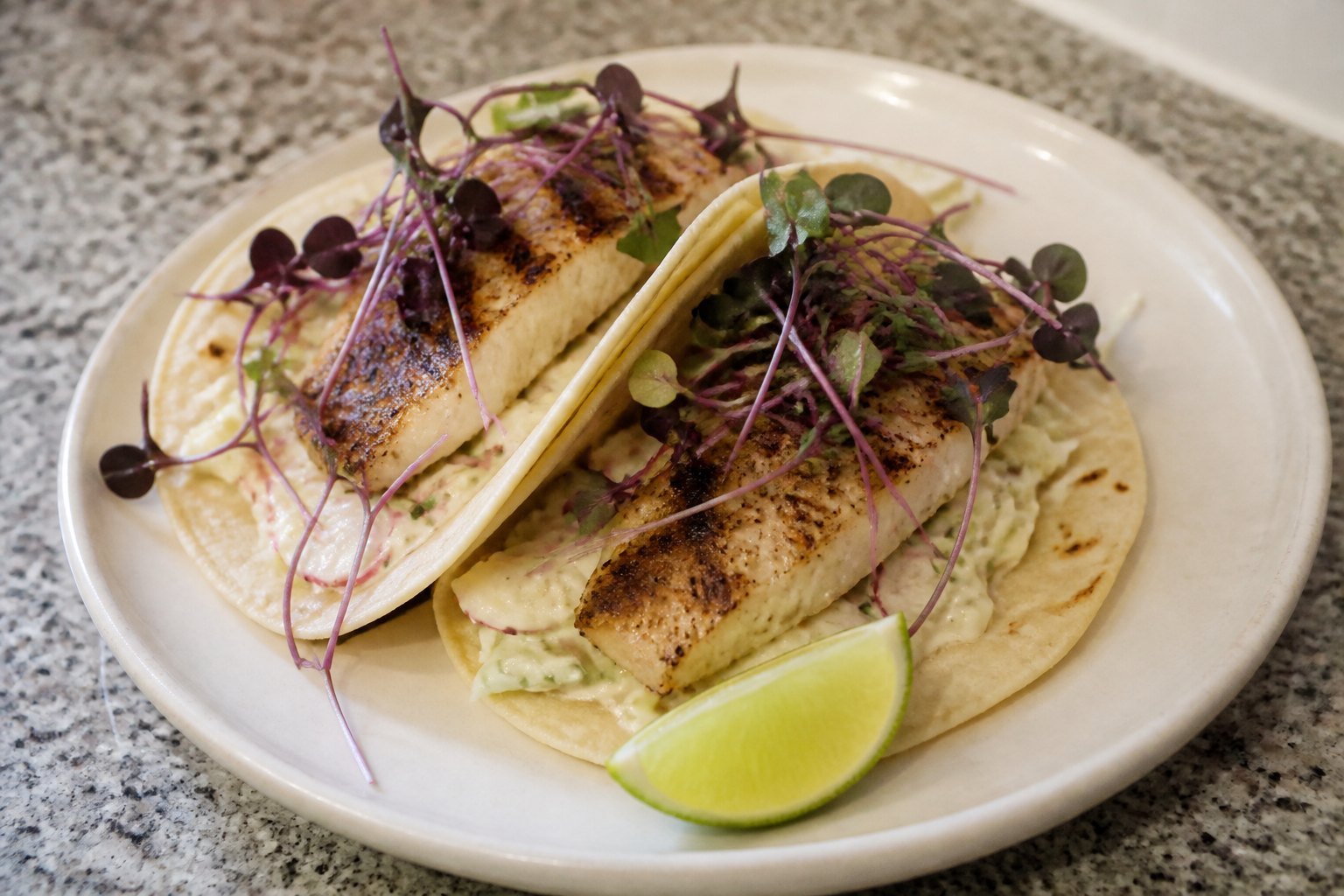
Match a strong green with a rich food and a mild green with a light one. That simple rule covers most plates.
Flavor follows the plant family. Penn State links the sharp taste of cabbage-family microgreens to natural compounds called glucosinolates (Di Gioia, 2024). Radish, mustard and arugula bring heat, so they suit eggs, cheese, tacos and fatty meats. Kinds outside that family, such as pea shoots and sunflower, lack that bite. They suit salads and sandwiches.
Herbs and seasoning greens act like the grown plant. The Penn State marketing guide gives rock chive microgreens for a garlic note and fenugreek for curries. Both act as seasoning, not just decoration (Kelley, 2025). Basil microgreens fit tomato dishes, and cilantro fits tacos and rice.
Mixes help when you are not sure. Penn State notes growers mix species for specific color or taste combinations (Di Gioia, 2024). A mixed pack is an easy way to learn how to use microgreens of different kinds at once. Our flavor guide ranks the common kinds from mild to hot. You can buy single kinds from local growers in the Microgreens 411 directory.
How do you use up a pack before it spoils?
Plan two or three meals for each pack in the first few days. New Mexico State University advises eating microgreens no later than 3 to 5 days after harvest (New Mexico State University, n.d.). That is a short window, so a plan helps.
Keep the pack cold the whole time. NMSU says cut microgreens go bad very quickly at room temperature and may not last more than a day or two outside a fridge (New Mexico State University, n.d.). The FDA advises keeping produce in a fridge at 4°C (40°F) or below (U.S. Food and Drug Administration, 2024). So take out only what you need, then put the pack straight back.
Wash only the portion you are about to eat. NMSU says washing too early damages the greens and adds moisture that shortens shelf life (New Mexico State University, n.d.). Penn State gives the same advice to wash them right before use (Di Gioia, 2026).
Save hot dishes for the end of the week. A pack that has softened a little still works scattered over soup. Our storage guide covers the fridge steps in detail.
Wrap-up: how to use microgreens every day
Microgreens work best as a raw, last-minute topping on food you already make. Eggs, sandwiches, tacos, pizza, curries and snacks all take a handful. Use a pinch of the spicy kinds and more of the mild ones. Match strong greens to rich food and gentle greens to light food.
Plan a few meals for each pack and keep it cold. Wash only what you are about to eat.
Fresher greens give you more days to use them. Search your town in the Microgreens 411 directory to find growers near you. Coverage varies by region, so some areas have few listings so far.
Microgreens 411
Find a microgreens grower near you
Greens that travel less start fresher in your fridge. Find my local grower →
Frequently asked questions
Do most people like the taste of microgreens?
Mostly, yes. In a Colorado State University panel, 99 consumers tasted arugula, broccoli, beet, red cabbage, amaranth and pea microgreens. All six scored as acceptable on average. People who are wary of new foods tended to rate them lower (Michell et al., 2020).
Which cabbage-family microgreen did tasters like best?
In a 2024 study of 14 Brassica microgreen species, cauliflower microgreens were the most accepted by the tasting panel. The same study found radish microgreens had the largest leaf area of the group (Bafumo et al., 2024). Your own taste may differ.
Do you need to wash microgreens labeled ready to eat?
No. The FDA says produce that is pre-washed and ready to eat will say so on the package, and you can use it without further washing (U.S. Food and Drug Administration, 2024). If the label does not say that, rinse the greens under running water first.
When should you cut a live tray of microgreens?
Cut just before the meal. Penn State says to harvest with a clean, sharp knife or scissors right before using them in any preparation (Di Gioia, 2026). NMSU adds that cut greens are wounded plants, which gives spoilage microbes a way in (New Mexico State University, n.d.).
How many dark green vegetables do adults need each week?
MyPlate sets weekly dark-green targets of 1½ cups for most women and 2 cups for most men. It says you don’t need every subgroup each day, as long as you meet the weekly amount (U.S. Department of Agriculture, n.d.). Microgreens are not named on its list.
Where do home cooks find new microgreen ideas?
Social media is a big source. A Penn State marketing guide names Pinterest and Instagram as key places where home cooks see microgreens used beyond salad toppings (Kelley, 2025). The same guide urges growers to share recipes and tasting tips with buyers.
References
Bafumo, R. F., Alloggia, F. P., Ramirez, D. A., Maza, M. A., Fontana, A., Moreno, D. A., & Camargo, A. B. (2024). Optimal Brassicaceae family microgreens from a phytochemical and sensory perspective. Food Research International, 193, 114812. https://doi.org/10.1016/j.foodres.2024.114812
Di Gioia, F. (2024, March 28). The ABCs of microgreens. Penn State Extension. https://extension.psu.edu/the-abcs-of-microgreens
Di Gioia, F. (2026, September 20). A step-by-step guide for growing microgreens at home. Penn State Extension. https://extension.psu.edu/a-step-by-step-guide-for-growing-microgreens-at-home
Kelley, K. (2025, June 4). Marketing microgreens. Penn State Extension. https://extension.psu.edu/marketing-microgreens
Michell, K. A., Isweiri, H., Newman, S. E., Bunning, M., Bellows, L. L., Dinges, M. M., Grabos, L. E., Rao, S., Foster, M. T., Heuberger, A. L., Prenni, J. E., Thompson, H. J., Uchanski, M. E., Weir, T. L., & Johnson, S. A. (2020). Microgreens: Consumer sensory perception and acceptance of an emerging functional food crop. Journal of Food Science, 85(4), 926–935. https://doi.org/10.1111/1750-3841.15075
New Mexico State University. (n.d.). Eating microgreens. All About Microgreens. https://all-about-microgreens-d.nmsu.edu/consumers.html
Sánchez, E., & Berghage, R. (2025, December 16). Growing microgreens. Penn State Extension. https://extension.psu.edu/growing-microgreens
U.S. Department of Agriculture. (n.d.). Vegetables. MyPlate. https://www.myplate.gov/eat-healthy/vegetables
U.S. Food and Drug Administration. (2024, March 5). Selecting and serving produce safely. https://www.fda.gov/food/buy-store-serve-safe-food/selecting-and-serving-produce-safely