

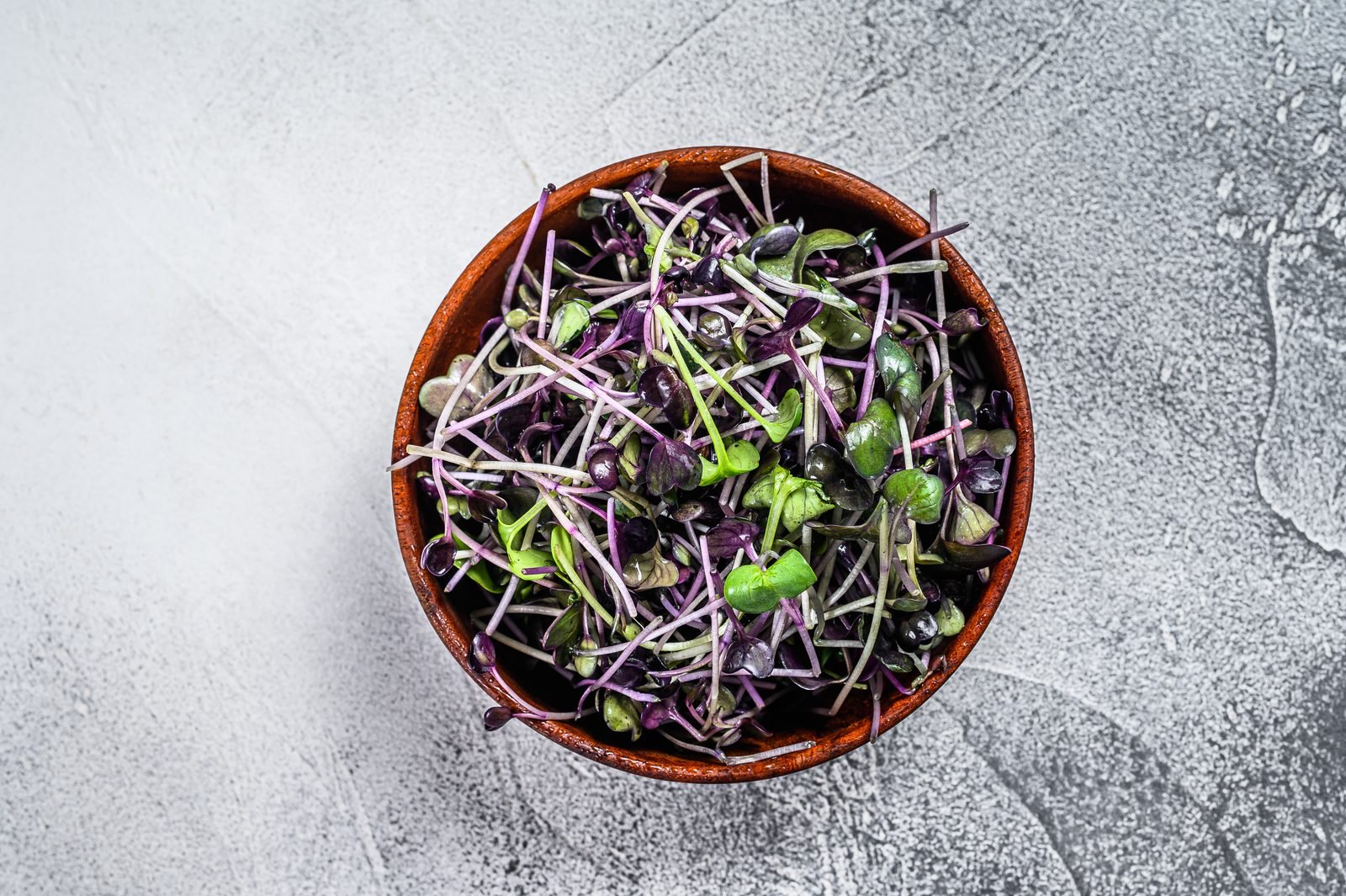
Small greens get big claims.
Search for microgreens online and you will see words like “superfood” next to them. Some of that rests on real lab work. Some of it stretches the studies past what they tested. This guide walks through the research on microgreens nutrition one study at a time. For each one, you will see which crops were tested and what was measured. You will see whether the work was done in a lab, in mice or in people. Then you can judge the claims on the pack for yourself.
Key Takeaway
Lab tests found that many microgreens hold more vitamins and carotenoids per gram than mature leaves, with big differences from crop to crop (Xiao et al., 2012). A mouse study and two small human studies followed. None has shown a health benefit in people yet, and most people eat microgreens in small amounts.
Below: what the lab tests measured, which crops led, how minerals compare, what the mouse study found, what human studies show and how much you really eat.
Microgreens 411
Find a microgreens grower near you
Greens that travel less start fresher in your fridge. Find my local grower →
Table of Contents
- What does research say about microgreens nutrition?
- Which microgreens had the most vitamins?
- Do microgreens have more minerals than grown vegetables?
- What did the red cabbage mouse study find?
- Has any study tested microgreens in people?
- How much microgreens do people actually eat?
- Wrap-up: microgreens nutrition in plain terms
- Frequently asked questions
- References
What does research say about microgreens nutrition?
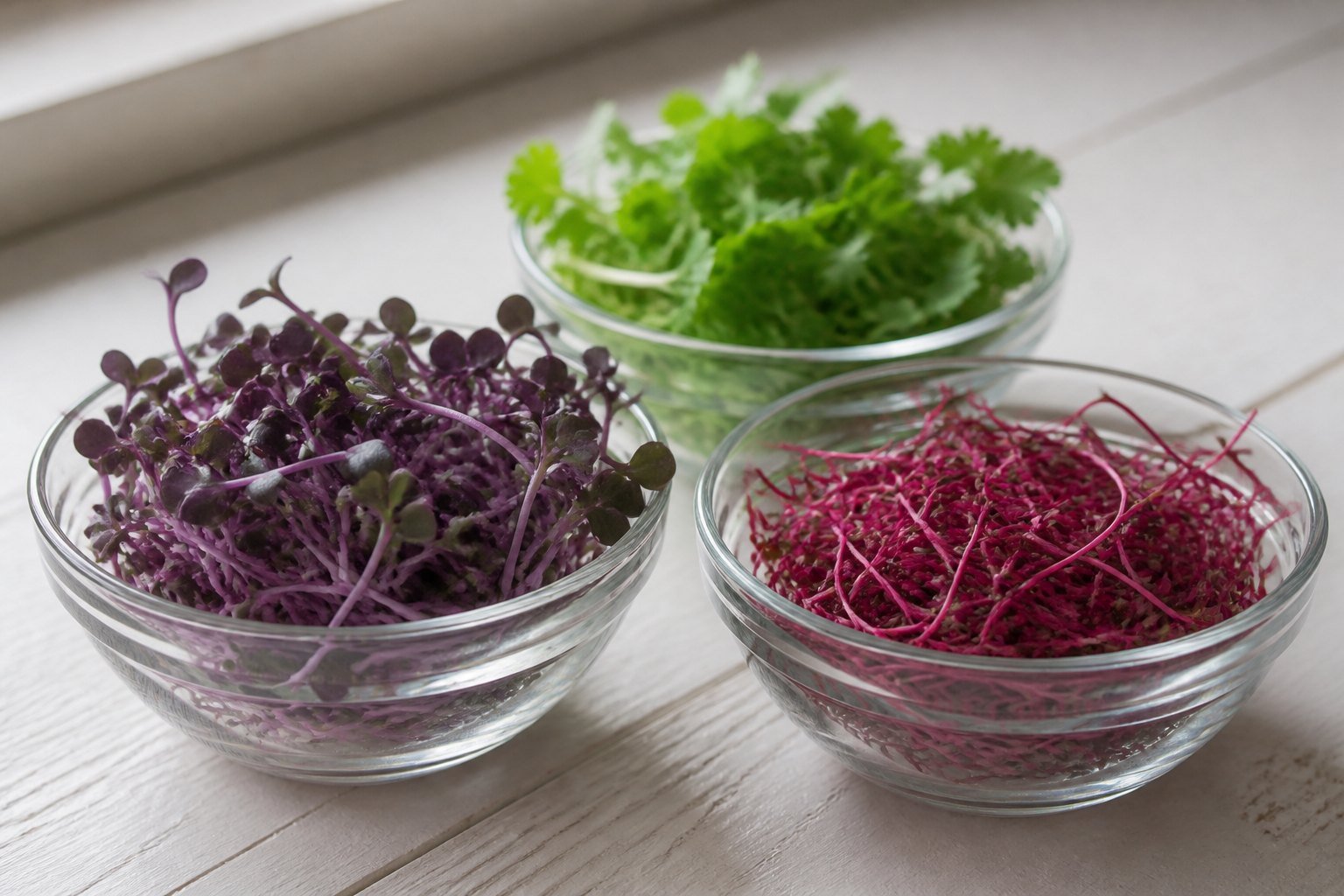
Lab tests show that many microgreens are dense in vitamins and carotenoids, but the amounts vary a lot by crop. The best-known study came from researchers at the University of Maryland. They measured vitamin C, carotenoids, vitamin K and vitamin E in 25 microgreens sold commercially (Xiao et al., 2012).
Vitamin C alone ranged from 20.4 to 147.0 mg per 100 grams, depending on the crop. The team compared the results with USDA database values for mature leaves. The microgreen seed leaves had higher nutrient densities (Xiao et al., 2012).
That is a useful finding, so read it closely. It measured how much of each nutrient sat in a given weight of greens. It did not test what happens when people eat them. Carotenoids, for the record, are the yellow and orange plant pigments, and some of them the body turns into vitamin A.
If you are new to these greens, our microgreens basics guide explains what they are and how they grow. The table sums up the kinds of studies covered here.
| Study | What it tested |
|---|---|
| Xiao et al., 2012 | Vitamins and carotenoids in 25 microgreens, in the lab |
| Pinto et al., 2015 | Minerals in lettuce microgreens and mature lettuce, in the lab |
| Huang et al., 2016 | Red cabbage microgreens fed to 60 mice for 8 weeks |
| Lee et al., 2025 | Beet and red cabbage microgreens eaten daily by healthy adults |
Which microgreens had the most vitamins?
No single crop won every test, and that is the main lesson. In the 2012 study, red cabbage had the most vitamin C. Cilantro led for carotenoids, garnet amaranth for vitamin K and green daikon radish for vitamin E (Xiao et al., 2012).
A later study by the same group tested six other microgreens. China rose radish had the most vitamin C and vitamin E. Opal basil led for vitamin K and total phenolics, a large group of plant compounds. Red amaranth had the most carotenoids (Xiao et al., 2015).
The researchers rated all six “good” to “excellent” for nutritional quality and for how much tasters liked them. So the crop name matters more than the word “microgreens” on the label. A red cabbage pack and a basil pack are not the same food.
For microgreens nutrition, then, a mix of crops gives you more than one vitamin leader. These rankings come from lab samples, so treat them as a guide, not a promise for every pack you buy.
Do microgreens have more minerals than grown vegetables?
For some minerals, yes, but not for all of them. A Portuguese study compared lettuce microgreens with mature lettuce. The microgreens held more calcium, magnesium, iron, manganese, zinc, selenium and molybdenum. The mature heads held more nitrogen, phosphorus and potassium (Pinto et al., 2015).
An Italian study of butterhead lettuce found the same kind of split. Calcium and magnesium were higher in the microgreens, and phosphorus and potassium were higher in mature leaves. The mature leaves had more lutein and beta-carotene too (El-Nakhel et al., 2020). So “younger is richer” does not hold for every nutrient.
Broccoli shows gains for several minerals. In one test, broccoli microgreens had more magnesium, manganese, copper and zinc than published values for the mature vegetable (Weber, 2017).
A USDA-funded study measured minerals in 30 cabbage-family microgreens. Potassium was the most plentiful, at 176 to 387 mg per 100 grams. Iron was the top trace mineral (Xiao et al., 2016). That study did not compare the greens with mature plants, so it shows the mineral side of microgreens nutrition without a side-by-side test.
What did the red cabbage mouse study find?
Mice that ate red cabbage microgreens with a high-fat diet had lower “bad” LDL cholesterol than mice given mature red cabbage. Scientists from the USDA and the University of Maryland ran the study in 60 young male mice over 8 weeks (Huang et al., 2016).
Each mouse ate one of six diets: low-fat or high-fat, with or without mature or microgreen red cabbage. The cabbage was freeze-dried and fed in amounts equal to about 200 grams, or 1 cup, of vegetables per person per day. The microgreens had more polyphenols and glucosinolates than the mature cabbage (Suszkiw, 2017).
Mice on high-fat diets with either form of cabbage had lower blood cholesterol and triglycerides than high-fat mice with no cabbage. Mice on low-fat diets were the healthiest group of all (Suszkiw, 2017).
ARS chemist Thomas Wang set a clear limit on the results. The team did not show which compounds caused the effects. How the microgreens might affect human health “remains to be determined,” he said (Suszkiw, 2017). So if you read about microgreens nutrition and cholesterol, check whether the source means mice.
Has any study tested microgreens in people?
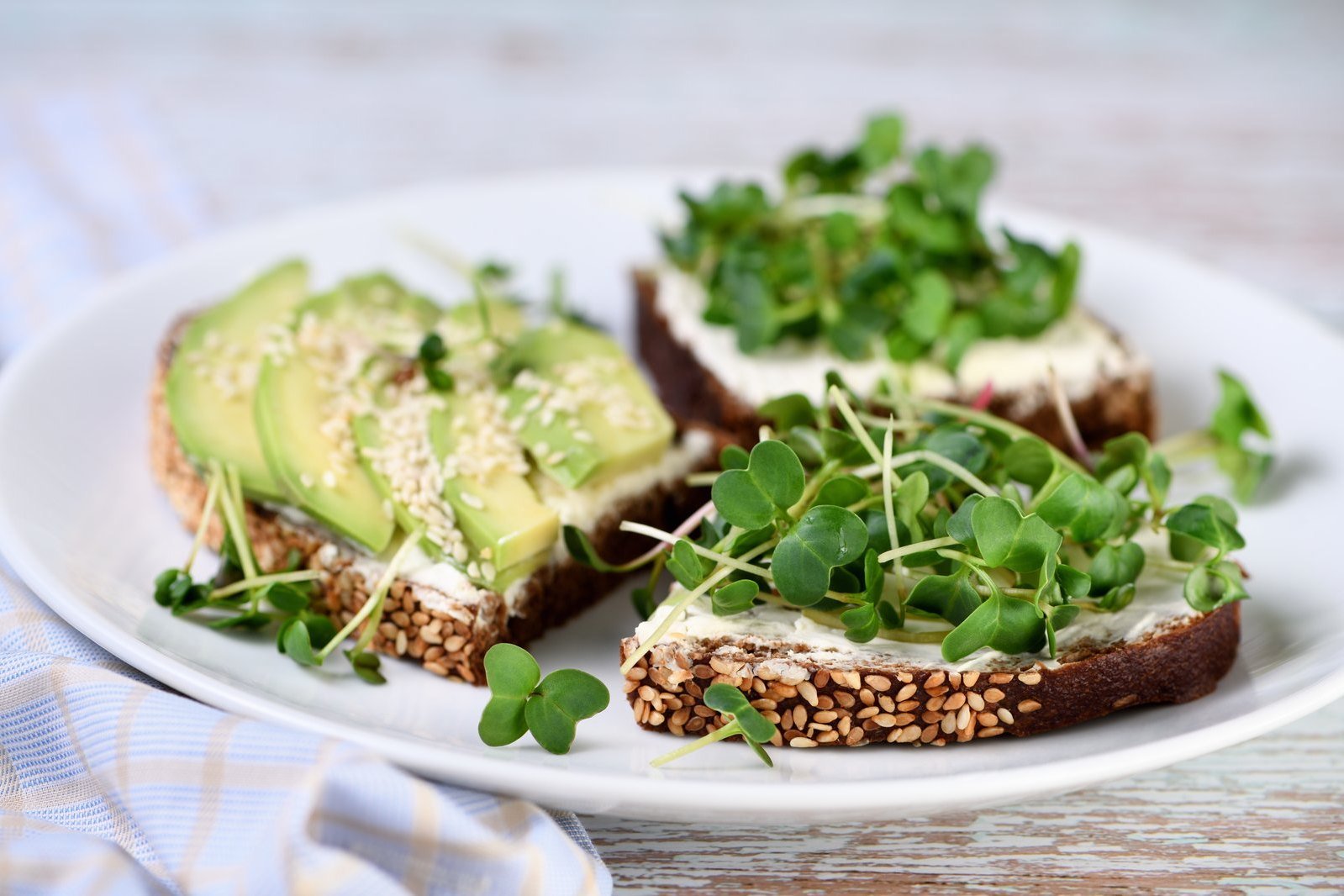
Yes, two small ones, and neither was built to prove a health benefit. In the first, 11 healthy adults ate a single 16-gram serving of fresh broccoli microgreens with breakfast. Researchers then tracked sulforaphane, a plant compound from broccoli, in urine and stool (Bouranis et al., 2023).
The urine results looked like those from earlier broccoli sprout studies. One serving did not change the mix of gut bacteria. The authors called their work a starting point for future studies of health benefits (Bouranis et al., 2023). Our microgreens vs sprouts guide covers how the two foods differ.
The second was a randomized crossover trial at Colorado State University. Healthy middle-aged and older adults ate 2 cups a day of ‘bull’s blood’ beet or red cabbage microgreens, each for two weeks. Of 26 who started, 24 finished, and they ate 95.6% of their doses (Lee et al., 2025).
The trial found no changes in heart and blood vessel readings, bowel movements or gut bacteria diversity. Its main goal was to see whether daily eating was doable and easy on the gut, and it was. The authors said more studies are needed to judge microgreens benefits for health (Lee et al., 2025).
How much microgreens do people actually eat?
Usually far less than the amounts used in studies. There is no set serving size for microgreens. The Colorado State team said so and borrowed the 2-cup serving used for leafy greens (Lee et al., 2025). A pinch on a sandwich is a small part of that.
The lab numbers work the same way. The 2012 vitamin values were given per 100 grams of greens (Xiao et al., 2012). The broccoli study used a 16-gram serving, about half an ounce (Bouranis et al., 2023). Portion size changes the whole picture of microgreens nutrition, so ask how much you would really eat before you compare.
That makes microgreens a flavorful extra next to your other vegetables, not a stand-in for them. If you wonder whether heat changes them, our cooking guide covers what is known. For the freshest packs, look for a local grower in the Microgreens 411 directory.
This article is general information, not medical advice. If you have a health condition, ask your doctor or a dietitian how microgreens fit your diet.
Wrap-up: microgreens nutrition in plain terms
Lab studies show that many microgreens hold more vitamins and some minerals per gram than mature leaves. The leader changes from crop to crop, and mature plants still win on some nutrients. A mouse study found lower “bad” cholesterol with red cabbage microgreens. Small human studies show people can eat them daily, but none has shown a health benefit yet.
So enjoy them for flavor and color, and count them as one vegetable among many. Want fresh ones from a nearby farm? Search your town in the Microgreens 411 directory to find growers near you. Coverage varies by region, so some areas have few listings so far.
Microgreens 411
Find a microgreens grower near you
Greens that travel less start fresher in your fridge. Find my local grower →
Frequently asked questions
Are microgreens a superfood?
“Superfood” is a popular nickname for them. UConn Extension uses the word in the title of its own microgreens guide (UConn Extension, 2025). The studies, though, measured set nutrients in set crops. The crop name on the pack tells you more than the nickname does.
Are microgreens high in nitrate?
Not in the one lettuce study that checked. Lettuce microgreens grown in Portuguese greenhouses had lower nitrate than the mature lettuce in that study (Pinto et al., 2015). It only tested lettuce, so other microgreen crops could give different results.
Do microgreens contain heavy metals?
In one USDA-funded test, no cadmium or lead was found in 30 cabbage-family varieties (Xiao et al., 2016). All of those samples came from one California farm and grew in peat moss. That is good news for those samples, not a guarantee for every grower.
Does the way microgreens are grown change their nutrients?
It can. Compost-grown broccoli microgreens beat the mature vegetable on more minerals than hydroponic ones did (Weber, 2017). In a Lithuanian lab, the mix of blue and red LED light changed mineral levels in mustard and kale microgreens (Brazaitytė et al., 2021).
Does the color of a microgreen make a difference?
Sometimes. Red butterhead lettuce held more polyphenols than green butterhead, most of all at the microgreen stage (El-Nakhel et al., 2020). Red-leaf types stood out in a larger study of eleven lettuces too (Martínez-Ispizua et al., 2022). Color is a clue, not a guarantee.
Are baby greens as rich as microgreens?
For lettuce, both young stages beat adult heads on some measures. Vitamin C and phenolic levels were 42% and 79% higher in microgreens and baby leaves than in adult lettuce (Martínez-Ispizua et al., 2022). The abstract reports the two young stages together, so it names no winner between them.
References
Bouranis, J. A., Wong, C. P., Beaver, L. M., Uesugi, S. L., Papenhausen, E. M., Choi, J., Davis, E. W., Da Silva, A. N., Kalengamaliro, N., Chaudhary, R., Kharofa, J., Takiar, V., Herzog, T. J., Barrett, W., & Ho, E. (2023). Sulforaphane bioavailability in healthy subjects fed a single serving of fresh broccoli microgreens. Foods, 12(20), 3784. https://doi.org/10.3390/foods12203784
Brazaitytė, A., Miliauskienė, J., Vaštakaitė-Kairienė, V., Sutulienė, R., Laužikė, K., Duchovskis, P., & Małek, S. (2021). Effect of different ratios of blue and red LED light on Brassicaceae microgreens under a controlled environment. Plants, 10(4), 801. https://doi.org/10.3390/plants10040801
El-Nakhel, C., Pannico, A., Graziani, G., Kyriacou, M. C., Giordano, M., Ritieni, A., De Pascale, S., & Rouphael, Y. (2020). Variation in macronutrient content, phytochemical constitution and antioxidant capacity of green and red butterhead lettuce dictated by different developmental stages of harvest maturity. Antioxidants, 9(4), 300. https://doi.org/10.3390/antiox9040300
Huang, H., Jiang, X., Xiao, Z., Yu, L., Pham, Q., Sun, J., Chen, P., Yokoyama, W., Yu, L. L., Luo, Y. S., & Wang, T. T. Y. (2016). Red cabbage microgreens lower circulating low-density lipoprotein (LDL), liver cholesterol, and inflammatory cytokines in mice fed a high-fat diet. Journal of Agricultural and Food Chemistry, 64(48), 9161–9171. https://doi.org/10.1021/acs.jafc.6b03805
Lee, S. Y., Michell, K. A., Butler, M. M., Smith, B. T., Woolf, E. K., Holmes, S. C., Grabos, L. E., Vazquez, A. R., Isweiri, H., Bunning, M., Uchanski, M. E., Rao, S., Newman, S. E., Weir, T. L., & Johnson, S. A. (2025). Feasibility and tolerability of daily microgreen consumption in healthy middle-aged/older adults: A randomized, open-label, controlled crossover trial. Nutrients, 17(3), 467. https://doi.org/10.3390/nu17030467
Martínez-Ispizua, E., Calatayud, Á., Marsal, J. I., Cannata, C., Basile, F., Abdelkhalik, A., Soler, S., Valcárcel, J. V., & Martínez-Cuenca, M.-R. (2022). The nutritional quality potential of microgreens, baby leaves, and adult lettuce: An underexploited nutraceutical source. Foods, 11(3), 423. https://doi.org/10.3390/foods11030423
Pinto, E., Almeida, A. A., Aguiar, A. A., & Ferreira, I. M. P. L. V. O. (2015). Comparison between the mineral profile and nitrate content of microgreens and mature lettuces. Journal of Food Composition and Analysis, 37, 38–43. https://doi.org/10.1016/j.jfca.2014.06.018
Suszkiw, J. (2017, June). Microgreen study shows health benefits. AgResearch Magazine. U.S. Department of Agriculture, Agricultural Research Service. https://agresearchmag.ars.usda.gov/2017/jun/microgreen/
UConn Extension. (2025, April 28). The amazing power of microgreens: Easy to grow and a superfood. University of Connecticut. https://extension.uconn.edu/publication/microgreens/
Weber, C. F. (2017). Broccoli microgreens: A mineral-rich crop that can diversify food systems. Frontiers in Nutrition, 4, 7. https://doi.org/10.3389/fnut.2017.00007
Xiao, Z., Codling, E. E., Luo, Y., Nou, X., Lester, G. E., & Wang, Q. (2016). Microgreens of Brassicaceae: Mineral composition and content of 30 varieties. Journal of Food Composition and Analysis, 49, 87–93. https://doi.org/10.1016/j.jfca.2016.04.006
Xiao, Z., Lester, G. E., Luo, Y., & Wang, Q. (2012). Assessment of vitamin and carotenoid concentrations of emerging food products: Edible microgreens. Journal of Agricultural and Food Chemistry, 60(31), 7644–7651. https://doi.org/10.1021/jf300459b
Xiao, Z., Lester, G. E., Park, E., Saftner, R. A., Luo, Y., & Wang, Q. (2015). Evaluation and correlation of sensory attributes and chemical compositions of emerging fresh produce: Microgreens. Postharvest Biology and Technology, 110, 140–148. https://doi.org/10.1016/j.postharvbio.2015.07.021