
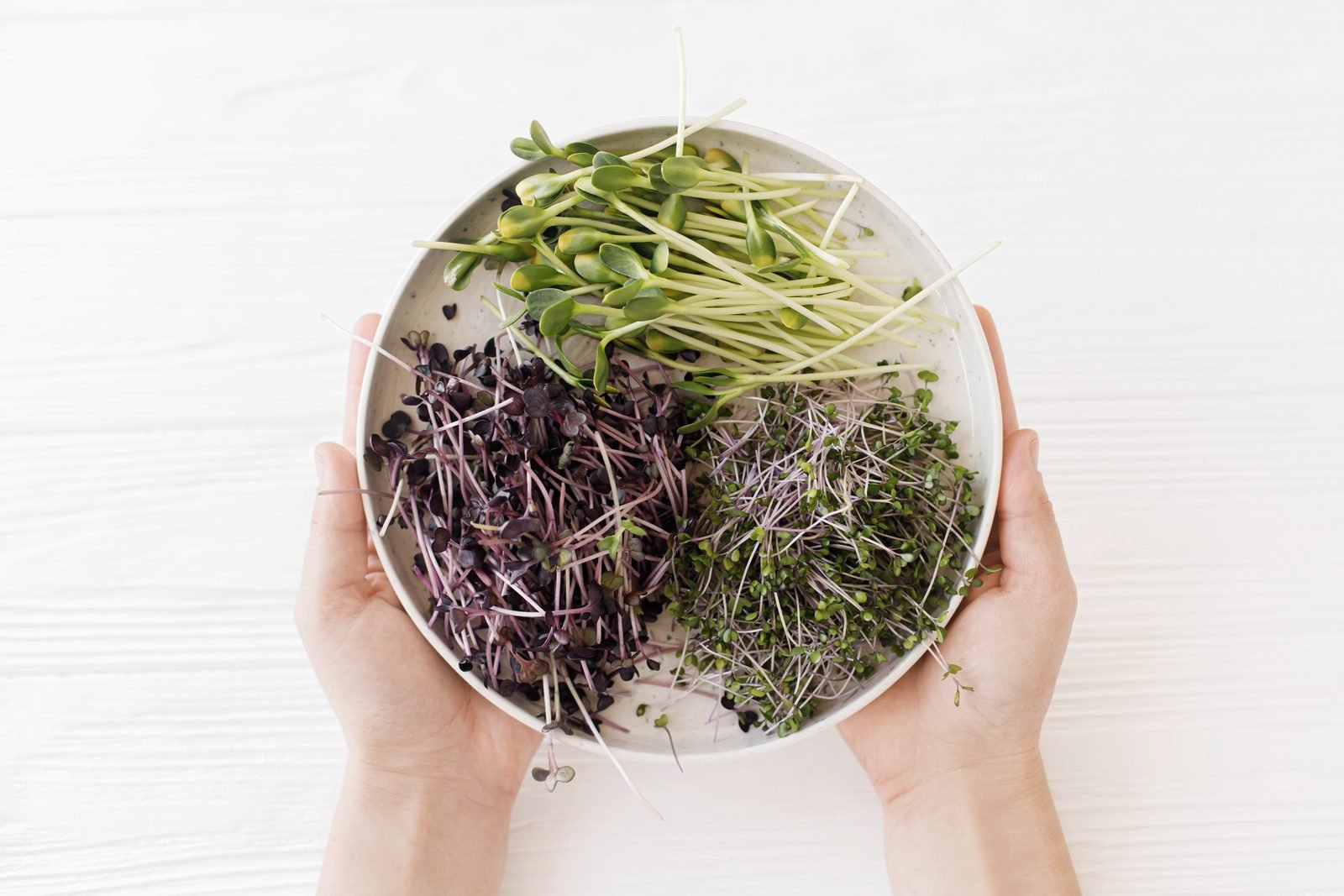
Not all microgreens taste the same.
Some are as mild as lettuce, and others bite like a radish or a spoon of mustard. A few taste like basil or cilantro, and some taste of beet and soil. That range is the fun part, but it can make buying a pack feel like a guess. This guide sorts microgreens flavor into simple groups, from mild to spicy. It draws on taste panels where real people rated each kind. Then it shows which groups fit which dishes, so your next pack suits the meal you have in mind.
Key Takeaway
Microgreens run from mild and sweet, like sunflower and pea, to hot, like radish, mustard and cress. Cabbage-family kinds get their bite from natural compounds called glucosinolates (Di Gioia, 2024). In taste panels, people liked kinds low in bitterness best. Start mild, then add heat.
Below: what sets the flavor, then the mild, herby, peppery and earthy kinds, and how to match them to a dish.
Microgreens 411
Find a microgreens grower near you
Greens that travel less start fresher in your fridge. Find my local grower →
Table of Contents
What shapes microgreens flavor?
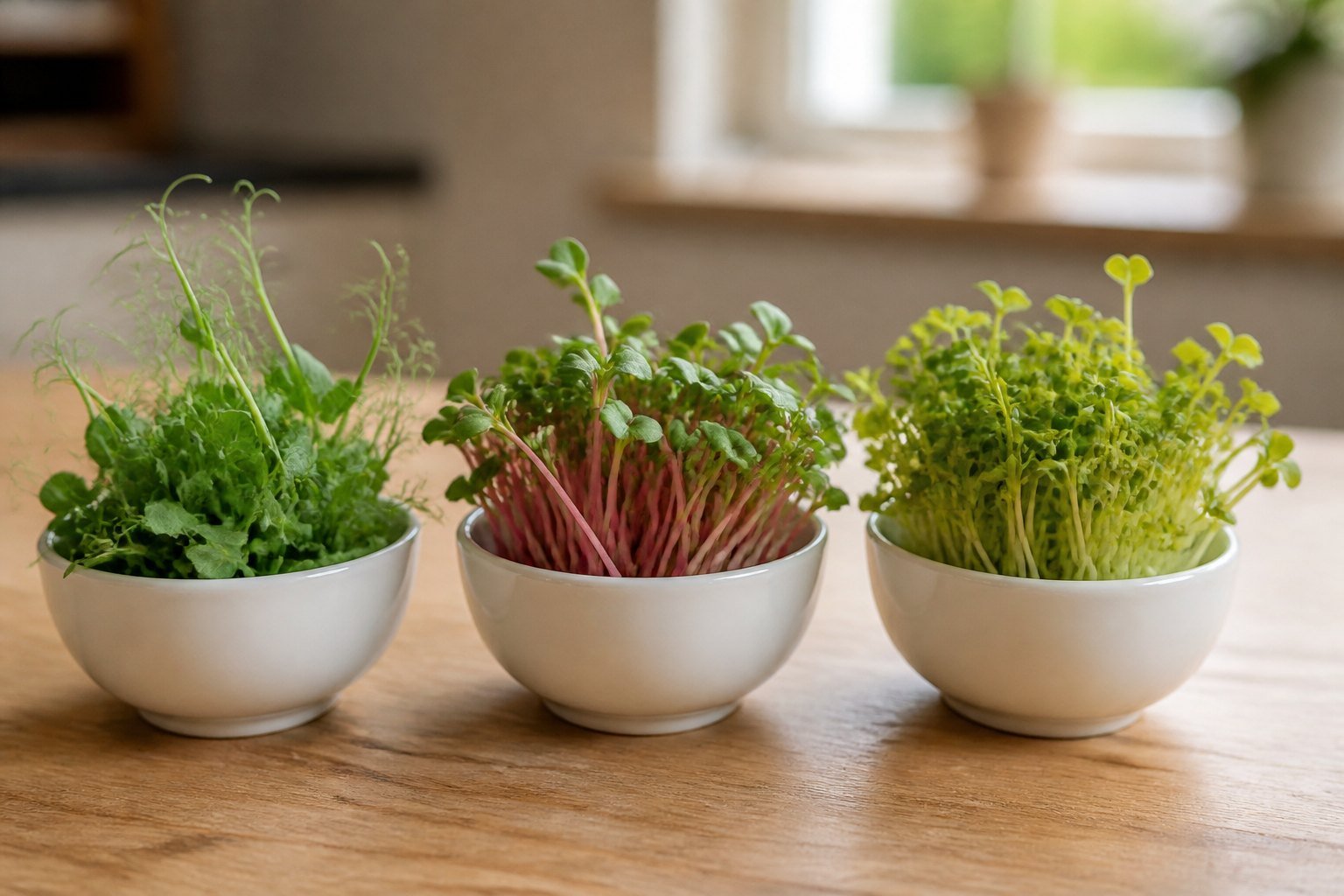
The plant family sets most of it. A radish microgreen tastes like radish, and a basil microgreen tastes like basil. In one taste study, USDA researchers picked six microgreens to stand for six different flavor groups. They were mustard, basil, beet, amaranth, peppercress and radish (Xiao et al., 2015).
Taste panels describe flavor with a short list of traits. An Italian study scored 12 kinds for sweetness, aroma, bitterness, sourness, astringency, heat and a grassy taste (Caracciolo et al., 2020). Astringency is the dry, puckery feel you get from strong tea.
Those traits drive what people like. In the same study, the lower the astringency, sourness and bitterness, the higher the overall score (Caracciolo et al., 2020). The USDA team found that flavor did the best job of predicting overall eating quality, with looks and texture mattering less (Xiao et al., 2015).
So the simplest way to shop is by flavor group. The table sorts common kinds into four groups, with a few places each one fits.
| Flavor group | Kinds to try and where they fit |
|---|---|
| Mild and sweet | Sunflower, pea, broccoli, Swiss chard. Salads, sandwiches, eggs |
| Herby | Basil, cilantro, dill. Dishes that already use the herb |
| Peppery and hot | Radish, arugula, mustard, cress. Burgers, sandwiches, red meat |
| Earthy | Beet, amaranth. Salads, wraps, color on the plate |
Which microgreens taste mild?
Sunflower, pea and broccoli are safe bets for a first pack. A guide in an Oregon State University Extension newsletter calls sunflower microgreens juicy and crunchy, with a mild, sweet and nutty flavor. It says speckled pea shoots taste sweet, like a fresh snap pea. Broccoli has a mild, earthy flavor (Smith, 2025).
Swiss chard is worth a look too. In the Italian taste test, it scored highest of 12 kinds for sweetness and lowest for bitterness. It tied with coriander for the top overall score (Caracciolo et al., 2020).
Other panels point the same way. The Italian authors cite an earlier study of 10 microgreens in which lettuce and carrot were the most liked. Radish, which tasted bitter and astringent, was the least liked (Senevirathne et al., 2019, as cited in Caracciolo et al., 2020).
Mild kinds make a good base, and this is the gentle end of the microgreens flavor range. The same newsletter suggests broccoli on salads, eggs, toast and sandwiches (Smith, 2025). Our recipe guide has dishes built around mild greens.
Which microgreens taste like herbs?
Basil and cilantro taste like the herbs they grow into, often with extra punch. In the Italian panel, coriander, the plant cilantro comes from, had the strongest aroma of all 12 kinds. It scored 13.0 out of 15 and still tied for the top overall score (Caracciolo et al., 2020).
Coriander scored 9.7 for heat in that test, so expect some bite. Green basil scored highest for a grassy taste, at 12.7. Purple basil was the gentlest of the 12 for heat, at 2.8 (Caracciolo et al., 2020).
The USDA study tested opal basil, a purple type. Panelists rated its looks as good, a step below the excellent scores the other five kinds earned (Xiao et al., 2015). So a purple herb may win on taste more than on looks.
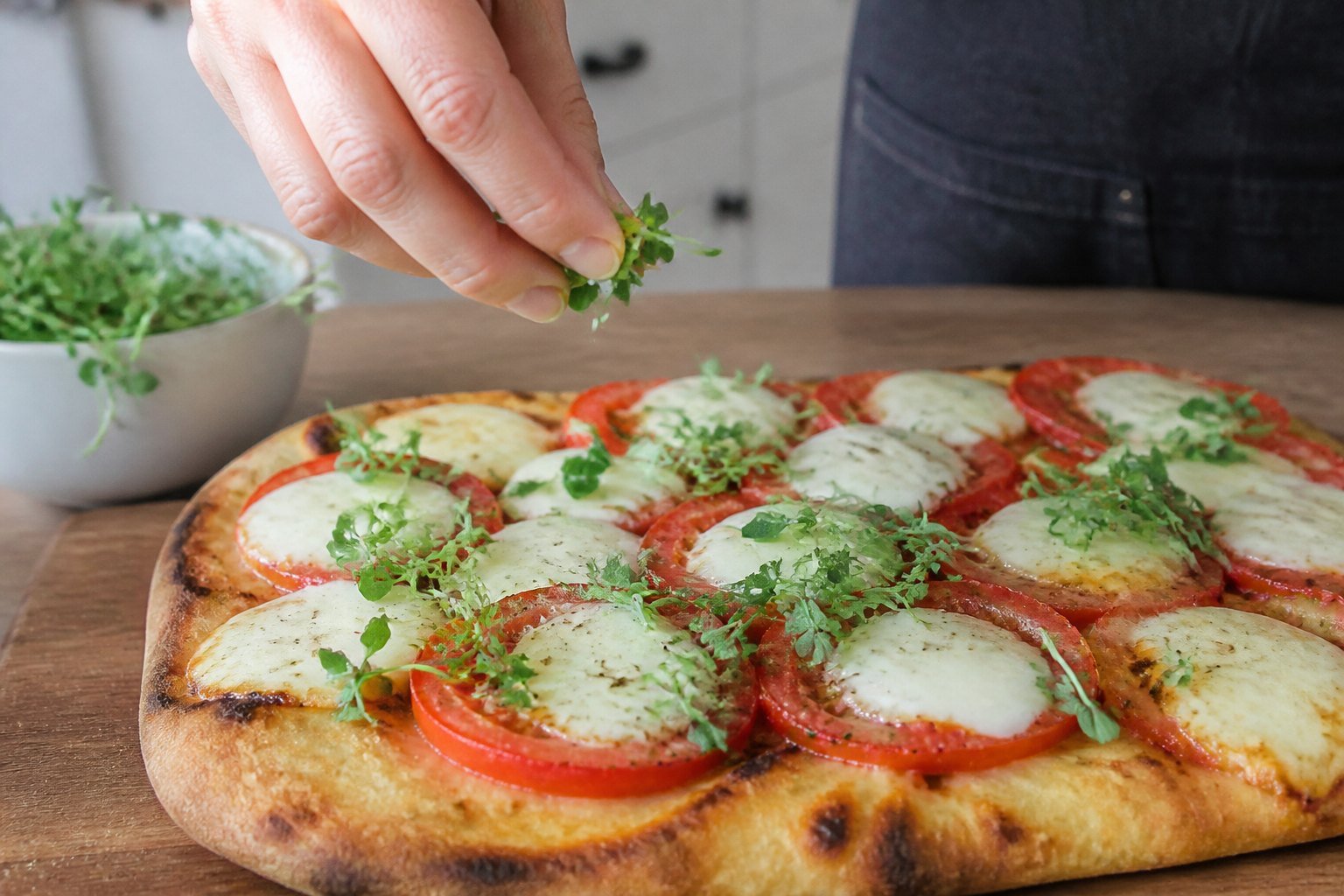
Herby microgreens flavor works best where you would use the herb itself. Try basil microgreens on tomato dishes or pizza, and cilantro microgreens on tacos or curry. Dill is grown this way too (Smith, 2025). A small pinch carries a lot of herb.
Which microgreens are peppery or spicy?
Radish, arugula, mustard and cress bring the heat. All four come from the cabbage family. Penn State Extension says these crops have the typical pungent taste of cole crops. That taste comes mainly from glucosinolates, which are natural compounds in the plants (Di Gioia, 2024).
The heat varies by kind. In the Italian panel, cress scored 12.6 out of 15 for heat, the highest of 12 kinds. Mibuna, another cabbage-family green, came next at 10.6, and those two were among the least liked of all (Caracciolo et al., 2020). In the USDA study, peppercress scored lowest of six for flavor and overall eating quality (Xiao et al., 2015).
That doesn’t make spicy kinds a bad buy. It means a little goes a long way at the hot end of the microgreens flavor scale. The Oregon State newsletter calls arugula spicy and peppery. It suggests using it as a garnish or mixing it with milder greens, and it suggests radish for a flare of spice on salads, sandwiches and burgers (Smith, 2025).
If you love horseradish, start here. If not, mix one spicy kind into a mild base and taste as you go.
Which microgreens taste earthy?
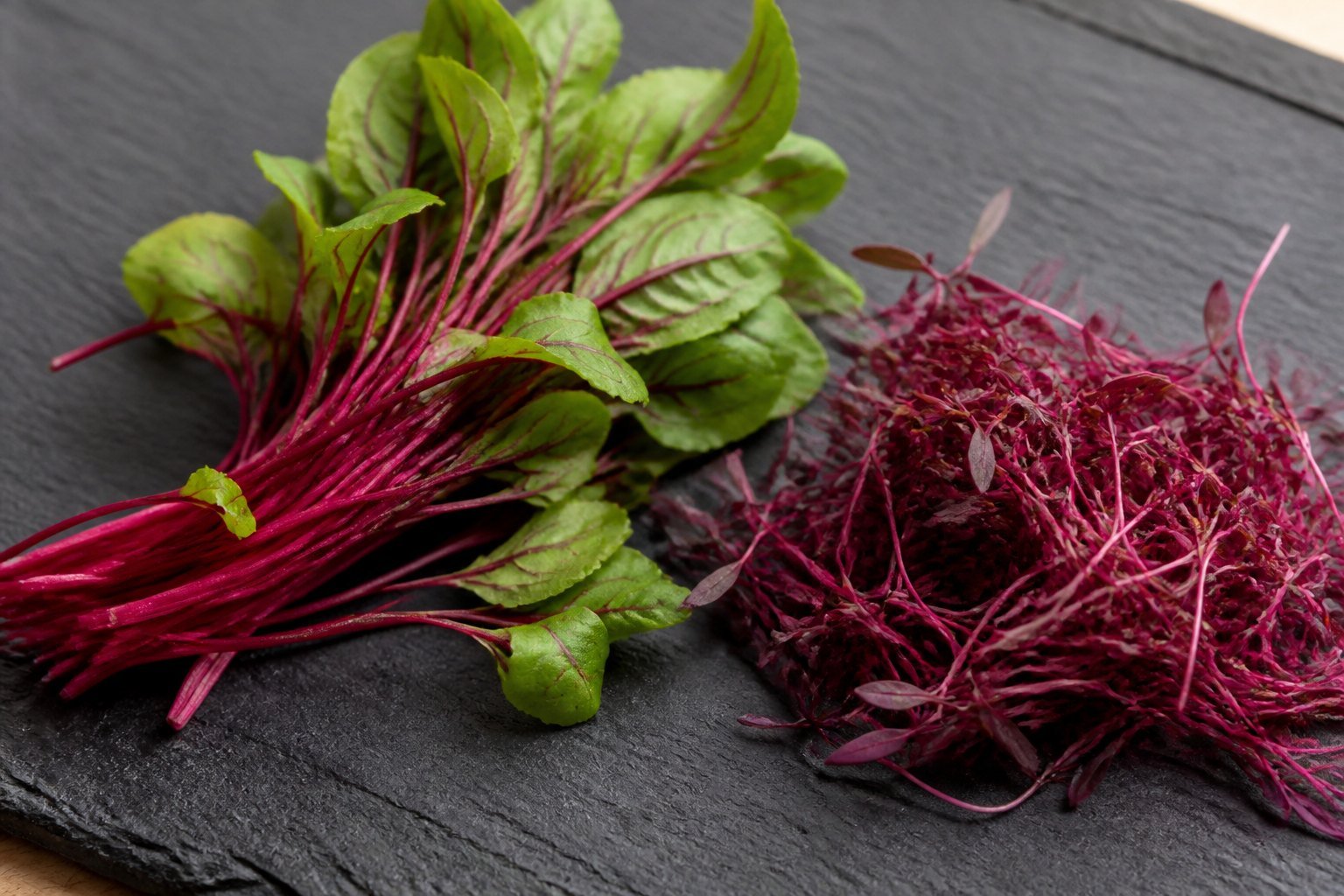
Beet and amaranth sit at the earthy end. The Oregon State newsletter describes beet microgreens as bold, sweet and earthy, with a bright red color (Smith, 2025).
Beet is a strong pick for new eaters. In the USDA study, bull’s blood beet scored highest of six kinds for flavor and overall eating quality (Xiao et al., 2015). The Italian team, looking back at that study, noted the beet was the lowest in sourness, astringency and bitterness (Caracciolo et al., 2020).
Amaranth is more mixed. A Colorado State University panel rated red garnet amaranth acceptable, along with the five other kinds it tested (Michell et al., 2020). In the Italian test, amaranth had the lowest overall score of 12 kinds, at 3.0 out of 15 (Caracciolo et al., 2020). Panels differ, and so do seeds and growers.
Both kinds add deep red color to a plate, and that look is part of their earthy microgreens flavor appeal. Use beet in salads, wraps and sandwiches (Smith, 2025). To find a specific kind, our guide to where to buy microgreens compares the places that sell them.
How do you match microgreens to a dish?
Start with the dish, then pick the group. Mild kinds suit almost anything. Spicy kinds suit rich or plain foods that need a lift, like burgers, eggs or red meat. Herb and earthy kinds bring a clear flavor of their own, plus color.
If you are cooking for picky eaters, start mild. A Colorado State panel of 99 consumers tasted six microgreens and rated all of them acceptable. Broccoli, pea and red cabbage earned the highest overall approval (Michell et al., 2020, as cited in Singh et al., 2024).
Mixes are a good middle ground for testing microgreens flavor at home. The Oregon State newsletter describes a blend of broccoli, kale, kohlrabi, arugula and cabbage as a balanced, flavorful staple (Smith, 2025). One pack gives you a little of each.
Add them at the end of cooking so they keep their crunch. The newsletter gives that advice for pea shoots in stir-fries, to keep their flavor and texture (Smith, 2025). Our everyday meals guide has more ideas. To taste kinds from a nearby farm, search the Microgreens 411 directory.
Wrap-up: microgreens flavor, from mild to spicy
Microgreens taste like the plants they come from, only younger. Sunflower, pea, broccoli and Swiss chard sit at the mild end. Radish, arugula, mustard and cress bring the heat. Basil and cilantro taste of the herb, and beet and amaranth taste earthy.
Taste panels point one way: people like kinds that are low in bitterness and sourness best. So start mild, add one spicy or herby kind, and see what your table enjoys.
Want to try a few kinds from a nearby farm? Search your town in the Microgreens 411 directory to find growers near you. Coverage varies by region, so some areas have few listings so far.
Microgreens 411
Find a microgreens grower near you
Greens that travel less start fresher in your fridge. Find my local grower →
Frequently asked questions
Does a microgreen’s flavor change as it grows?
Often, yes. The Oregon State newsletter says arugula’s peppery bite becomes less intense the larger it grows (Smith, 2025). A study of pak choi found bitterness and a green, leafy taste were weaker at early stages than in older plants (Talavera-Bianchi et al., 2010, as cited in Caracciolo et al., 2020).
Why does the same kind taste different from two growers?
Growing conditions play a part. A 2024 review notes that the strength, length and color of the light a crop gets can change its flavor, aroma and color (Kyriacou et al., 2016, as cited in Singh et al., 2024). Seed type, harvest stage and handling after harvest matter too (Caracciolo et al., 2020).
Do microgreens lose flavor in the fridge?
Their appeal fades with time. One study of sunflower microgreens found that people liked them less as storage went on and their sensory traits changed (Dalal et al., 2020, as cited in Caracciolo et al., 2020). New Mexico State University advises eating microgreens no later than 3 to 5 days after harvest (New Mexico State University, n.d.).
Why do some people dislike microgreens?
Bitterness and wariness of new foods are two reasons. In the Colorado State panel, people who were more wary of unfamiliar foods tended to give microgreens lower scores (Michell et al., 2020). The Italian authors add that consumers in Western countries tend to dislike bitter foods in general (Caracciolo et al., 2020).
What makes some microgreens taste sour or bitter?
Their chemistry plays a role. In the USDA study, a microgreen’s pH and its total phenolic content were strongly linked with sourness, astringency and bitterness. Phenolics are natural plant compounds. Opal basil had the most phenolics of the six kinds tested (Xiao et al., 2015).
Do microgreens taste stronger than the grown plant?
Some do. A study cited by the Italian team found coriander microgreens held more phenolic compounds and terpenes than mature coriander. The young plants had a more intense bitter and sweet taste than the grown herb (Oruna-Concha et al., 2018, as cited in Caracciolo et al., 2020).
References
Caracciolo, F., El-Nakhel, C., Raimondo, M., Kyriacou, M. C., Cembalo, L., De Pascale, S., & Rouphael, Y. (2020). Sensory attributes and consumer acceptability of 12 microgreens species. Agronomy, 10(7), 1043. https://doi.org/10.3390/agronomy10071043
Di Gioia, F. (2024, March 28). The ABCs of microgreens. Penn State Extension. https://extension.psu.edu/the-abcs-of-microgreens
Michell, K. A., Isweiri, H., Newman, S. E., Bunning, M., Bellows, L. L., Dinges, M. M., Grabos, L. E., Rao, S., Foster, M. T., Heuberger, A. L., Prenni, J. E., Thompson, H. J., Uchanski, M. E., Weir, T. L., & Johnson, S. A. (2020). Microgreens: Consumer sensory perception and acceptance of an emerging functional food crop. Journal of Food Science, 85(4), 926–935. https://doi.org/10.1111/1750-3841.15075
New Mexico State University. (n.d.). Eating microgreens. All About Microgreens. https://all-about-microgreens-d.nmsu.edu/consumers.html
Singh, A., Singh, J., Kaur, S., Gunjal, M., Kaur, J., Nanda, V., Ullah, R., Ercisli, S., & Rasane, P. (2024). Emergence of microgreens as a valuable food, current understanding of their market and consumer perception: A review. Food Chemistry: X, 23, 101527. https://doi.org/10.1016/j.fochx.2024.101527
Smith, A. (2025, April/May). Top 10 microgreens & how to grow them. High Desert Gardening, Issue 128. Oregon State University Extension Service. https://extension.oregonstate.edu/sites/extd8/files/documents/humpertr/high-desert-gardening-newsletter-april-2025.pdf
Xiao, Z., Lester, G. E., Park, E., Saftner, R. A., Luo, Y., & Wang, Q. (2015). Evaluation and correlation of sensory attributes and chemical compositions of emerging fresh produce: Microgreens. Postharvest Biology and Technology, 110, 140–148. https://doi.org/10.1016/j.postharvbio.2015.07.021