

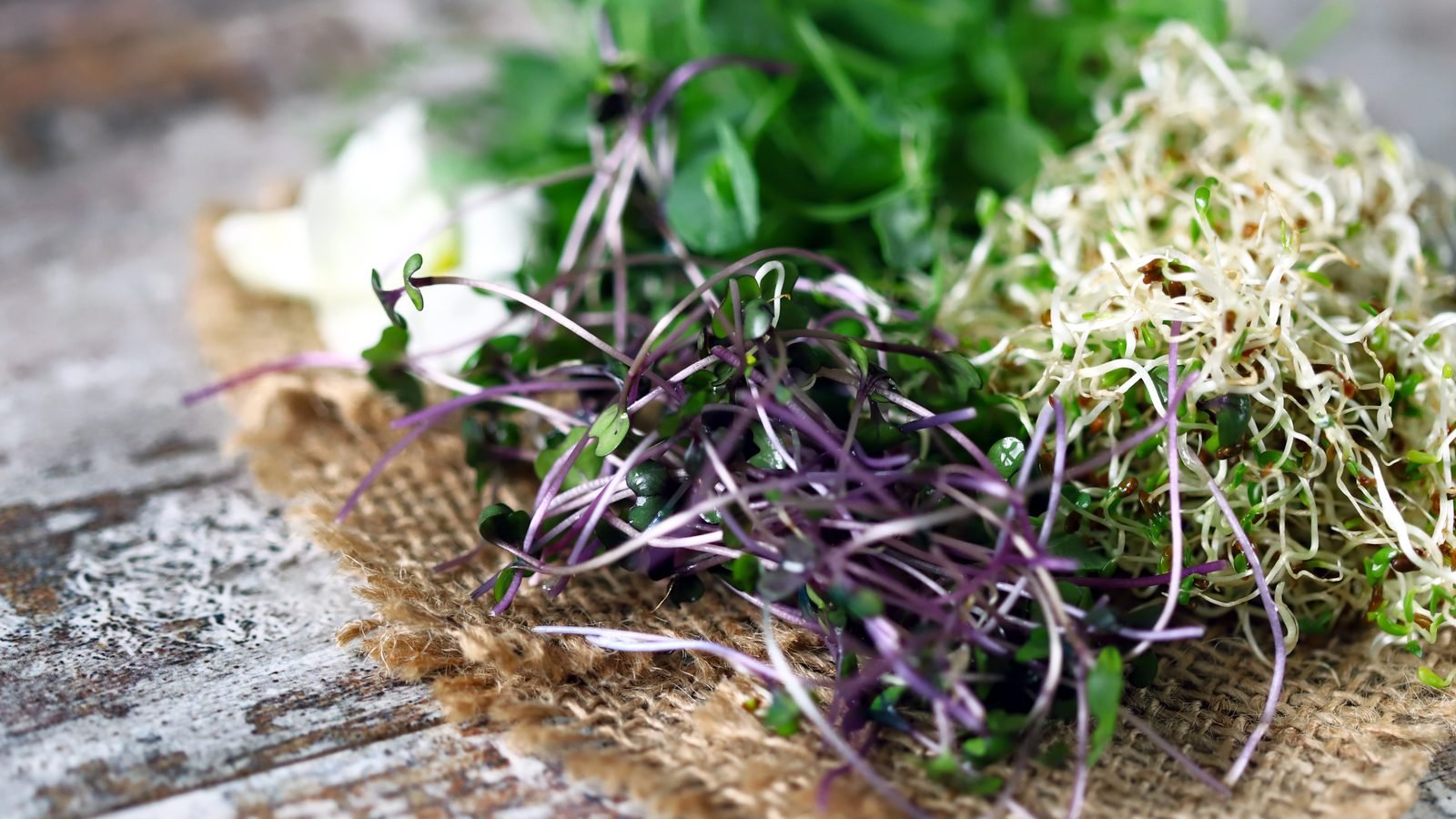
Sprouts and microgreens are not the same food.
Both are young plants grown from seed, and both turn up in salads and sandwiches. They even share crop names, like radish and broccoli. But they are grown in different ways, picked at different ages and eaten in different forms. Those differences change how they look in the pack, what they cost and how risky they are to eat raw. This guide sets out microgreens vs sprouts side by side, with a source behind each point. By the end, you will know which one is in the pack you are holding.
Key Takeaway
Sprouts are germinated seeds grown in water and eaten whole, root and seed included. Microgreens grow in a medium under light and are cut above the roots 10 to 21 days later (New Mexico State University, n.d.). That warm, wet sprouting step is why raw sprouts carry extra food safety warnings.
Below: how each is grown, how they differ in safety and nutrition, how to read the label and what each costs.
Microgreens 411
Find a microgreens grower near you
Greens that travel less start fresher in your fridge. Find my local grower →
Table of Contents
- What is the difference between microgreens and sprouts?
- How are sprouts and microgreens grown?
- Are sprouts riskier to eat than microgreens?
- Are microgreens more nutritious than sprouts?
- How can you tell microgreens and sprouts apart on a label?
- Which costs more, and where can you buy each?
- Wrap-up: microgreens vs sprouts in one view
- Frequently asked questions
- References
What is the difference between microgreens and sprouts?
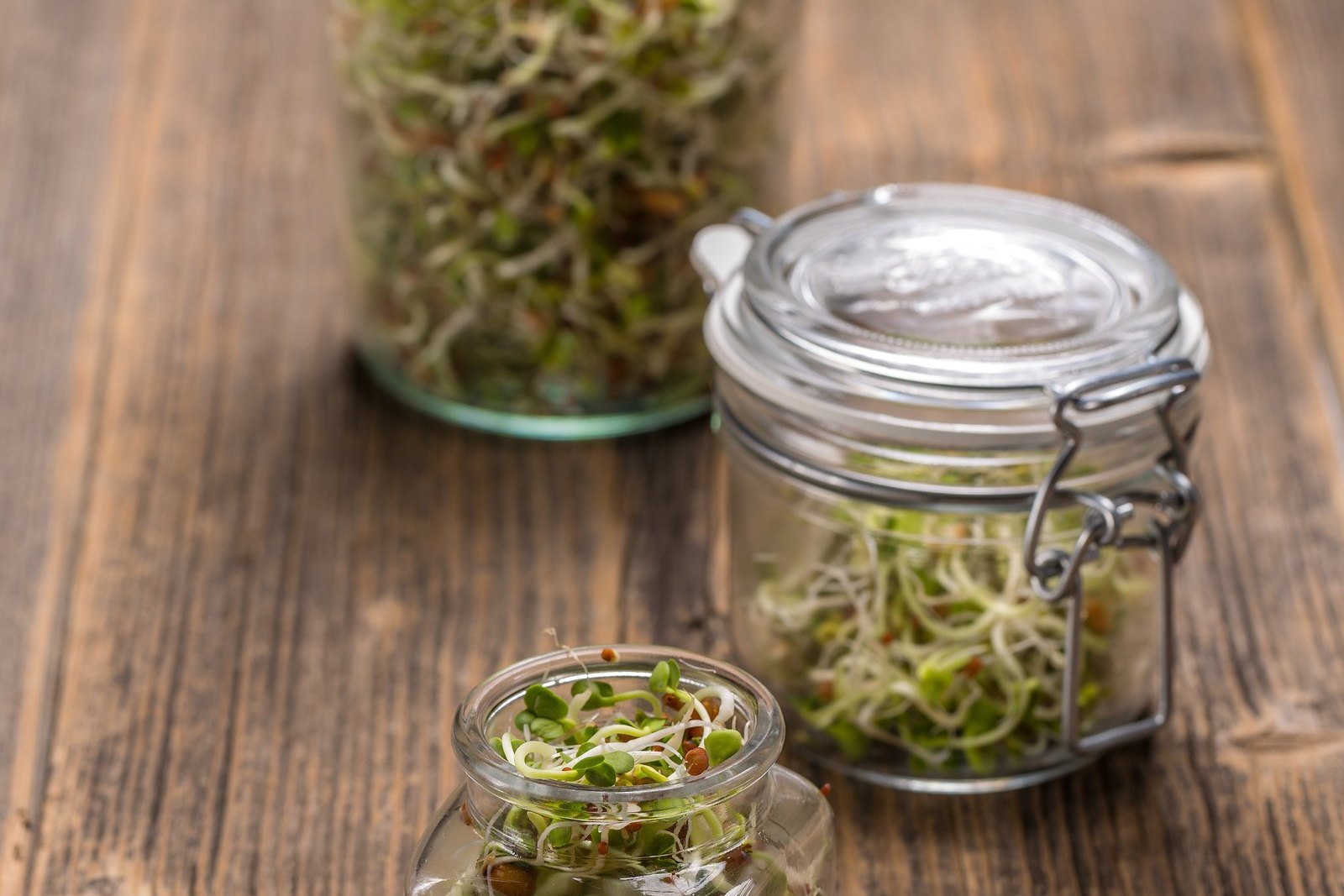
The main differences are age, growing method and the part you eat. New Mexico State University (NMSU) says microgreens are the more mature of the two. They grow taller, and only the top of the plant is eaten. Sprouts have had less time to grow, so they are smaller, and they are eaten whole (New Mexico State University, n.d.).
So a sprout comes with its root and often its seed. A microgreen comes as stem and leaves, cut above the growing mix. If you are new to them, our microgreens guide covers the basics.
Texture follows from that. Researchers describe microgreens as small greens with “surprisingly intense flavors, vivid colors, and crisp textures” (Xiao et al., 2012). We found no study that rated sprout flavor the same way, so we won’t guess at it.
The mix-up is common. A University of Arkansas survey found only 49% of consumers knew the difference between a microgreen and a sprout (New Mexico State University, n.d.). The table puts microgreens vs sprouts side by side.
| Sprouts | Microgreens |
|---|---|
| Soaked, then kept damp in a jar, often in the dark | Sown in a soilless mix, a mat or soil and grown under light |
| Ready within days | Cut 10 to 21 days after sowing |
| Eaten whole: root, stem and often the seed | Cut above the roots: stem and leaves only |
| FDA says people at higher risk should avoid them raw | About as risky as other raw produce, says NMSU |
How are sprouts and microgreens grown?
Sprouts grow in water, and microgreens grow in a medium under light. A Colorado State University Extension article shows one home sprout method. Seeds soak for 8 to 12 hours, then sit in a drained jar in a dark cabinet or under a towel. They get rinsed twice a day and germinate in about three days (Davis, n.d.).
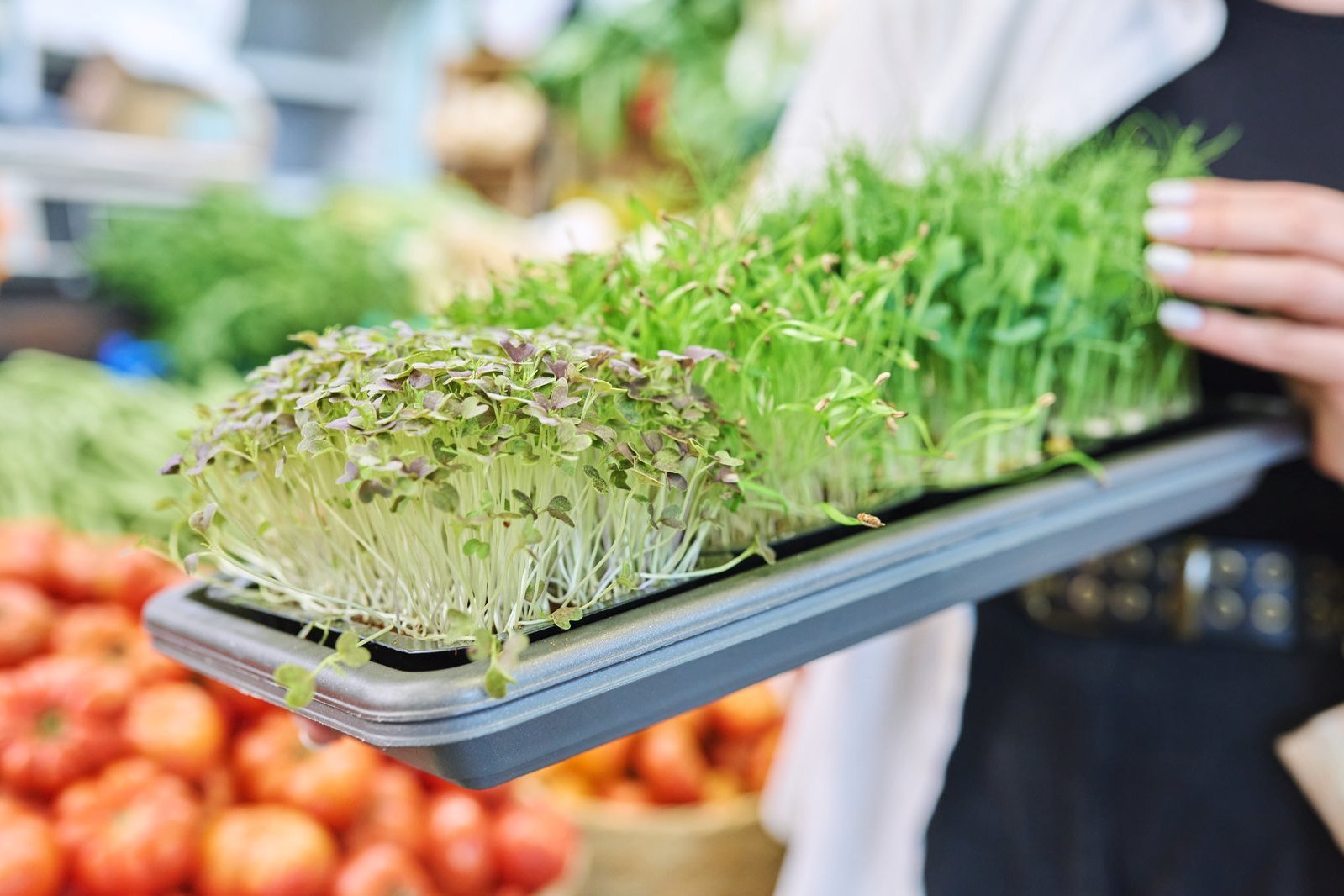
Microgreens take a different path. NMSU says the seeds soak briefly, for 2 to 4 hours, if at all. They are then sown in a soilless mix, a fiber grow mat or, less often, soil. The roots stay moist and the tops grow under light. Ten to 21 days later, growers cut them above the growing medium (New Mexico State University, n.d.).
Commercial growers lean on lights. A 2023 HortScience paper says most microgreens are grown in greenhouses with lighting added to the sunlight (Ricks et al., 2023).
The method matters for more than speed. Sprouts spend their whole short life warm and damp, and that sets up the safety gap covered next. For microgreens vs sprouts, the jar and the tray are the real dividing line.
Are sprouts riskier to eat than microgreens?
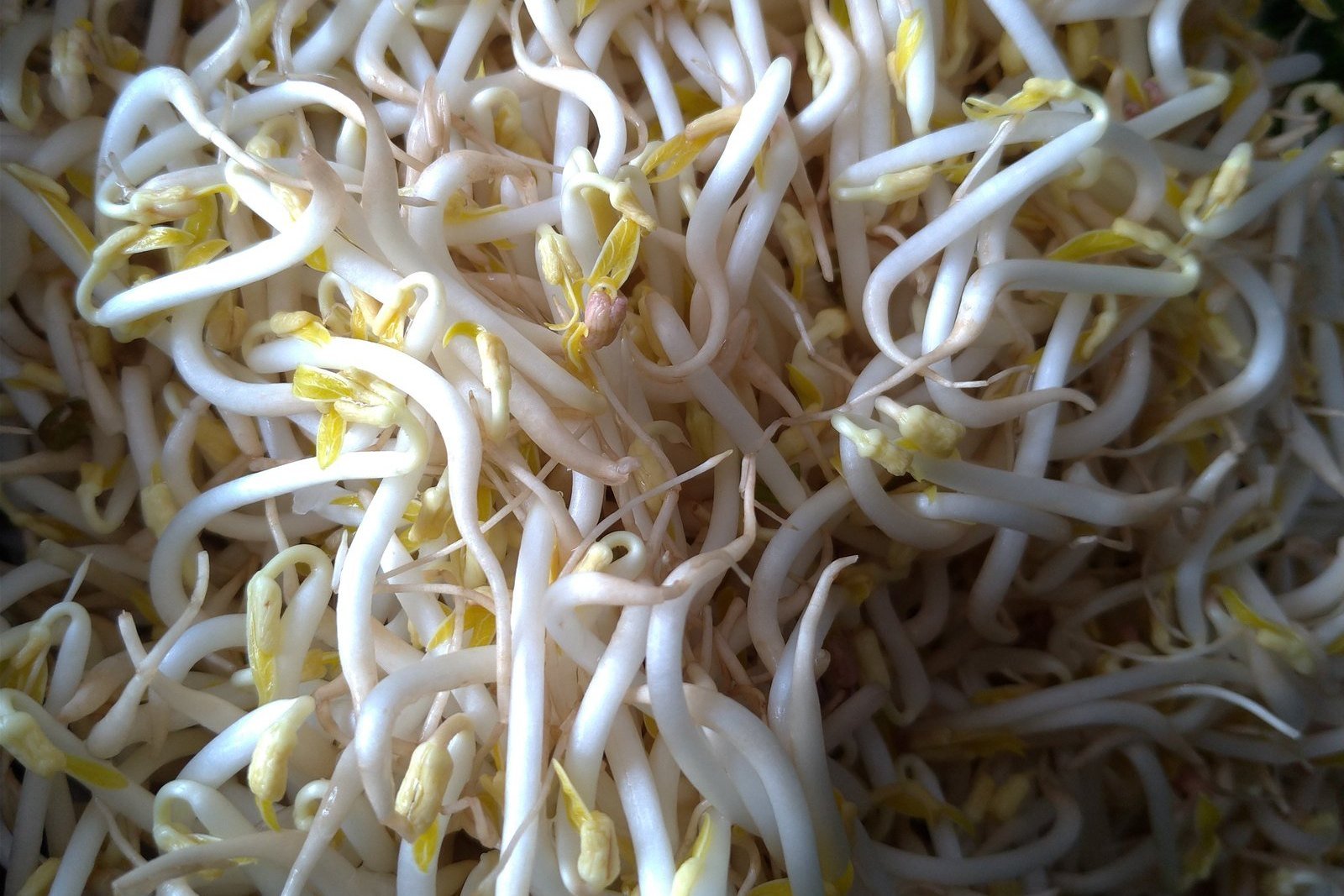
Yes, raw sprouts carry warnings that microgreens do not. The FDA says sprouts grow from seeds and beans in warm, humid conditions. Those same conditions are ideal for bacteria such as Salmonella, Listeria and E. coli (U.S. Food and Drug Administration, 2024).
So the FDA advises people at higher risk of foodborne illness to avoid raw or lightly cooked sprouts. That group includes children, older adults, pregnant women and people with weakened immune systems (U.S. Food and Drug Administration, 2024).
The track record backs this up. From 1996 to July 2016, the FDA counted 46 U.S. outbreaks linked to sprouts. They caused 2,474 illnesses, 187 hospital stays and three deaths (U.S. Food and Drug Administration, 2017). In 2026, the CDC tied an outbreak of E. coli and Salmonella to alfalfa sprouts. By October 1 it counted 76 sick people in 16 states (Centers for Disease Control and Prevention, 2026).
Microgreens sit closer to ordinary salad. NMSU calls them about as risky as any fresh produce eaten raw. Some have been recalled, but those problems were caught in routine inspections (New Mexico State University, n.d.). The FDA advice is about sprouts, so don’t apply it to microgreens.
Are microgreens more nutritious than sprouts?
Neither one wins across the board, based on the one lab study we found that compared them head to head. Polish researchers tested eight kinds of sprouts and five kinds of microgreens. The sprouts included radish, lentil, broccoli and mung bean. The microgreens included kale, radish, beetroot, pea and amaranth (Wojdyło et al., 2020).
The sprouts scored higher for polyphenols, vitamin C and antioxidant capacity in lab tests. They were better sources of amino acids, pectins and sugars too. The microgreens held more carotenoids and chlorophylls (Wojdyło et al., 2020). Free amino acids in the sprouts ran from 321.4 to 1,292.1 mg per 100 g of fresh greens. In the microgreens they ran from 162.3 to 455.0 mg.
Keep the limits in view. The crops were not the same in each group. The tests measured compounds and test-tube activity, not effects in people, and no trial tested whether eating one over the other changes health.
So the microgreens vs sprouts nutrition question has no single winner. Our nutrition guide covers what studies say about microgreens crop by crop.
How can you tell microgreens and sprouts apart on a label?
Read the word after the crop name, then look at the bottom of the greens. The same crop can be sold both ways. The Polish study grew radish and beetroot as sprouts and as microgreens (Wojdyło et al., 2020). So “radish” on a label tells you the plant, not the form.
The form is in the next word: sprouts or microgreens. The 2026 alfalfa outbreak shows why that word counts. The recall later grew to cover a radish sprout mix, over a risk of cross-contamination with the alfalfa (Centers for Disease Control and Prevention, 2026).
Then look closely. Sprouts are eaten whole, so you will see roots, and often seeds, in the pack. Microgreens are cut above the growing medium, so you should see stems and leaves with no roots (New Mexico State University, n.d.).
If a pack is loose or has no label, ask the seller how it was grown. A jar or a tray is the quick answer to microgreens vs sprouts. Either way, wash raw greens just before you eat them. Our washing guide shows how to do that for microgreens.
Which costs more, and where can you buy each?
Microgreens sell as a specialty crop, and their price range is wide. For a 2021 survey, researchers checked grocery prices across the United States. They then tested prices from $6.49 to $16.99 per 2-ounce package to match what stores charged (Ricks et al., 2023). We found no source that priced sprouts the same way, so we can’t give a fair head-to-head.
Where you shop changes what buyers will pay. In the same survey, people preferred buying microgreens at a farmers market over a supermarket. They were willing to pay $7.52 more per 2-ounce package there (Ricks et al., 2023).
Sprouts are mostly a grocery item. The alfalfa sprouts in the 2026 outbreak were sold at retailers and grocery stores (Centers for Disease Control and Prevention, 2026). Microgreens come from both kinds of sellers, which is how the survey framed the choice.
To weigh microgreens vs sprouts on price, compare the cost per ounce on each label. To find microgreens grown near you, try the Microgreens 411 directory.
Wrap-up: microgreens vs sprouts in one view
Sprouts are germinated seeds grown in water and eaten whole, root and all. Microgreens grow in a medium under light and get cut above the roots after 10 to 21 days. That difference shapes the risk. Raw sprouts carry an FDA warning for people at higher risk, and microgreens sit closer to ordinary raw produce. On nutrition, the one direct lab comparison found no clear winner.
Check the label for the form, then check the pack for roots.
Want microgreens from a nearby farm? Search your town in the Microgreens 411 directory to find growers near you. Coverage varies by region, so some areas have few listings so far.
Microgreens 411
Find a microgreens grower near you
Greens that travel less start fresher in your fridge. Find my local grower →
Frequently asked questions
Can you freeze sprouts or microgreens?
Yes, if you plan to use them in food rather than fresh. A home-growing piece from Colorado State University Extension suggests sealing extras in a zip bag with the air squeezed out and freezing them. Frozen, they can still go into smoothies or a stir fry (Davis, n.d.).
What are the signs of food poisoning from sprouts?
For Salmonella, the CDC lists diarrhea, fever and stomach cramps, starting 6 hours to 6 days after eating. Shiga toxin E. coli often brings severe cramps, bloody diarrhea and vomiting. Call your healthcare provider right away for diarrhea with a fever above 39°C (102°F) (Centers for Disease Control and Prevention, 2026).
Does washing make raw sprouts safe?
No. The FDA says rinsing produce under running water can cut down bacteria but will not get rid of all of it. It advises against soap, detergent or commercial produce washes. Thorough cooking is the step it names for killing harmful bacteria (U.S. Food and Drug Administration, 2024).
Are homegrown sprouts safer than store-bought?
Not by default. The FDA says a few bacteria on the seed can multiply to high levels during sprouting, even in a clean home kitchen (U.S. Food and Drug Administration, 2024). In FDA testing, Salmonella turned up on 2.35% of seed samples (U.S. Food and Drug Administration, 2017).
Do microgreens start out in the dark?
Often, for a few days. In one Colorado State University Extension method, the seeded tray stays covered to block light until most seeds have come up, around day three. Then the cover comes off and the tray moves under grow lights or near a sunny window (Davis, n.d.).
Does the FDA warning cover only alfalfa sprouts?
No. The FDA advice covers raw or lightly cooked sprouts of any kind. It names onion, alfalfa, clover, radish and mung bean sprouts as examples (U.S. Food and Drug Administration, 2024). It is advice for the people most likely to get seriously ill, not a ban on sprouts.
References
Centers for Disease Control and Prevention. (2026, October 1). E. coli and Salmonella outbreak linked to alfalfa sprouts. https://www.cdc.gov/ecoli/outbreaks/alfalfa-sprouts-08-26/index.html
Davis, M. (n.d.). Growing sprouts and microgreens at home. Colorado State University Extension, Pueblo County. https://pueblo.extension.colostate.edu/growing-sprouts-and-microgreens-at-home/
New Mexico State University. (n.d.). All about eating and growing microgreens. All About Microgreens. https://all-about-microgreens-d.nmsu.edu/
Ricks, J., Secor, W., & Campbell, B. L. (2023). Consumer preference for microgreens in the presence of LED lights and information treatments. HortScience, 58(3), 327–332. https://doi.org/10.21273/HORTSCI16948-22
U.S. Food and Drug Administration. (2017, August 18). FDA concludes major sampling study of sprouts. https://www.fda.gov/food/hfp-constituent-updates/fda-concludes-major-sampling-study-sprouts
U.S. Food and Drug Administration. (2024, March 5). Selecting and serving produce safely. https://www.fda.gov/food/buy-store-serve-safe-food/selecting-and-serving-produce-safely
Wojdyło, A., Nowicka, P., Tkacz, K., & Turkiewicz, I. P. (2020). Sprouts vs. microgreens as novel functional foods: Variation of nutritional and phytochemical profiles and their in vitro bioactive properties. Molecules, 25(20), 4648. https://doi.org/10.3390/molecules25204648
Xiao, Z., Lester, G. E., Luo, Y., & Wang, Q. (2012). Assessment of vitamin and carotenoid concentrations of emerging food products: Edible microgreens. Journal of Agricultural and Food Chemistry, 60(31), 7644–7651. https://doi.org/10.1021/jf300459b