

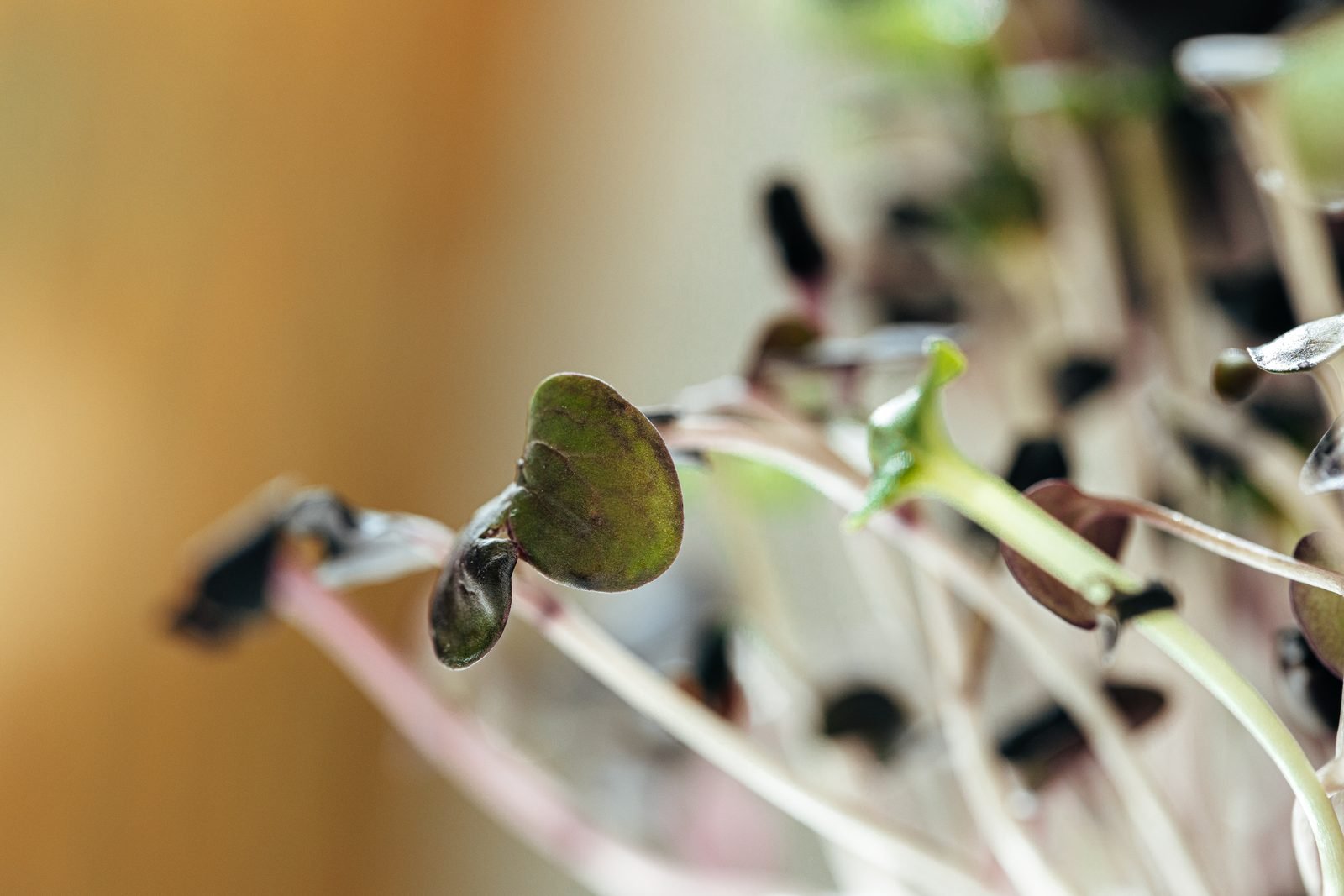
Microgreens are baby plants you eat.
They are the young shoots of vegetables and herbs, cut a week or two after they sprout. Chefs have used them for years to add color and bite to a plate. Now they sit in grocery cases and on farmers market tables too. Maybe you have seen the little clamshells and wondered about them. How do they taste? Are they worth the price? This guide answers what are microgreens in plain terms, with a source behind every claim, so you can decide for yourself.
Key Takeaway
Microgreens are vegetable and herb seedlings cut 7 to 21 days after they sprout, once the first leaves have opened (Di Gioia, 2024). You eat the stem and leaves, not the roots or seed. They taste like a stronger version of the grown plant, and most people eat them raw.
Below: a plain definition, which plants are grown this way, how they taste, why people buy them, how safe they are and how to buy and use them.
Microgreens 411
Find a microgreens grower near you
Greens that travel less start fresher in your fridge. Find my local grower →
Table of Contents
What are microgreens, exactly?
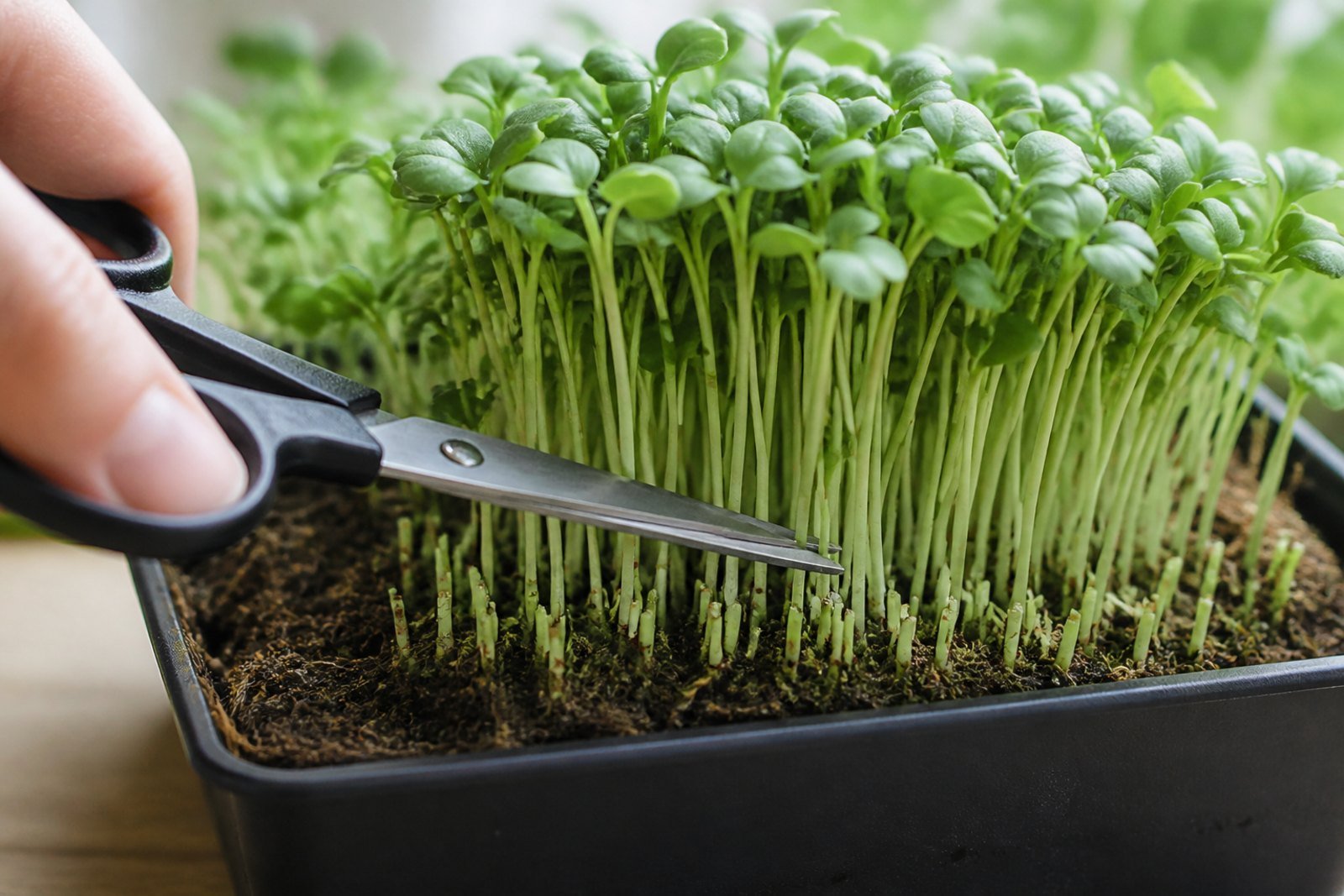
Microgreens are young, tender greens grown from the seeds of vegetables and herbs. Penn State Extension says they can be harvested 7 to 21 days after germination, depending on the plant and the growing conditions. That is the point when the first seed leaves have fully opened and the first true leaves are coming in (Di Gioia, 2024).
At that stage they are small. A separate Penn State guide puts them at about 1.5 to 3 inches tall at harvest (Sánchez & Berghage, 2025). New Mexico State University calls them “basically baby plants” (New Mexico State University, n.d.). They grow only a few inches, so a whole pack fits in your hand.
Growers cut the seedlings just above the growing mix, so you eat the stem and leaves. The roots stay behind. That one detail sets them apart from sprouts, which are eaten whole, roots and all (Di Gioia, 2024). Our sprouts guide goes deeper on the difference, including how each one is grown.
The table sums up the basics.
| Feature | Microgreens |
|---|---|
| Age at harvest | 7 to 21 days after sprouting |
| Height at harvest | About 1.5 to 3 inches |
| Part you eat | Stem and leaves, cut above the roots |
| How they are eaten | Mostly raw |
Which plants are grown as microgreens?
Many vegetables and herbs, but not all of them. Penn State says the most popular microgreens come from the cabbage family. That group includes broccoli, radish, arugula, cabbage, kale, kohlrabi, mustard and cress. These grow fast, often in 7 or 8 days, and have the peppery bite of their grown-up relatives (Di Gioia, 2024).
Other common ones are beet, Swiss chard, spinach, amaranth, lettuce, carrot, fennel and onion. Pea and sunflower are grown this way too, as are herbs such as basil, cilantro and dill (Di Gioia, 2024). Growers often mix several kinds in one pack for color and flavor.
Some plants are off the list. Penn State says tomato, pepper, eggplant and potato seedlings are not edible, since they contain alkaloids that are toxic at high levels (Di Gioia, 2024). You won’t find them in a pack from a reputable grower.
Part of the answer to what are microgreens, then, is “the seedlings of plants whose leaves you can already eat.” If a pack lists a crop you don’t recognize, ask the grower.
What do microgreens taste like?
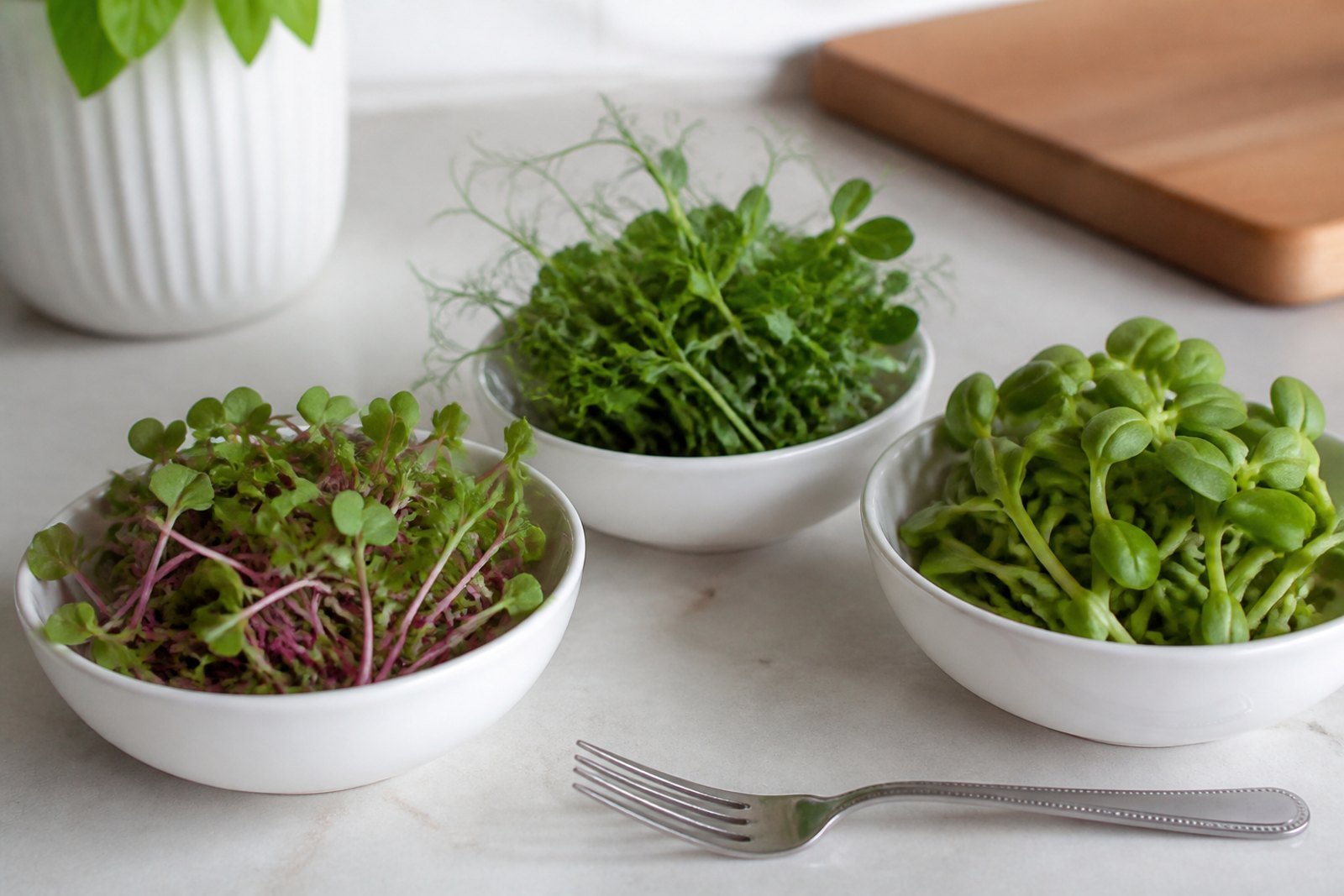
Most taste like a stronger, fresher version of the grown plant. Researchers describe microgreens as small but with “surprisingly intense flavors,” vivid colors and crisp textures (Xiao et al., 2012).
The flavor follows the plant family. Penn State links the pungent taste of cabbage-family microgreens, such as radish and mustard, to natural compounds called glucosinolates (Di Gioia, 2024). So radish microgreens bite like radish, and mustard greens bring heat. Basil and cilantro microgreens taste like the herbs.
Texture matters as much as taste. The stems are tender and the leaves are thin, so microgreens add crunch without much chewing. That makes them easy to pile onto food at the last minute, and a little goes a long way on flavor.
When people first ask what are microgreens, the quickest answer is often a taste. Try a mild kind first, then a spicy one, and you’ll learn fast which you like. Our flavor guide sorts the common kinds from mild to hot.
Why are microgreens so popular?
Two reasons: looks and nutrition. Chefs at fine restaurants have long used microgreens to garnish plates, and they have since gained a following for their nutrients (Di Gioia, 2024).
The nutrition interest started with lab tests. In one well-known study, researchers led by the University of Maryland measured vitamins and carotenoids in 25 commercial microgreens. Levels varied widely by crop. Compared with published values for mature leaves, the microgreen seed leaves had higher nutrient densities (Xiao et al., 2012).
Keep that finding in proportion. It measured nutrients in the greens, not effects in people. A later USDA study fed red cabbage microgreens to mice and saw lower “bad” cholesterol, but the lead scientist said the benefits for humans remain to be determined (Suszkiw, 2017).
So the honest answer to what are microgreens good for is this. They are a colorful, flavorful vegetable with promising lab results, and you eat them in small amounts. Our nutrition guide covers the research crop by crop.
Are microgreens safe to eat?
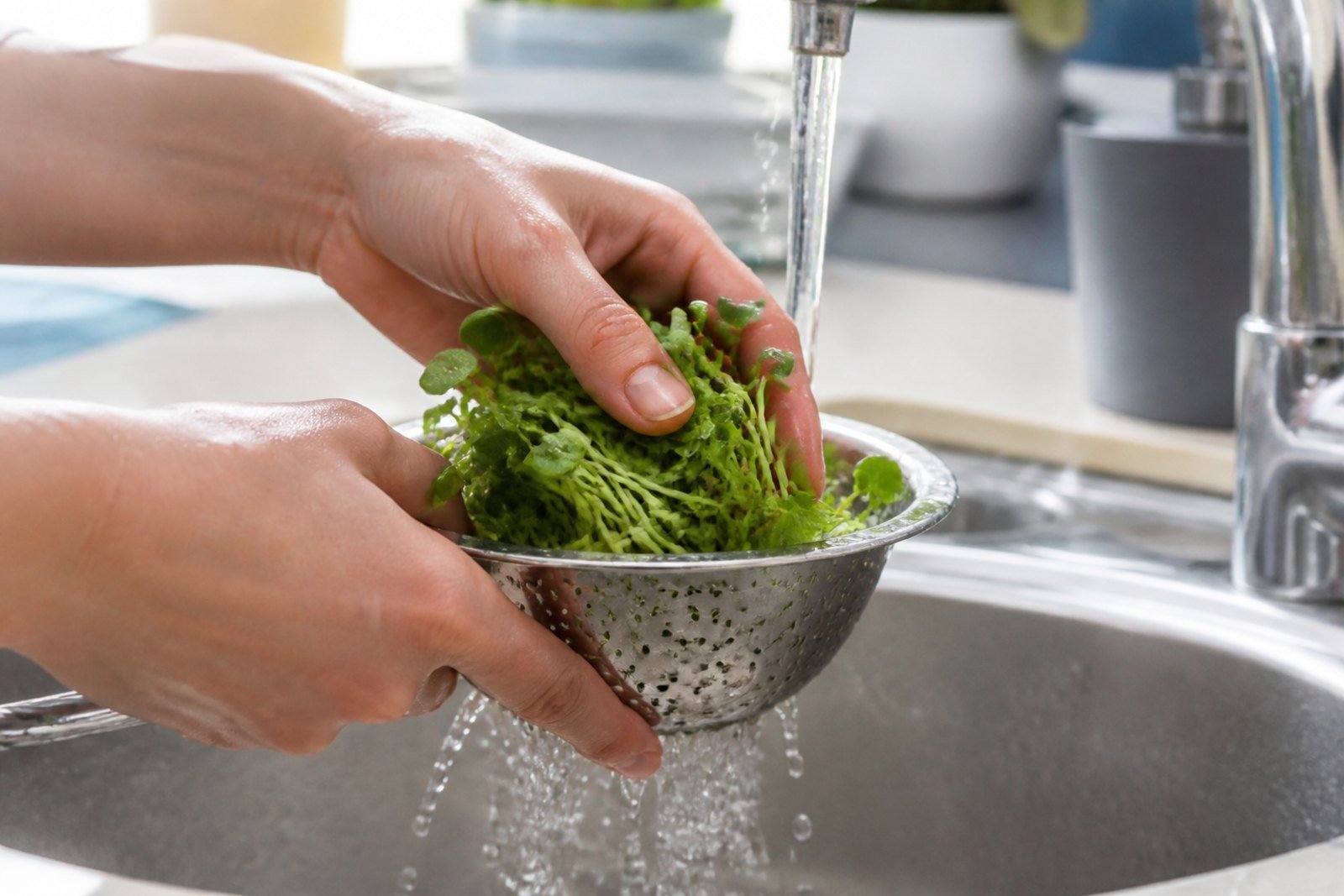
For most people, about as safe as other raw produce. New Mexico State University says microgreens are “about as risky as any fresh produce that is eaten raw.” Some have been recalled, but those problems were caught during routine food safety inspections (New Mexico State University, n.d.).
The same source gives the main step: wash them right before you eat them (New Mexico State University, n.d.). Our washing guide covers the method.
Allergies are worth a thought. Penn State advises leaving out any species you might be allergic to when choosing microgreens to grow (Di Gioia, 2024). The same caution makes sense when buying, so if you react to a grown vegetable, skip its microgreen.
We found no source that names a group of people who should avoid microgreens entirely. That is different from sprouts, which carry their own warnings for some groups. If you have a medical reason to limit raw vegetables, ask your doctor whether raw microgreens fit your diet. Whatever raw-produce advice your care team gives you applies to them too.
How do you buy and use microgreens?
Buy them fresh and cold, then use them within a few days. Look for packs that are cold and dry inside. Grocery stores, farmers markets and local growers all sell them. Our guide to where to buy microgreens compares the options.
At home, keep them in the fridge in their container. Our storage guide explains the details.
Using them is simple, since most people eat microgreens raw. Penn State suggests salads, appetizers, sandwiches and pizza, or serving them with meat or fish (Di Gioia, 2024). Another Penn State guide adds tacos and fillings for ravioli and empanadas (Sánchez & Berghage, 2025). A handful on eggs, soup or a grain bowl works too. Peppery kinds like radish and mustard work best where you want a little heat.
Add them at the end, just before serving, so they stay crisp. Heat wilts them fast. A small pack goes a long way once you find the dishes you like it on. Our everyday meals guide has more ideas.
Wrap-up: what are microgreens, in short
Microgreens are the young shoots of vegetables and herbs, cut 7 to 21 days after sprouting. You eat the stem and leaves. They taste like a sharper version of the grown plant, add color and crunch, and show promising nutrient levels in lab tests.
Treat them like other raw produce: buy them cold, wash them right before eating and use them within a few days.
Want to try some from a nearby farm? Search your town in the Microgreens 411 directory to find growers near you. Coverage varies by region, so some areas have few listings so far.
Microgreens 411
Find a microgreens grower near you
Greens that travel less start fresher in your fridge. Find my local grower →
Frequently asked questions
Which microgreen is the healthiest?
It depends on the nutrient. In the 2012 study of 25 microgreens, red cabbage had the most vitamin C, cilantro the most carotenoids, garnet amaranth the most vitamin K, and green daikon radish the most vitamin E (Xiao et al., 2012). No single crop led in every category.
Is it okay to eat microgreens every day?
No trial has tested daily intake. Penn State suggests that a mix of microgreen species can add variety of colors and nutrients to a weekly healthy diet, in line with the Dietary Guidelines for Americans (Di Gioia, 2024). Treat them as one vegetable among many.
When did microgreens become common?
They reached the market in the 1980s and 1990s. Since then their use has spread well beyond the high-end restaurants that first used them (Ricks et al., 2023). Today many growers sell them straight to home cooks, and some grocery chains stock them.
Do most people know microgreens from sprouts?
Not really. A University of Arkansas survey found only 49% of consumers knew the difference between a microgreen and a sprout (New Mexico State University, n.d.). The two are grown in very different ways, and the label on the pack should say which one you have.
Are pea shoots and sunflower shoots microgreens?
Yes. Penn State lists pea and sunflower among the plants commonly grown as microgreens and shows both as shoots ready to harvest (Di Gioia, 2024). Penn State notes that their larger seeds make bigger shoots than small-seeded crops like broccoli.
Can you grow microgreens at home?
Yes. Penn State says their small size and short growth cycle let you grow them on a window ledge, porch, balcony or kitchen shelf. It advises using seed sold for sprouts and microgreens that has not been treated with chemicals or coated (Di Gioia, 2024).
References
Di Gioia, F. (2024, March 28). The ABCs of microgreens. Penn State Extension. https://extension.psu.edu/the-abcs-of-microgreens
New Mexico State University. (n.d.). All about eating and growing microgreens. All About Microgreens. https://all-about-microgreens-d.nmsu.edu/
Ricks, J., Secor, W., & Campbell, B. L. (2023). Consumer preference for microgreens in the presence of LED lights and information treatments. HortScience, 58(3), 327–332. https://doi.org/10.21273/HORTSCI16948-22
Sánchez, E., & Berghage, R. (2025, December 16). Growing microgreens. Penn State Extension. https://extension.psu.edu/growing-microgreens
Suszkiw, J. (2017, June). Microgreen study shows health benefits. AgResearch Magazine. U.S. Department of Agriculture, Agricultural Research Service. https://agresearchmag.ars.usda.gov/2017/jun/microgreen/
Xiao, Z., Lester, G. E., Luo, Y., & Wang, Q. (2012). Assessment of vitamin and carotenoid concentrations of emerging food products: Edible microgreens. Journal of Agricultural and Food Chemistry, 60(31), 7644–7651. https://doi.org/10.1021/jf300459b