

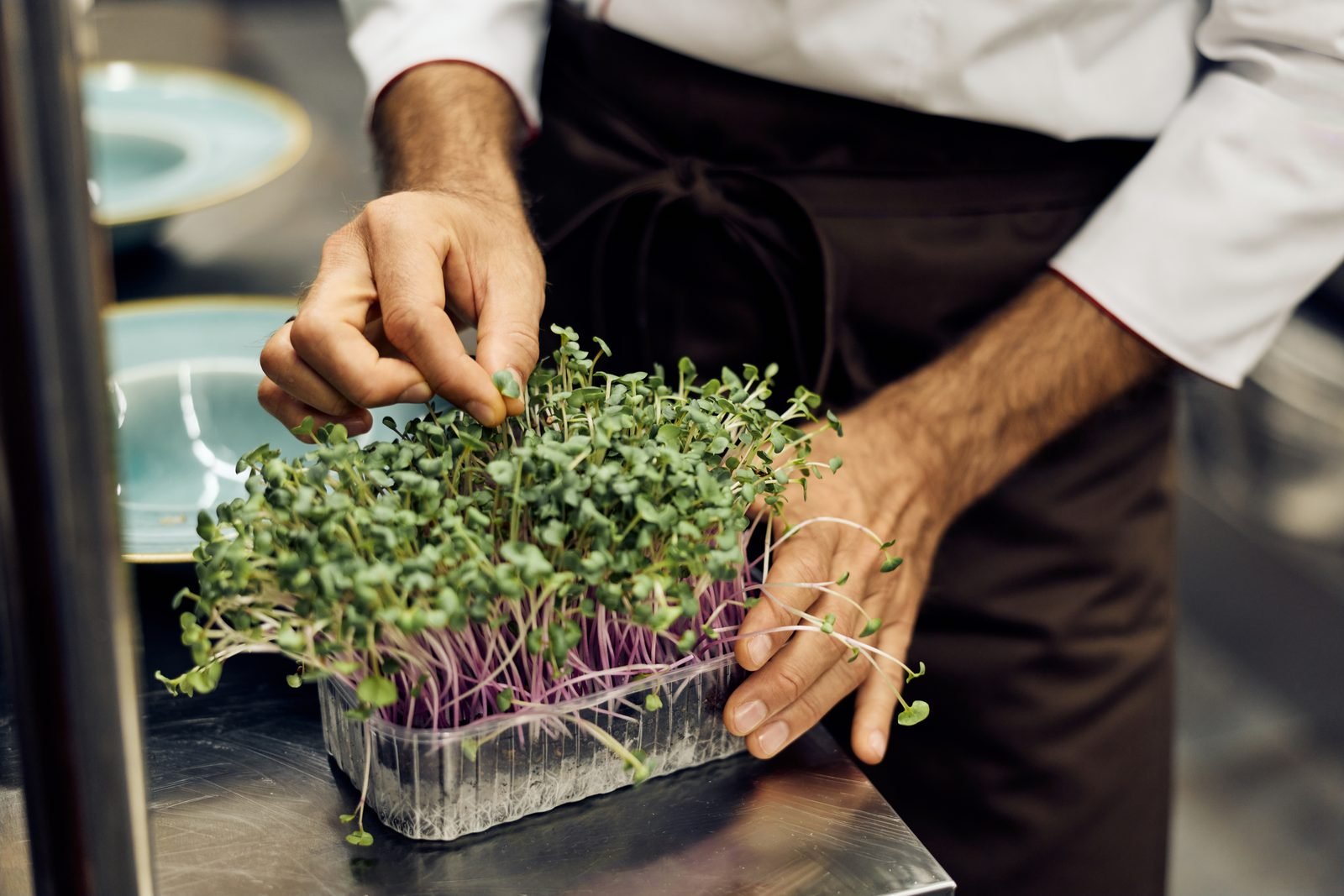
A pinch of greens can change a whole plate.
Chefs have used microgreens for years to finish a dish and make it look like theirs. Picking the right ones takes more thought than ordering a mixed box. Each kind brings its own color, flavor, shelf life and price. This guide looks at microgreens for restaurants from the menu side. It covers which kinds suit which dishes and how color and flavor work on the plate. It then turns to cost per plate, storage and prep, and how to word them on the menu.
Key Takeaway
Choose each microgreen for the job it does on the plate. In one consumer panel, bull’s blood beet rated highest for overall eating quality, and flavor scores predicted overall liking best (Xiao et al., 2015). Work out cost per portion, keep cut greens cold, and wash them just before service.
Below: which kinds suit which dishes, how color and flavor play on the plate, cost per plate, storage and prep, and menu wording.
Microgreens 411
Find a microgreens grower near you
Greens that travel less start fresher in your fridge. Find my local grower →
Table of Contents
- Which microgreens suit which dishes?
- Does color on the plate change how diners see a dish?
- How do you balance microgreen flavor with the rest of the dish?
- What do microgreens for restaurants cost per plate?
- How long do microgreens last in a restaurant kitchen?
- How should microgreens appear on the menu?
- Wrap-up: microgreens on the menu, in short
- Frequently asked questions
- References
Which microgreens suit which dishes?
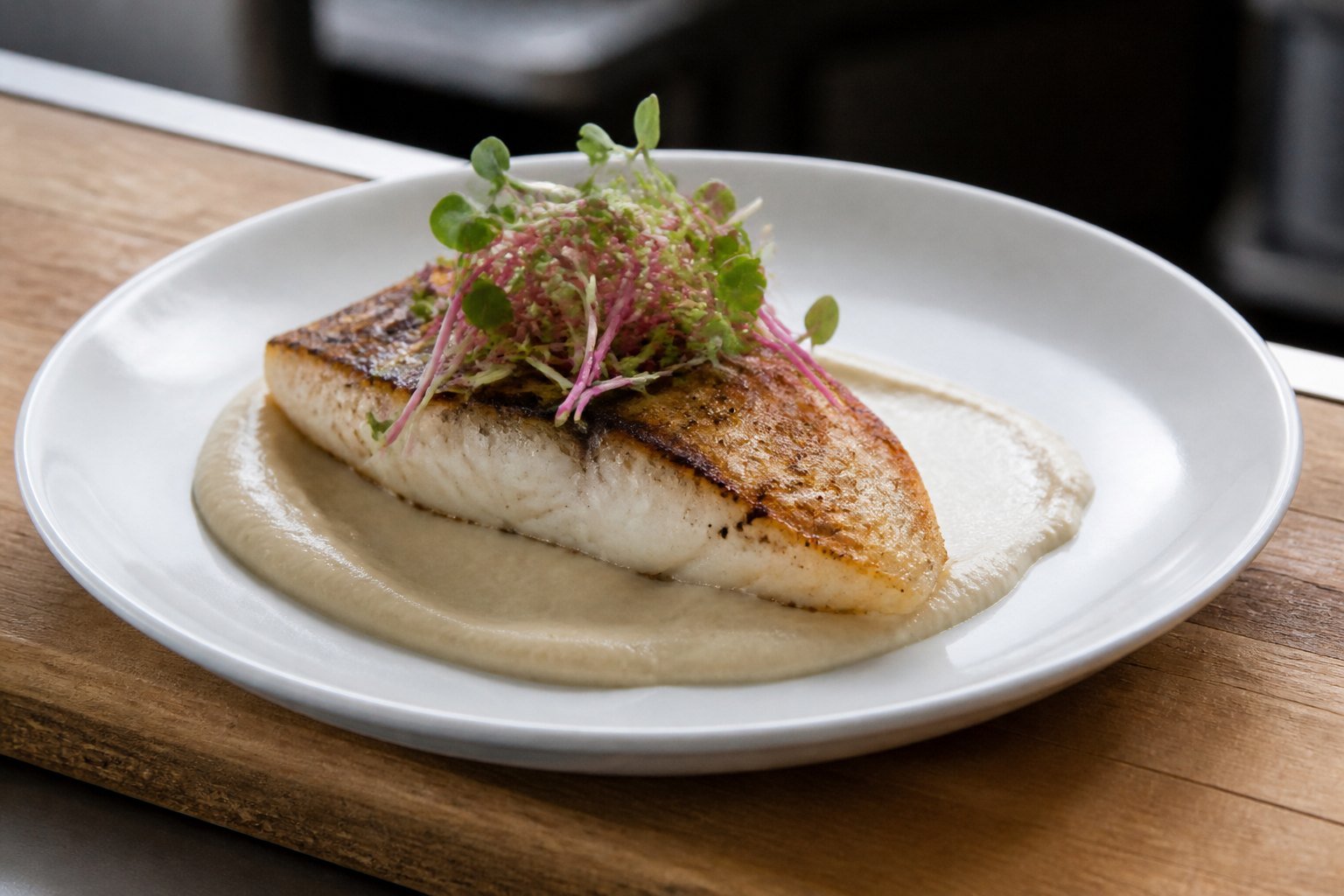
Match each kind to the job it does on the plate. Farmzz, a software company that writes for growers, says chefs buy microgreens for flavor, color and texture, not for health (Farmzz, 2026). That is a handy filter when you build a short list of microgreens for restaurants.
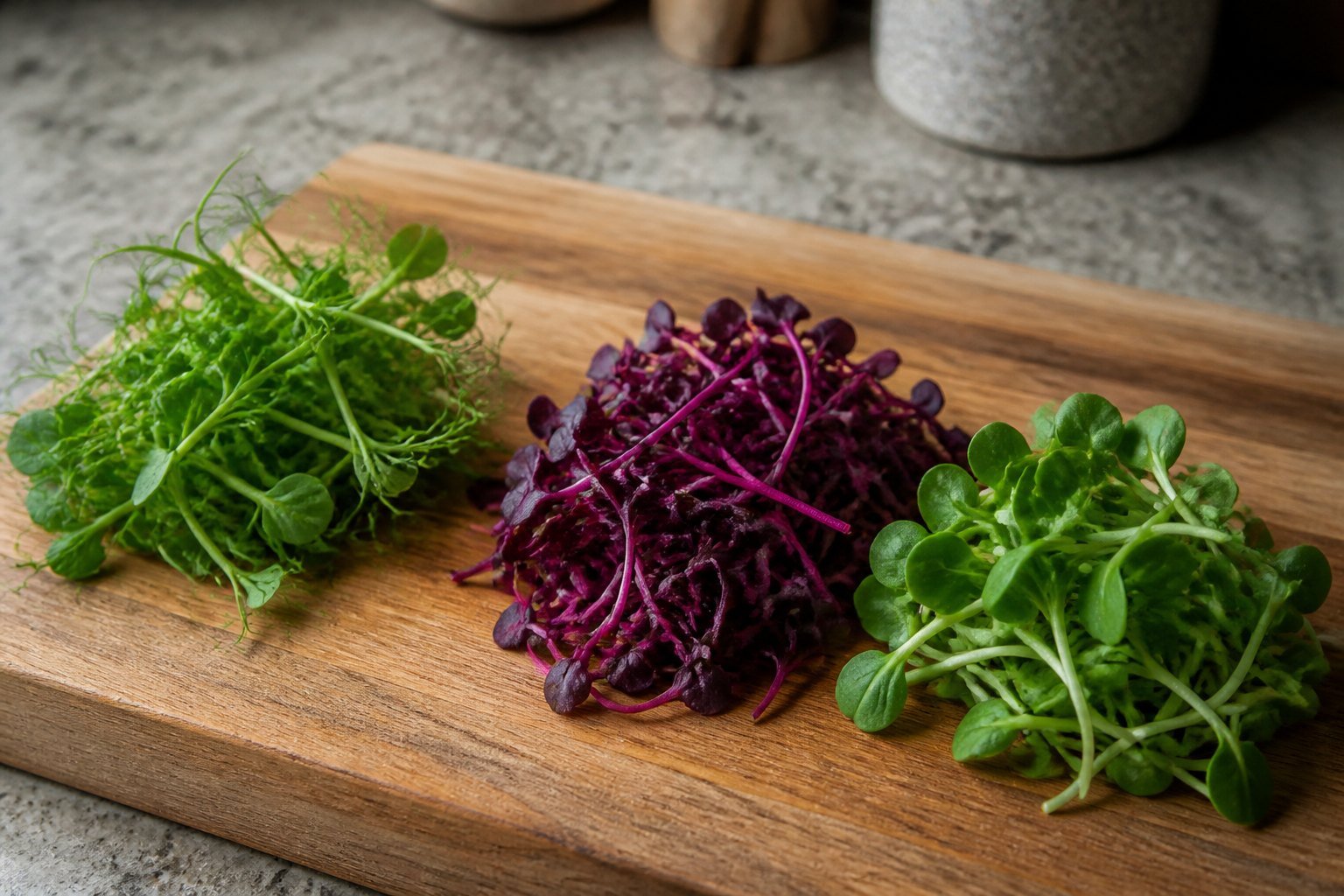
Mild kinds go almost anywhere. Pea shoots are sweet and mild, so they sit well in salads and sandwiches without fighting the main ingredient. Sunflower shoots add a nutty crunch to grain bowls and can serve as a bed for proteins (Farmzz, 2026).
Stronger kinds need a target. The same source puts radish on tacos, sushi and soups, micro basil with Italian and Mediterranean food, and cilantro with Asian, Latin and fusion menus (Farmzz, 2026). Penn State lists salads, appetizers, sandwiches, pizza and meat or fish dishes as common uses (Di Gioia, 2024).
Start with two or three kinds that cover most of your menu, then add a specialty kind when a dish calls for it. If a dish goes out hot, our guide to cooking microgreens explains how they handle heat. The table gives a quick guide.
| Kind | Where it fits on the menu |
|---|---|
| Pea shoots | Mild and sweet: salads, sandwiches, plating |
| Radish | Peppery, pink stems: tacos, sushi, soups |
| Sunflower | Nutty crunch: grain bowls, a bed for proteins |
| Amaranth | Mild taste, deep magenta: color on pale dishes |
Does color on the plate change how diners see a dish?
In consumer tests, yes. A Colorado State University panel of 99 consumers tasted six kinds of microgreens. All six scored as acceptable, but the kinds differed most on flavor and overall liking (Michell et al., 2020). On looks alone, the red kinds won. Bull’s blood beet, red cabbage and red garnet amaranth had the highest appearance scores (Michell et al., 2020, as cited in Kelley, 2025).
A panel run by USDA researchers found much the same. Five of the six kinds they tested scored “excellent” for appearance. Opal basil was the one kind rated only “good” (Xiao et al., 2015).
Color works differently on a store shelf. In a 2022 Tennessee survey, shoppers rating photos of kale and radish would pay 66 cents more for green microgreens than for light purple ones (Kelley, 2025). That study used photos for shoppers, not plated food.
So use color with a purpose when you put microgreens on the menu. Farmzz notes that chefs use amaranth as a color accent on light dishes, since its leaves add little flavor (Farmzz, 2026). A red kind gives contrast on pale fish, eggs or risotto. On a plate that already has strong color, a green kind may be enough.
How do you balance microgreen flavor with the rest of the dish?
Let the main ingredient lead, then pick a green that adds what the dish lacks. Flavor matters more than looks once a diner takes a bite. In the USDA panel, flavor was the trait that best predicted overall eating quality (Xiao et al., 2015).
That study chose its six kinds to stand for different flavor groups, from mild to peppery. Bull’s blood beet rated highest for flavor and overall eating quality, and peppercress rated lowest. The researchers tied sourness, astringency and bitterness to each green’s pH and phenolic content (Xiao et al., 2015).
Cabbage-family kinds bring the heat. Penn State says broccoli, radish and kale microgreens get their sharp taste mainly from compounds called glucosinolates (Di Gioia, 2024). Treat that bite like black pepper. A rich, fatty dish can carry radish or mustard. A delicate fish may do better with pea shoots.
When you test microgreens for restaurants, taste each new kind on the actual dish, not on its own from the box. A green that tastes harsh alone can balance a rich sauce. Our flavor guide sorts the common kinds from mild to hot, so you can shortlist before you taste.
What do microgreens for restaurants cost per plate?
Work it out per portion, not per pound. A price per pound looks high until you divide it down. Here is a worked example using prices Penn State reported. Treat it as an example, not a market quote.
Penn State has seen microgreens sell for $40 per pound through a wholesale market. It has seen $1.75 for a half ounce through a direct market (Sánchez & Berghage, 2025). A pound is 16 ounces, so $40 ÷ 16 = $2.50 per ounce. Half an ounce at $1.75 means $1.75 × 2 = $3.50 per ounce.
Now pick a portion. Say a garnish uses a quarter ounce. That portion is our example, not a Penn State figure, so weigh your own. At $2.50 per ounce, a quarter ounce costs about 63 cents. At $3.50 per ounce, it costs about 88 cents.
Add waste to the math. Greens that spoil before service raise the real cost of every plate you do sell. So order to your covers, and price with real quotes from growers near you. The Microgreens 411 directory lists growers by area.
How long do microgreens last in a restaurant kitchen?
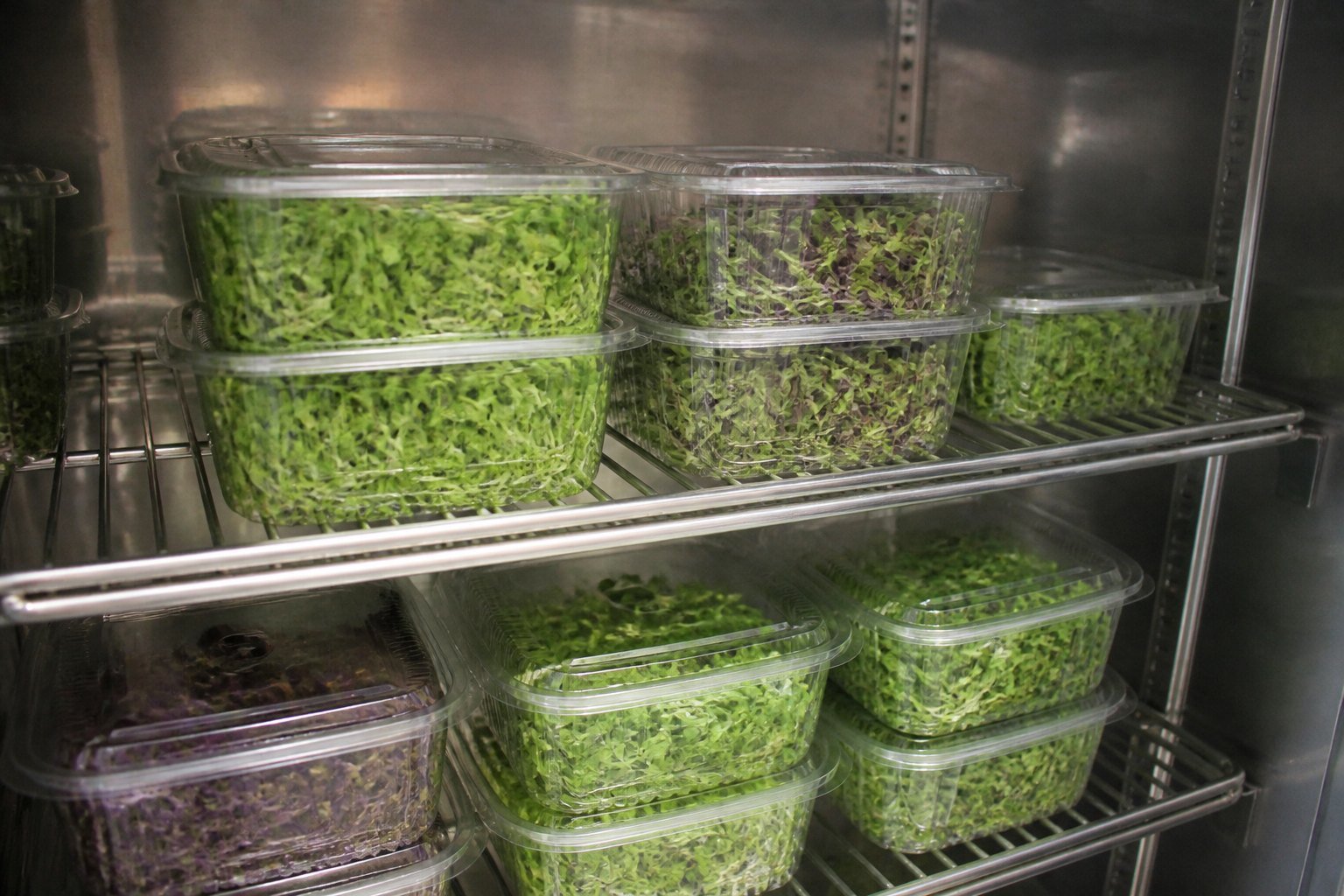
Cut microgreens last days, not weeks, so plan prep around that. Penn State reports that dark storage at 5°C (41°F) can stretch shelf life to 10 to 14 days, against 2 to 4 days at room conditions (Sánchez & Berghage, 2025). NMSU gives a stricter rule: eat them no later than 3 to 5 days after harvest (New Mexico State University, n.d.-b). The FDA says to keep fresh produce at 4°C (40°F) or below (U.S. Food and Drug Administration, 2024).
Wash them just before service, not when the order arrives. Penn State notes that washing before sale shortens their life (Sánchez & Berghage, 2025). NMSU says early washing damages the tissue and adds moisture that can feed bacteria (New Mexico State University, n.d.-b).
Living trays are the other choice. NMSU calls cutting a big stress on the plant and advises not cutting until you are ready to eat them (New Mexico State University, n.d.-b). Penn State says growers can sell in seeding trays to skip harvest costs, but trays take more transport space than cut greens (Sánchez & Berghage, 2025). In a small walk-in, that space matters.
How should microgreens appear on the menu?
Name the kind, and make only claims you can back up. “Radish microgreens” tells a diner more than “micro greens.” It helps a guest who avoids a certain plant.
Say “organic” only when the greens come from a certified organic source. USDA says nearly every operation that produces or handles organic products must be certified. Restaurants that sell straight to diners are exempt from certification, but they still have to follow parts of the organic rules (USDA Agricultural Marketing Service, n.d.-a). Keep the grower’s current certificate on file before the word goes on the menu.
“Local” needs the same care. Penn State’s marketing guide says many shoppers prefer food grown locally, by growers they know (Kelley, 2025). Name the farm only as long as you buy from it.
Seasons matter less than with field crops. Most microgreens are grown in greenhouses with extra lighting (Ricks et al., 2023). So rotate kinds to suit your seasonal dishes, and ask growers what they can supply each month. Picking that grower is a separate job, covered in our guide to choosing a restaurant microgreens supplier.
Wrap-up: microgreens on the menu, in short
Choose each microgreen for the job it does on the plate. Red kinds scored best on looks in consumer tests, and flavor did the most to decide overall liking. Work out the cost per portion, not per pound, and count waste. Keep cut greens cold and dry, and wash them just before service. On the menu, name the kind, and say “organic” or “local” only when it is true.
Need greens for a new dish? Search your area in the Microgreens 411 directory to find growers near you. Coverage varies by region, so some areas have few listings so far.
Microgreens 411
Find a microgreens grower near you
Greens that travel less start fresher in your fridge. Find my local grower →
Frequently asked questions
How long does a new kind of microgreen take to grow?
Penn State says microgreens can be harvested 7 to 21 days after germination, depending on the crop. Cabbage-family kinds such as radish and broccoli have a short cycle of about 7 to 8 days at most (Di Gioia, 2024). Slower kinds need more lead time when you add a dish.
Which seedlings should never be served as microgreens?
Tomato, pepper, eggplant and potato. Penn State says their seedlings contain alkaloids, which are toxic to humans at high levels, so they should not be grown or eaten as microgreens (Di Gioia, 2024). If a supplier offers an unusual kind, check it before it reaches a plate.
Are microgreens the same as sprouts?
No. Sprouts are eaten whole, roots and often the seed included. Microgreens are cut above the growing medium, so only the shoot and leaves are eaten (Di Gioia, 2024). Many diners mix them up. A University of Arkansas survey found only 49% of consumers knew the difference (New Mexico State University, n.d.-a).
Are raw microgreens safe to serve?
NMSU says microgreens are “about as risky as any fresh produce that is eaten raw.” Some have been recalled in the past, and those problems were caught during routine food safety inspections (New Mexico State University, n.d.-a). Handle them like other raw salad items in your kitchen.
Are some diners wary of microgreens?
Some are. In the Colorado State panel, high liking scores went with stronger intent to buy. Scores tended to drop among people with food neophobia, a fear of new foods. Knowledge, familiarity, cost and freshness all shaped whether people would buy them (Michell et al., 2020).
Can a small farm sell microgreens as organic without certification?
Sometimes. USDA exempts producers who sell less than $5,000 of organic products a year. They must still follow the organic rules and keep records for 3 years. They may not use the USDA organic seal (USDA Agricultural Marketing Service, n.d.-b).
References
Di Gioia, F. (2024, March 28). The ABCs of microgreens. Penn State Extension. https://extension.psu.edu/the-abcs-of-microgreens
Farmzz. (2026, March 24). How to sell microgreens to restaurants: Orders and delivery. Farmzz Blog. https://farmzz.com/en/blog/sell-microgreens-to-restaurants
Kelley, K. (2025, June 4). Marketing microgreens. Penn State Extension. https://extension.psu.edu/marketing-microgreens
Michell, K. A., Isweiri, H., Newman, S. E., Bunning, M., Bellows, L. L., Dinges, M. M., Grabos, L. E., Rao, S., Foster, M. T., Heuberger, A. L., Prenni, J. E., Thompson, H. J., Uchanski, M. E., Weir, T. L., & Johnson, S. A. (2020). Microgreens: Consumer sensory perception and acceptance of an emerging functional food crop. Journal of Food Science, 85(4), 926–935. https://doi.org/10.1111/1750-3841.15075
New Mexico State University. (n.d.-a). All about eating and growing microgreens. All About Microgreens. https://all-about-microgreens-d.nmsu.edu/
New Mexico State University. (n.d.-b). Eating microgreens. All About Microgreens. https://all-about-microgreens-d.nmsu.edu/consumers.html
Ricks, J., Secor, W., & Campbell, B. L. (2023). Consumer preference for microgreens in the presence of LED lights and information treatments. HortScience, 58(3), 327–332. https://doi.org/10.21273/HORTSCI16948-22
Sánchez, E., & Berghage, R. (2025, December 16). Growing microgreens. Penn State Extension. https://extension.psu.edu/growing-microgreens
U.S. Food and Drug Administration. (2024). Selecting and serving produce safely. https://www.fda.gov/food/buy-store-serve-safe-food/selecting-and-serving-produce-safely
USDA Agricultural Marketing Service. (n.d.-a). Do I need to be certified organic? https://www.ams.usda.gov/services/organic-certification/need-be-certified
USDA Agricultural Marketing Service. (n.d.-b). Labeling organic products. https://www.ams.usda.gov/rules-regulations/organic/labeling
Xiao, Z., Lester, G. E., Park, E., Saftner, R. A., Luo, Y., & Wang, Q. (2015). Evaluation and correlation of sensory attributes and chemical compositions of emerging fresh produce: Microgreens. Postharvest Biology and Technology, 110, 140–148. https://doi.org/10.1016/j.postharvbio.2015.07.021