
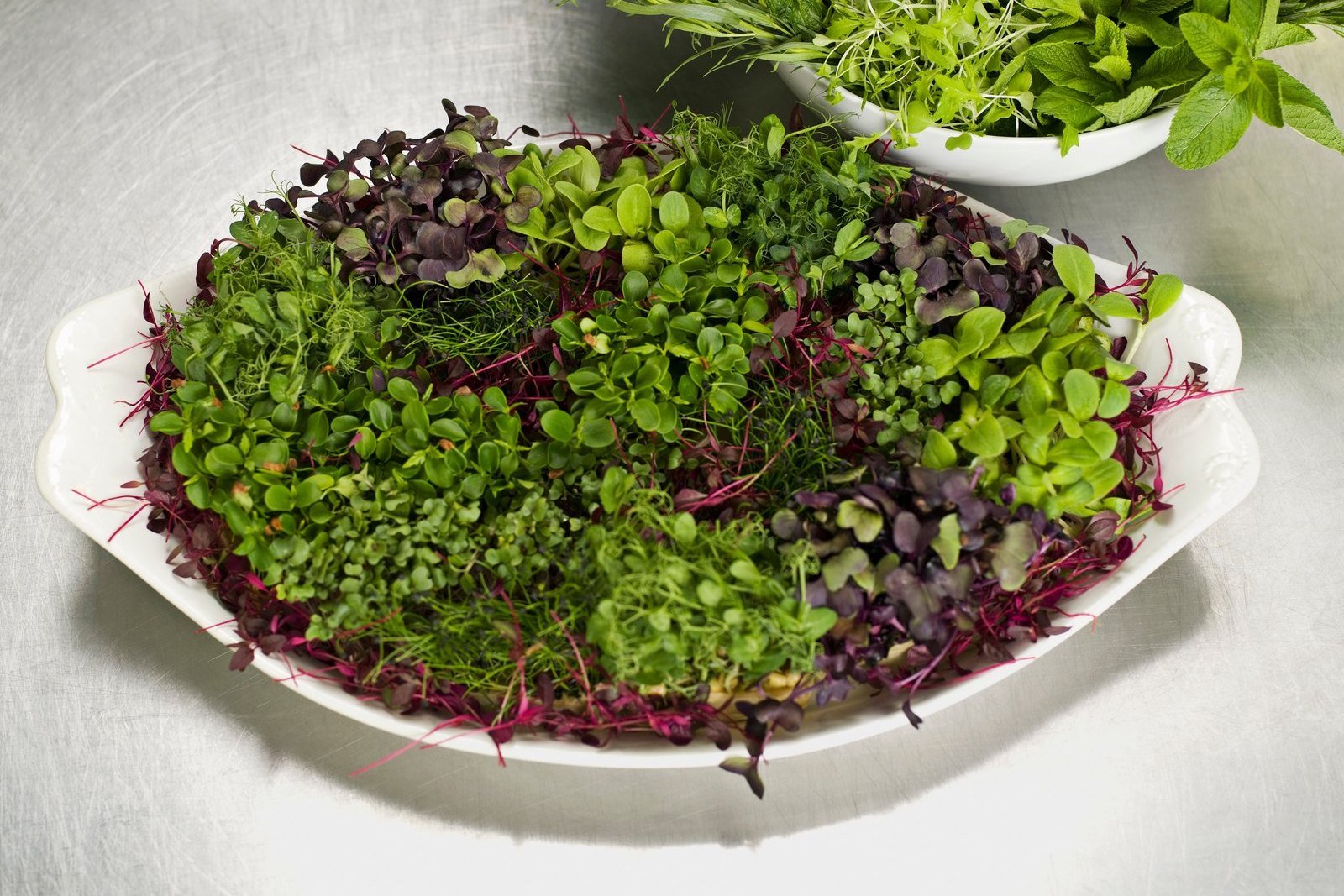
Yes, for most healthy people.
Microgreens are sold to be eaten raw, and that is how most people enjoy them. Raw food skips the one kitchen step that kills germs, which is heat. So the question is fair, and the answer has a few parts. Are microgreens safe to eat raw if they look clean? What does a rinse do, and what does it miss? Why do raw sprouts carry warnings that microgreens do not? This guide walks through each part with federal and university sources, so you can decide how to serve them at home.
Key Takeaway
For most healthy people, yes. The FDA treats microgreens as produce, not sprouts, so its strict sprout rules do not apply (U.S. Food and Drug Administration [FDA], 2023). A rinse lowers germs but does not remove them all. Thorough cooking kills harmful bacteria. People in higher-risk groups should ask a doctor first.
Below: the short answer, why sprouts are treated differently, what washing does and misses, raw versus cooked, who should be careful and how to pick safer packs.
Microgreens 411
Find a microgreens grower near you
Greens that travel less start fresher in your fridge. Find my local grower →
Table of Contents
- Are microgreens safe to eat raw?
- Why do raw sprouts carry warnings that microgreens do not?
- Does washing make raw microgreens safe?
- Is it safer to cook microgreens?
- Who should think twice about raw microgreens?
- How do you pick microgreens that are safer to eat raw?
- Wrap-up: are microgreens safe to eat raw?
- Frequently asked questions
- References
Are microgreens safe to eat raw?
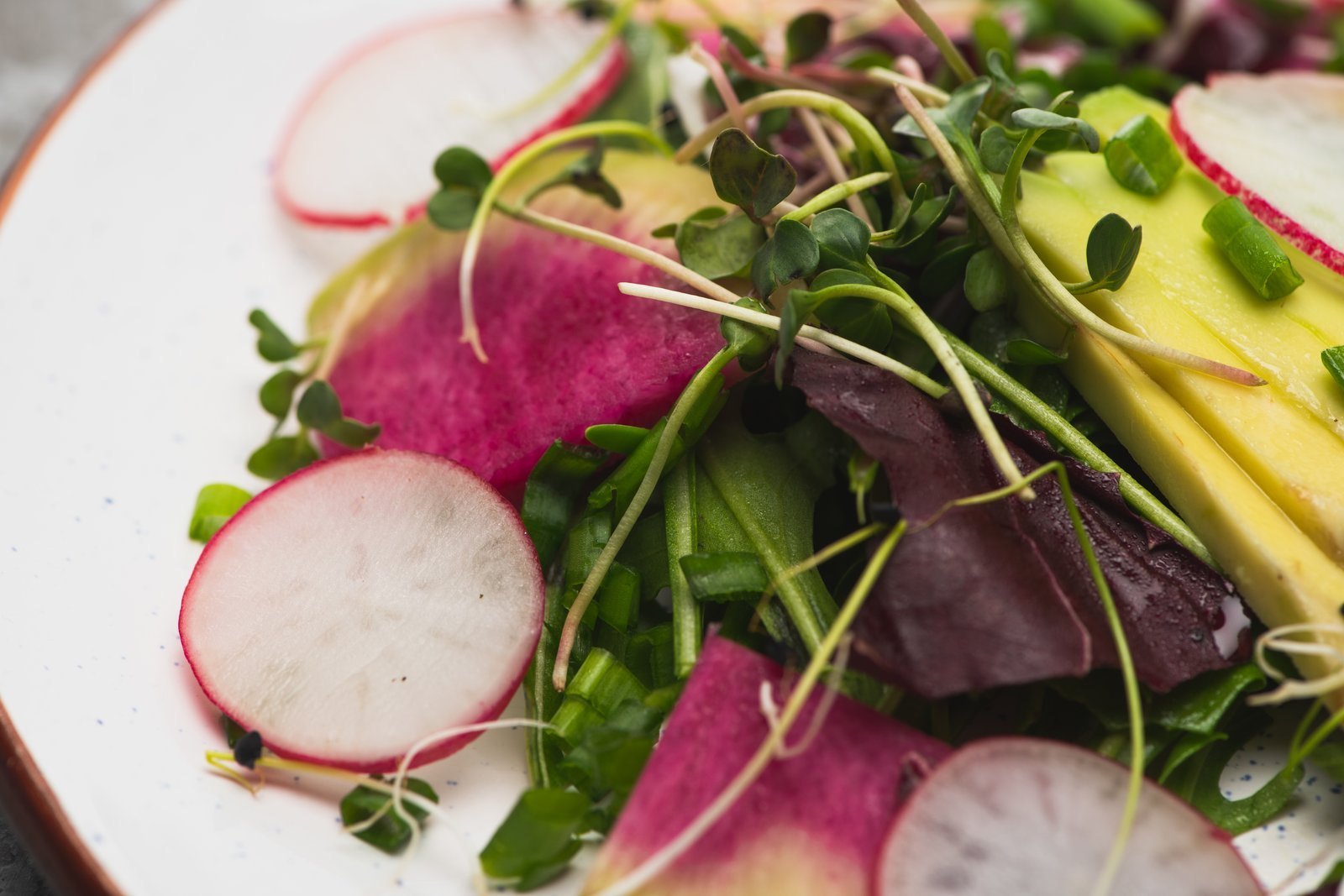
For most healthy people, yes, with the same care you give any raw produce. Penn State Extension says microgreens are normally eaten raw, in salads, sandwiches and appetizers or on pizza (Di Gioia, 2024). New Mexico State University calls them “about as risky as any fresh produce that is eaten raw” (New Mexico State University, n.d.).
Raw is not the same as risk free. The FDA says harmful bacteria in the soil or water where produce grows can reach the crop. Produce can pick up germs after harvest too, during storage or preparation. Federal farm rules lower that risk but do not wipe it out (FDA, 2024b).
So most raw microgreens cause no trouble at all, and a few simple kitchen habits lower the odds further. If you want the outbreak and recall record, our guide to whether microgreens can make you sick lays it out in full.
The table shows what each kitchen step does to germs, according to the FDA.
| Kitchen step | What it does to germs |
|---|---|
| Rinse under running water | Reduces bacteria but does not remove all of them |
| Pat dry with a clean towel | Cuts surface bacteria a little more |
| Keep cold at 4°C (40°F) or below | The fridge setting the FDA advises for produce |
| Cook thoroughly | Kills harmful bacteria |
Why do raw sprouts carry warnings that microgreens do not?
In the eyes of the FDA, they are different crops. Its sprout guidance says sprouts are usually harvested before true leaves start to form. Microgreens reach a later stage, are usually grown in soil or a growing mix and are cut above it. Since microgreens are not sprouts, the FDA’s extra sprout rules do not apply to them (FDA, 2023).
The growing method explains the gap. The FDA says sprouts grow from seeds under warm, humid conditions that suit Salmonella, Listeria and E. coli. Just a few germs on a seed can multiply to high levels during sprouting (FDA, 2024b). For that reason, the agency tells higher-risk groups to avoid raw or lightly cooked sprouts of any kind.
Penn State Extension adds that sprouts are often grown in water and harvested with the seed still attached. Microgreens grow in light, which can help reduce bacteria, so their risk is slightly lower. They still grow in the moist, warm setting that bacteria like (Stoltzfus & Fronk, 2025).
So microgreens are a different crop, not a free pass. Our microgreens vs sprouts guide covers the other differences.
Does washing make raw microgreens safe?
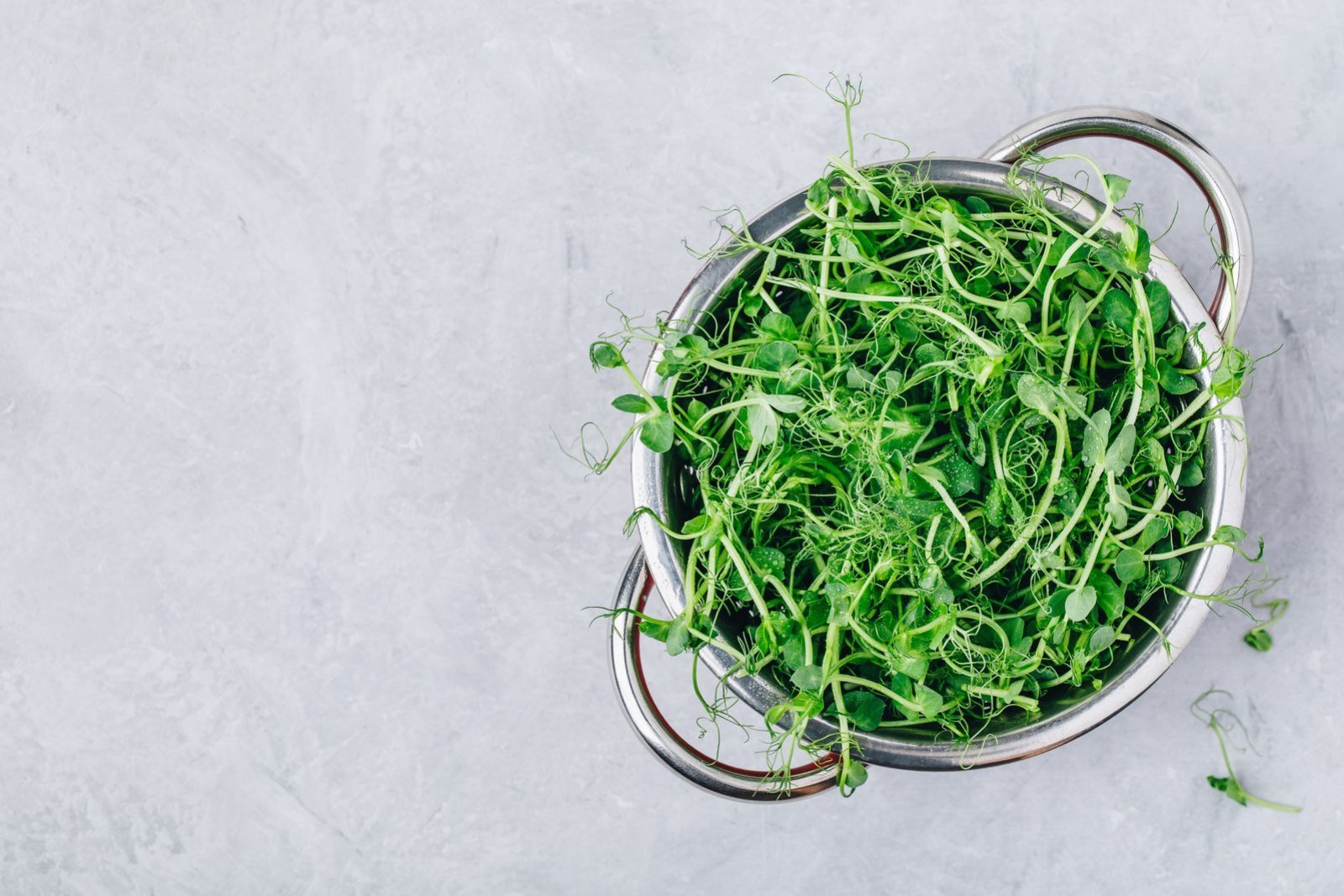
Washing helps, but it does not make them germ free. The FDA says rinsing produce under running water can reduce bacteria but will not eliminate it. Drying with a clean cloth or paper towel can lower surface bacteria a bit more (FDA, 2024b).
Part of the reason is where germs can sit. In a USDA lab study, researchers grew radish microgreens from seed dosed with E. coli O157:H7. The bacteria spread across the whole plant, the edible part included. The seed coats stayed the main spot where they survived and grew (Xiao et al., 2015).
Farms have few fixes at this stage. A 2026 study notes that sanitizer washes after harvest are not often used on microgreens, since the plants are so fragile. UV-C light cut germ counts on sunflower and radish microgreens in the lab. Even so, the authors said it could not fully solve the safety problem, and germ counts rose again in cold storage (Işık et al., 2026).
Rinse right before eating, then, and treat it as one layer of care among several. Our washing guide shows the gentle method.
Is it safer to cook microgreens?
From a germ point of view, yes. The FDA says cooking produce thoroughly kills harmful bacteria and reduces the risk of illness (FDA, 2024b). A rinse lowers germ numbers, and heat is the step that kills them.
Cooking has a cost, though. Microgreens are thin and tender, so they wilt fast in a hot pan. Their crunch and fresh bite are a big part of why people buy them, and Penn State describes them as a food normally eaten raw (Di Gioia, 2024).
We found no FDA or CDC advice that tells healthy adults to cook microgreens. The FDA’s raw-food warning for higher-risk groups names sprouts. No agency we checked gives the same advice for microgreens by name, and no trial has compared illness from raw and cooked microgreens.
If you do want them cooked, stir them into soup, eggs or a stir fry and let them heat through. Keep the raw ones for salads, sandwiches and toppings, where texture matters most. Our cooking guide has more ideas for hot dishes.
Who should think twice about raw microgreens?
People who are more likely to get very sick from food poisoning. The CDC names four groups: adults 65 and older, children under 5, people with weakened immune systems and pregnant women (Centers for Disease Control and Prevention [CDC], 2025).
The CDC gives a few numbers that show the stakes. Children under 5 are three times more likely to be hospitalized with a Salmonella infection. Pregnant women are 10 times more likely to get a Listeria infection. People on dialysis are 50 times more likely to get Listeria (CDC, 2025).
For these groups, the choice between raw and cooked carries more weight. No FDA or CDC page we checked tells them to avoid microgreens by name, and no trial has tested raw microgreens in these groups. Whether to cook them or skip them for now is a good question for a doctor. Our pregnancy guide looks at that case on its own.
This article is general information, not medical advice. Ask your doctor or pharmacist about your own situation.
How do you pick microgreens that are safer to eat raw?
Start with how they are kept and labeled. The FDA says to buy packaged produce only if it is refrigerated or surrounded by ice, and to pass on anything bruised or damaged. If a pack says pre-washed or ready to eat, you can use it without another wash (FDA, 2024b).
Indoor growing still needs care. A University of Arkansas review points to a 2021 outbreak and many recalls of lettuce and microgreens grown indoors. It says germs can get in when a farm’s food safety system fails (Topalcengiz et al., 2023).
Farm size shapes the rules. The FDA page on its Produce Safety Rule, updated in November 2024, says the rule sets minimum standards for growing, harvesting, packing and holding produce. Farms averaging $25,000 or less in produce sales a year over three years are not covered. Some small farms get a partial exemption and must list the farm’s name and full address on the label or at the point of sale (FDA, 2024a).
A small farm can still follow careful habits, so ask how it handles seed and water. You can find growers to ask in the Microgreens 411 directory.
Wrap-up: are microgreens safe to eat raw?
For most healthy people, raw microgreens are about as safe as other raw produce. The FDA treats them as produce, not sprouts, so the strict sprout warnings do not carry over. A rinse and a pat dry lower germ numbers, but neither removes every germ. Thorough cooking kills harmful bacteria, at some cost to crunch. Higher-risk groups should talk with a doctor first.
Like to ask a grower how they handle seed and water before you buy? Search your town in the Microgreens 411 directory to find growers near you. Coverage varies by region, so some areas have few listings so far.
Microgreens 411
Find a microgreens grower near you
Greens that travel less start fresher in your fridge. Find my local grower →
Frequently asked questions
Can you eat the roots of microgreens?
Penn State describes harvest as cutting the seedlings at the base, right above the growing medium. The part you eat is the shoot with its seed leaves or first true leaves. Sprouts are the crop eaten whole, roots and all (Di Gioia, 2024). With a living tray, cut above the mix.
Are any microgreens unsafe raw no matter how clean they are?
Yes. Penn State says tomato, pepper, eggplant and potato seedlings are not edible, since they contain alkaloids that are toxic to people at high levels. Penn State advises leaving out any species you may be allergic to (Di Gioia, 2024). Reputable growers do not sell nightshade seedlings as microgreens.
How long can raw microgreens sit out on the counter?
Treat them like other perishable food. FoodSafety.gov says never to leave perishable food out of the fridge for more than 2 hours. If it sits above 32°C (90°F), as in a hot car or at a summer picnic, the limit drops to 1 hour (U.S. Department of Health and Human Services, 2023).
Does freezing microgreens kill germs?
No. FoodSafety.gov says freezing does not destroy harmful germs. It only keeps food safe until you can cook it (U.S. Department of Health and Human Services, 2023). So a frozen pack is no safer to eat raw than a fresh one. Our freezing guide covers when freezing makes sense.
What should you do with microgreens that look slimy or rotten?
Throw them out. The FDA says to cut away damaged or bruised spots on produce and to throw away any produce that looks rotten (FDA, 2024b). With greens this small, tossing a slimy clump is simpler than trying to trim it. Check the rest of the pack before you serve it.
Does your cutting board matter for raw microgreens?
Yes. The FDA says to keep produce you will eat raw away from raw meat, poultry and seafood. Use a separate board if you can, or wash boards and knives with soap and hot water in between. Start by washing your hands for at least 20 seconds (FDA, 2024b).
References
Centers for Disease Control and Prevention. (2025, January 31). People at increased risk for food poisoning. https://www.cdc.gov/food-safety/risk-factors/index.html
Di Gioia, F. (2024, March 28). The ABCs of microgreens. Penn State Extension. https://extension.psu.edu/the-abcs-of-microgreens
Işık, S., Çetin, B., Moreira, J., & Topalcengiz, Z. (2026). Post-harvest UV-C treatment of microgreens for inactivation of Salmonella, Escherichia coli O157:H7 and Listeria monocytogenes. Foods, 15(6), 974. https://doi.org/10.3390/foods15060974
New Mexico State University. (n.d.). All about eating and growing microgreens. All About Microgreens. https://all-about-microgreens-d.nmsu.edu/
Stoltzfus, J., & Fronk, L. (2025, July 29). Ensuring food safety in microgreens production. Penn State Extension. https://extension.psu.edu/ensuring-food-safety-in-microgreens-production
Topalcengiz, Z., Chandran, S., & Gibson, K. E. (2023). A comprehensive examination of microbial hazards and risks during indoor soilless leafy green production. International Journal of Food Microbiology, 411, 110546. https://doi.org/10.1016/j.ijfoodmicro.2023.110546
U.S. Department of Health and Human Services. (2023, September 18). 4 steps to food safety. FoodSafety.gov. https://www.foodsafety.gov/keep-food-safe/4-steps-to-food-safety
U.S. Food and Drug Administration. (2023, September). Guidance for industry: Standards for the growing, harvesting, packing, and holding of sprouts for human consumption. https://www.fda.gov/media/102430/download
U.S. Food and Drug Administration. (2024a, November 13). FSMA final rule on produce safety. https://www.fda.gov/food/food-safety-modernization-act-fsma/fsma-final-rule-produce-safety
U.S. Food and Drug Administration. (2024b, March 5). Selecting and serving produce safely. https://www.fda.gov/food/buy-store-serve-safe-food/selecting-and-serving-produce-safely
Xiao, Z., Bauchan, G., Nichols-Russell, L., Luo, Y., Wang, Q., & Nou, X. (2015). Proliferation of Escherichia coli O157:H7 in soil-substitute and hydroponic microgreen production systems. Journal of Food Protection, 78(10), 1785–1790. https://doi.org/10.4315/0362-028X.JFP-15-063