
Raw wins, so far.
Broccoli microgreens get a lot of attention for one compound: sulforaphane. Sellers and wellness sites say to eat them raw and never cook them. Is that true, or just a slogan? The answer depends on a plant enzyme that heat can switch off. This guide looks at sulforaphane in broccoli microgreens using lab tests and the few studies done in people. It covers how much they hold, what heat does, whether a quick steam helps, and how to buy and store them. You will see where the research stops, too.
Key Takeaway
In broccoli trials, raw broccoli gave far more sulforaphane than cooked: 37% versus 3.4% in one crossover study (Vermeulen et al., 2008). One small study fed people raw broccoli microgreens and found sulforaphane in their urine (Bouranis et al., 2023). No study has tested cooked broccoli microgreens.
Below: how much they hold, how sulforaphane forms, what cooking does, the case for a light steam, the human study and how to buy and eat them.
Microgreens 411
Find a microgreens grower near you
Greens that travel less start fresher in your fridge. Find my local grower →
Table of Contents
- How much sulforaphane is in broccoli microgreens?
- How does sulforaphane form when you eat them?
- Does cooking destroy sulforaphane?
- Is a light cook ever better than raw?
- What did the human study of broccoli microgreens find?
- How should you buy, store and eat them for sulforaphane?
- Wrap-up: sulforaphane in broccoli microgreens
- Frequently asked questions
- References
How much sulforaphane is in broccoli microgreens?
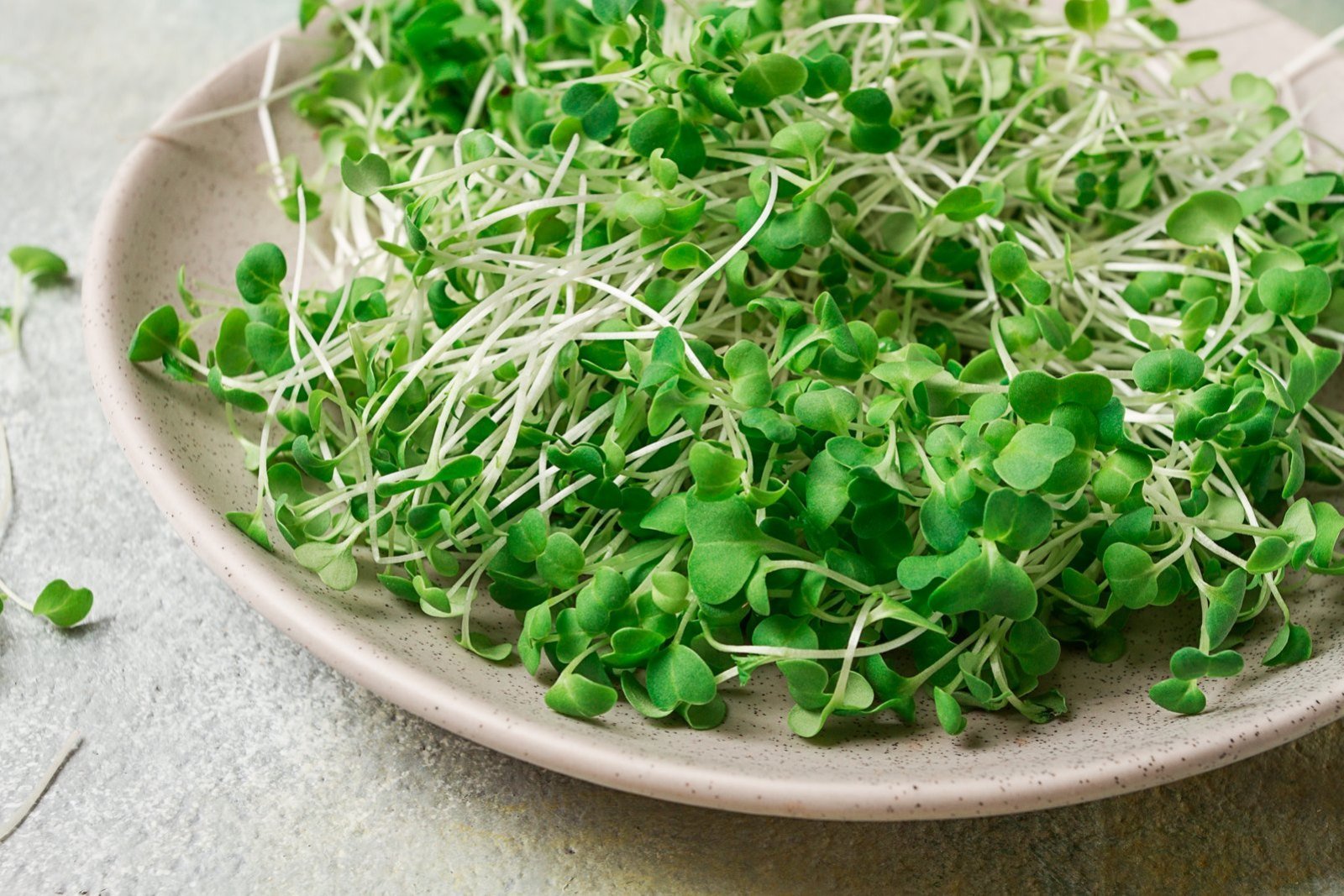
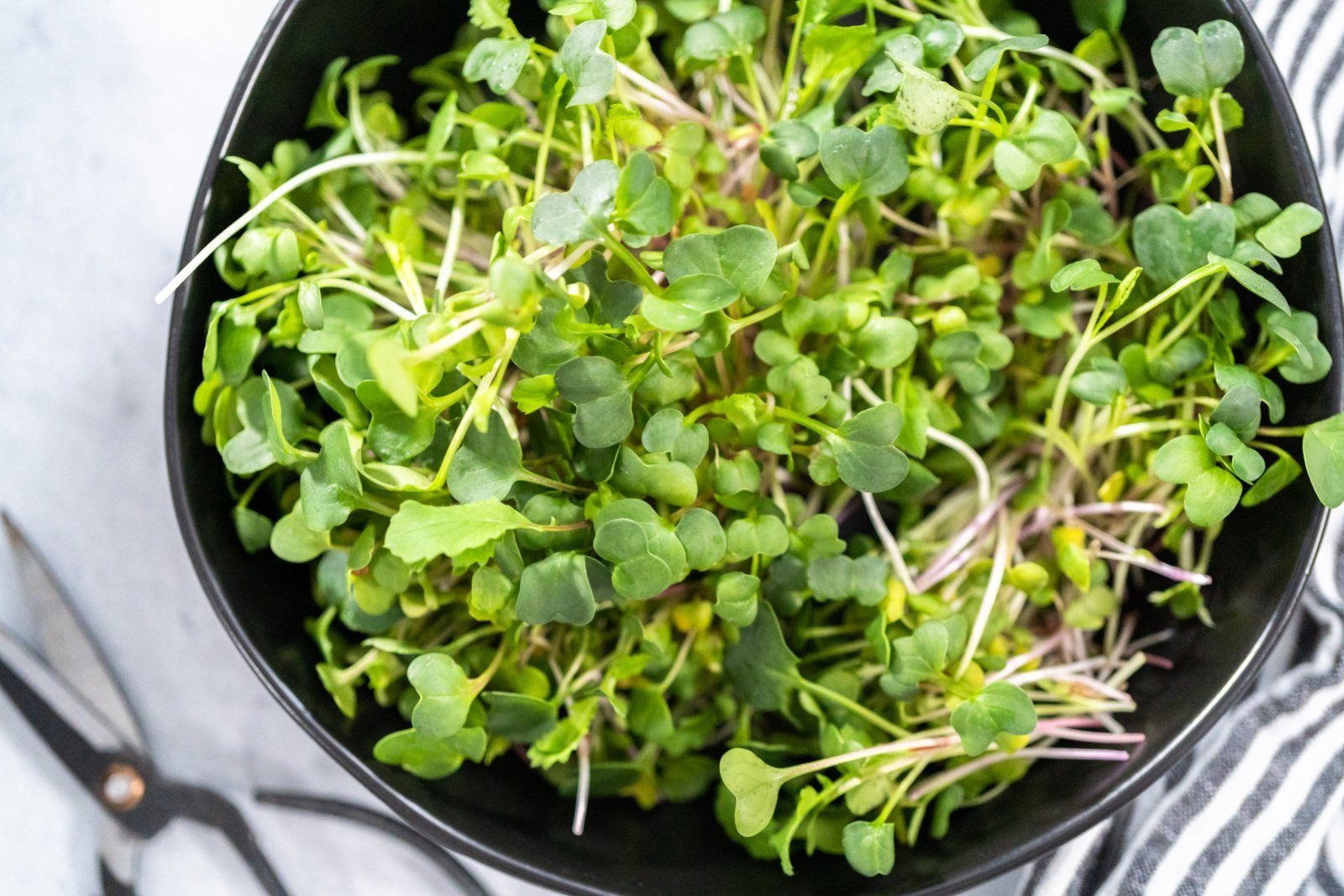
Quite a lot, at least in the one batch that has been tested in a feeding study. Sulforaphane in broccoli microgreens starts as a precursor called glucoraphanin. The plant turns it into sulforaphane only when the leaves are crushed.
A team at Oregon State University measured 10-day-old broccoli microgreens from a commercial farm. They held about 13 micromoles of glucoraphanin per gram. That is close to the 16.6 micromoles per gram reported for broccoli sprouts (Bouranis et al., 2023). Sprouts are the broccoli product most often used in research, so the match matters.
The same team checked whether the level held up in the fridge. Samples tested 1 day and 6 days after harvest showed no real difference. The greens were kept at 4°C (39°F) between tests (Bouranis et al., 2023).
Keep the limits in view. This was one variety from one farm. Levels in a pack from your local grower could be higher or lower, and no label lists them. The table sums up what the cooking studies on broccoli found.
| How it was eaten | What the study found |
|---|---|
| Raw, crushed | 37% of the sulforaphane was taken up by the body |
| Boiled | Almost no sulforaphane formed |
| Steamed 1 to 3 minutes | More sulforaphane than raw in 3 of 4 broccoli types |
| Cooked, plus 1 g mustard powder | Over four times the uptake of cooked broccoli alone |
How does sulforaphane form when you eat them?
It forms when the leaves are damaged. Inside a whole plant cell, the enzyme myrosinase is kept apart from glucoraphanin. Chopping or chewing breaks the cells, the two meet, and the reaction starts (Delage, 2017).
The National Cancer Institute describes the same process for the whole cabbage family. During food preparation, chewing and digestion, these sulfur compounds break down into active products such as isothiocyanates (National Cancer Institute, 2012). Sulforaphane is one of those isothiocyanates.
Not every crushed leaf makes the useful product. A helper protein in broccoli can push the reaction toward sulforaphane nitrile, which researchers describe as inactive. In raw broccoli heads, nitrile made up between 52% and 91% of the breakdown products, depending on the variety (Wang et al., 2012).
People who ate broccoli microgreens excreted some nitrile as well, so this happens with the small greens too (Bouranis et al., 2023). The practical point is simple. The enzyme does its work in your mouth and gut, so chewing well matters more than any special trick. Blending raw greens into a cold drink breaks the cells too. Our smoothie guide has ideas for that.
Does cooking destroy sulforaphane?
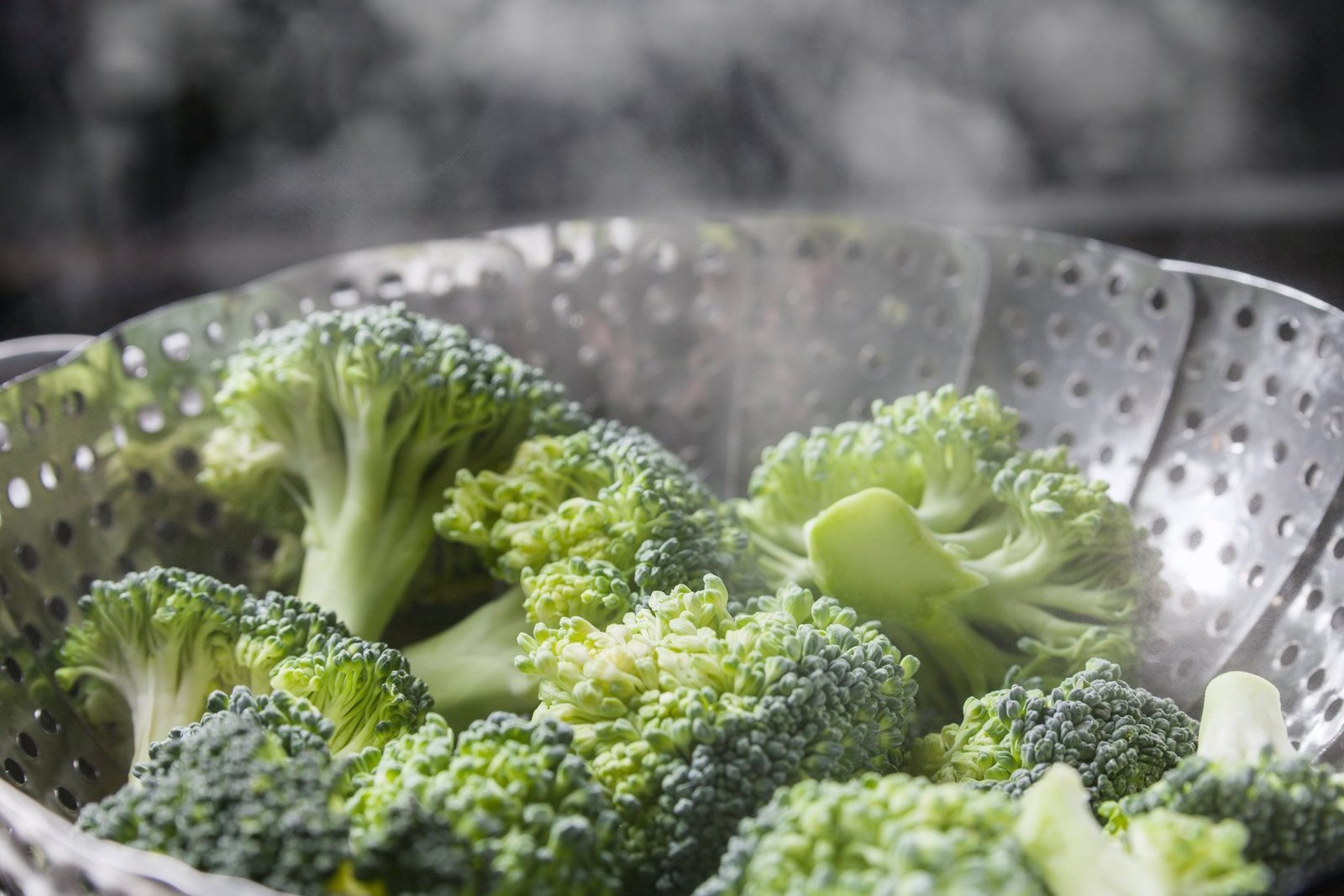
Mostly, yes, in the broccoli studies we found. Heat switches off myrosinase, and without it the precursor stays locked up (Delage, 2017).
The clearest test in people came from the Netherlands. Eight men ate 200 grams of crushed broccoli, raw one time and cooked another time. With raw broccoli, about 37% of the sulforaphane was absorbed. With cooked broccoli, the figure fell to 3.4%. It peaked later in the blood, at about 6 hours instead of 1.6 hours (Vermeulen et al., 2008).
Lab work points the same way. A University of Reading team found that boiling broccoli in water stopped any significant sulforaphane from forming, since the enzyme was gone (Ghawi et al., 2013).
All of these studies used mature broccoli. We found no study that cooked broccoli microgreens and measured sulforaphane. The same enzyme is in both, so the broccoli results are a fair guide, but no trial tested it. Our guide to cooking microgreens covers which dishes suit a little heat.
Is a light cook ever better than raw?
Possibly, for broccoli heads, but the window is short. A University of Illinois study steamed, boiled and microwaved four broccoli varieties for different times. Gentle heat can knock out the helper protein that makes the inactive nitrile before it harms the enzyme itself (Wang et al., 2012).
Steaming for 1 to 3 minutes gave more sulforaphane than raw in three of the four varieties. Boiling and microwaving behaved differently. Those methods raised sulforaphane at first, then lost it, all within about 1 minute (Wang et al., 2012).
The Linus Pauling Institute at Oregon State University gives similar advice for the cabbage family. It says light steaming for under 5 minutes keeps some of the enzyme working (Delage, 2017).
Does this apply to microgreens? Nobody has checked. A 3-minute steam suits a broccoli floret, but it would turn a handful of microgreens limp in seconds. Buyers want them crisp anyway. The simpler plan is to keep them raw and add them to hot food at the very end, just before serving. That way the heat of the dish touches them only briefly.
What did the human study of broccoli microgreens find?
It found that people absorb sulforaphane from them, and little else so far. Eleven healthy adults, aged 22 to 54, each ate 16 grams of fresh broccoli microgreens with a breakfast of bagels and orange juice. That is about 0.56 ounce (Bouranis et al., 2023).
The researchers then collected urine and stool for two days. Sulforaphane products showed up in every person’s urine. They peaked 3 to 6 hours after the meal. Each serving held about 100 micromoles of potential sulforaphane, and on average about 50.5 micromoles of products came out in urine. Amounts varied a lot from one person to the next (Bouranis et al., 2023).
One serving did not change the mix of gut bacteria. The authors call their work a foundation for future studies of health benefits.
So keep the result in proportion. It measured uptake from a single raw meal, in a small group. It did not compare microgreens with sprouts directly, and it did not measure any health outcome. No trial has tested whether eating broccoli microgreens regularly changes anyone’s health. Our nutrition guide covers what other studies have measured.
How should you buy, store and eat them for sulforaphane?
Buy them fresh, keep them cold and eat them raw. Look for packs that are cold to the touch and dry inside, with green leaves and no slime. Local growers often harvest close to the day you buy. You can search your area in the Microgreens 411 directory to find one.
At home, keep the pack in the fridge. In the Oregon State test, glucoraphanin stayed steady for 6 days at 4°C (39°F) (Bouranis et al., 2023). Our storage guide explains how to keep them crisp.
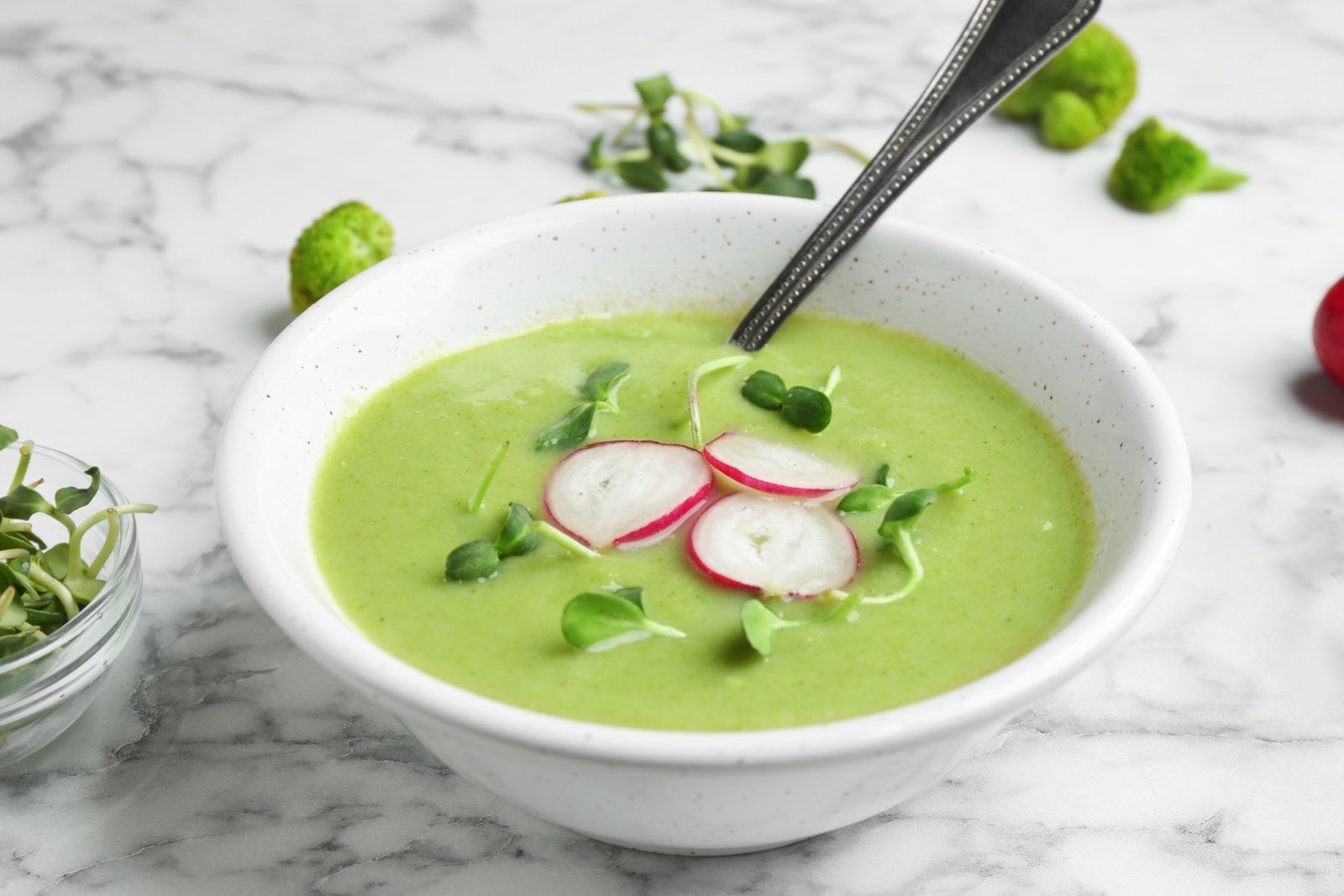
Eat them on salads, sandwiches, wraps or grain bowls, and chew well. For soup or eggs, add a handful after you turn off the heat. Our broccoli microgreens guide covers taste and more ways to use them.
If you do cook broccoli, one trick has support. Twelve adults ate 200 grams of cooked broccoli with and without 1 gram of brown mustard powder. With the mustard, their sulforaphane uptake was over four times higher (Okunade et al., 2018). Mustard seed carries its own active enzyme.
Wrap-up: sulforaphane in broccoli microgreens
Broccoli microgreens carry plenty of the precursor to sulforaphane, and the level held steady in cold storage. The enzyme that turns it into sulforaphane works when you chew raw greens, and heat shuts it down. Broccoli studies show raw beats boiled by a wide margin.
So eat them raw, chew well and add them to hot dishes at the end. Treat health claims with care, since no trial has tested long-term effects.
This article is general information, not medical advice. Ask your doctor or pharmacist about your own situation.
Want fresh broccoli microgreens from a nearby farm? Search your town in the Microgreens 411 directory. Coverage varies by region, so some areas have few listings so far.
Microgreens 411
Find a microgreens grower near you
Greens that travel less start fresher in your fridge. Find my local grower →
Frequently asked questions
Do broccoli sprouts have more glucoraphanin than grown broccoli?
Yes, by a wide margin. The Linus Pauling Institute says three-day-old broccoli sprouts contain 10 to 100 times more glucoraphanin by weight than mature broccoli plants (Delage, 2017). The precursor level in the seed stays fairly constant as the plant grows, so younger plants pack it into less weight.
Can sulforaphane interact with medicines?
The Linus Pauling Institute says isothiocyanates are not known to interact with any drugs. It notes they may block a family of enzymes that break down many medicines, which raises a possible risk (Delage, 2017). If you take regular medication, ask your pharmacist before using concentrated broccoli supplements.
Do cooked cabbage-family vegetables give you any isothiocyanates?
Some. Gut bacteria can do part of the conversion. In a feeding study of 45 healthy adults, about 12% of the precursors became isothiocyanate products on average, with a range of 1.1% to 40.7% between people (Delage, 2017).
Does eating cruciferous vegetables prevent cancer?
The evidence is not settled. The National Cancer Institute says studies in people have shown mixed results. A few studies found effects on biomarkers of cancer-related processes, which are lab signals rather than proof of fewer cancers (National Cancer Institute, 2012).
Do radish and arugula microgreens contain glucosinolates too?
They come from the same cabbage family. The National Cancer Institute lists radishes, arugula and kale among cruciferous vegetables and says this group contains glucosinolates (National Cancer Institute, 2012). Each plant makes its own mix, so the main product is not always sulforaphane.
Why do broccoli microgreens taste sharp?
The bite comes from the same reaction. When plant cells are damaged, the enzyme meets the sulfur compounds and makes products with a pungent aroma and a spicy, slightly bitter taste (Delage, 2017). Stronger bite in a pack hints that the reaction is happening as you chew.
References
Bouranis, J. A., Wong, C. P., Beaver, L. M., Uesugi, S. L., Papenhausen, E. M., Choi, J., Davis, E. W., Da Silva, A. N., Kalengamaliro, N., Chaudhary, R., Kharofa, J., Takiar, V., Herzog, T. J., Barrett, W., & Ho, E. (2023). Sulforaphane bioavailability in healthy subjects fed a single serving of fresh broccoli microgreens. Foods, 12(20), 3784. https://doi.org/10.3390/foods12203784
Delage, B. (2017). Isothiocyanates. Linus Pauling Institute Micronutrient Information Center, Oregon State University. https://lpi.oregonstate.edu/mic/dietary-factors/phytochemicals/isothiocyanates
Ghawi, S. K., Methven, L., & Niranjan, K. (2013). The potential to intensify sulforaphane formation in cooked broccoli (Brassica oleracea var. italica) using mustard seeds (Sinapis alba). Food Chemistry, 138(2–3), 1734–1741. https://doi.org/10.1016/j.foodchem.2012.10.119
National Cancer Institute. (2012). Cruciferous vegetables and cancer prevention. National Institutes of Health. https://www.cancer.gov/about-cancer/causes-prevention/risk/diet/cruciferous-vegetables-fact-sheet
Okunade, O., Niranjan, K., Ghawi, S. K., Kuhnle, G., & Methven, L. (2018). Supplementation of the diet by exogenous myrosinase via mustard seeds to increase the bioavailability of sulforaphane in healthy human subjects after the consumption of cooked broccoli. Molecular Nutrition & Food Research, 62(18), e1700980. https://doi.org/10.1002/mnfr.201700980
Vermeulen, M., Klöpping-Ketelaars, I. W. A. A., van den Berg, R., & Vaes, W. H. J. (2008). Bioavailability and kinetics of sulforaphane in humans after consumption of cooked versus raw broccoli. Journal of Agricultural and Food Chemistry, 56(22), 10505–10509. https://doi.org/10.1021/jf801989e
Wang, G. C., Farnham, M., & Jeffery, E. H. (2012). Impact of thermal processing on sulforaphane yield from broccoli (Brassica oleracea L. ssp. italica). Journal of Agricultural and Food Chemistry, 60(27), 6743–6748. https://doi.org/10.1021/jf2050284