

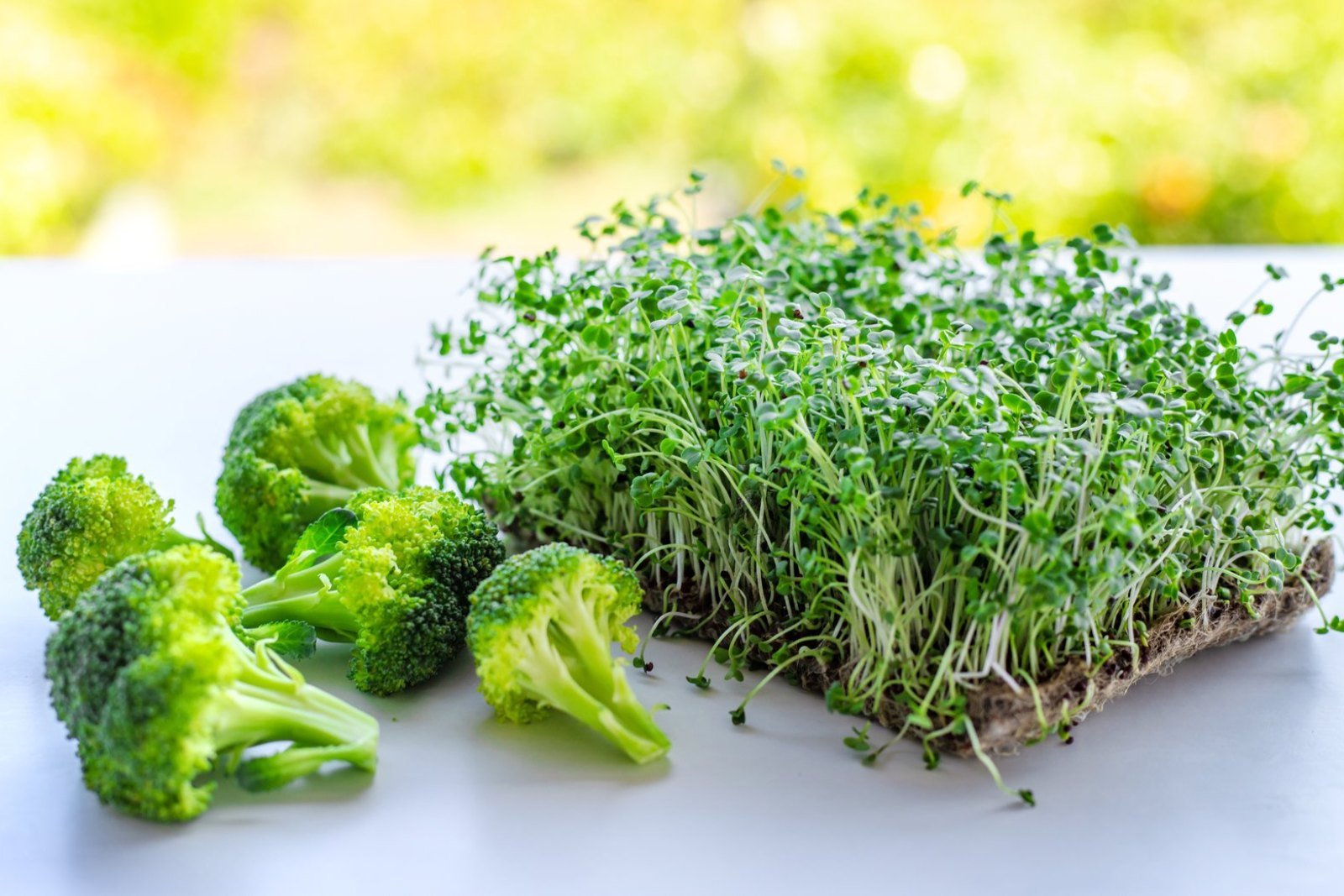
Broccoli microgreens are the mild member of the cabbage family.
They are broccoli seedlings, cut a week or two after they sprout, when the first two leaves have opened. You see them in grocery clamshells, in mixed packs and on restaurant plates. They look plain next to purple radish or red amaranth. Their appeal is a gentle flavor that suits almost any dish. This guide covers how they taste, how people use them, what research has measured and how to pick a fresh pack, with a source behind every claim.
Key Takeaway
Broccoli microgreens taste like mild broccoli, and most people eat them raw (Beck, 2025). Buy them cold and dry, keep them in the fridge at 4°C (40°F) or below and eat them within 3 to 5 days of harvest. Lab and small human studies are early, so treat them as food, not medicine.
Below: what they are, how they taste, ways to use them, what studies found, how to choose a pack and how to store it.
Microgreens 411
Find a microgreens grower near you
Greens that travel less start fresher in your fridge. Find my local grower →
Table of Contents
- What are broccoli microgreens?
- What do broccoli microgreens taste like?
- How do you use broccoli microgreens?
- What does research say about broccoli microgreens?
- How do you pick a good pack of broccoli microgreens?
- How should you store broccoli microgreens at home?
- Wrap-up: broccoli microgreens in short
- Frequently asked questions
- References
What are broccoli microgreens?
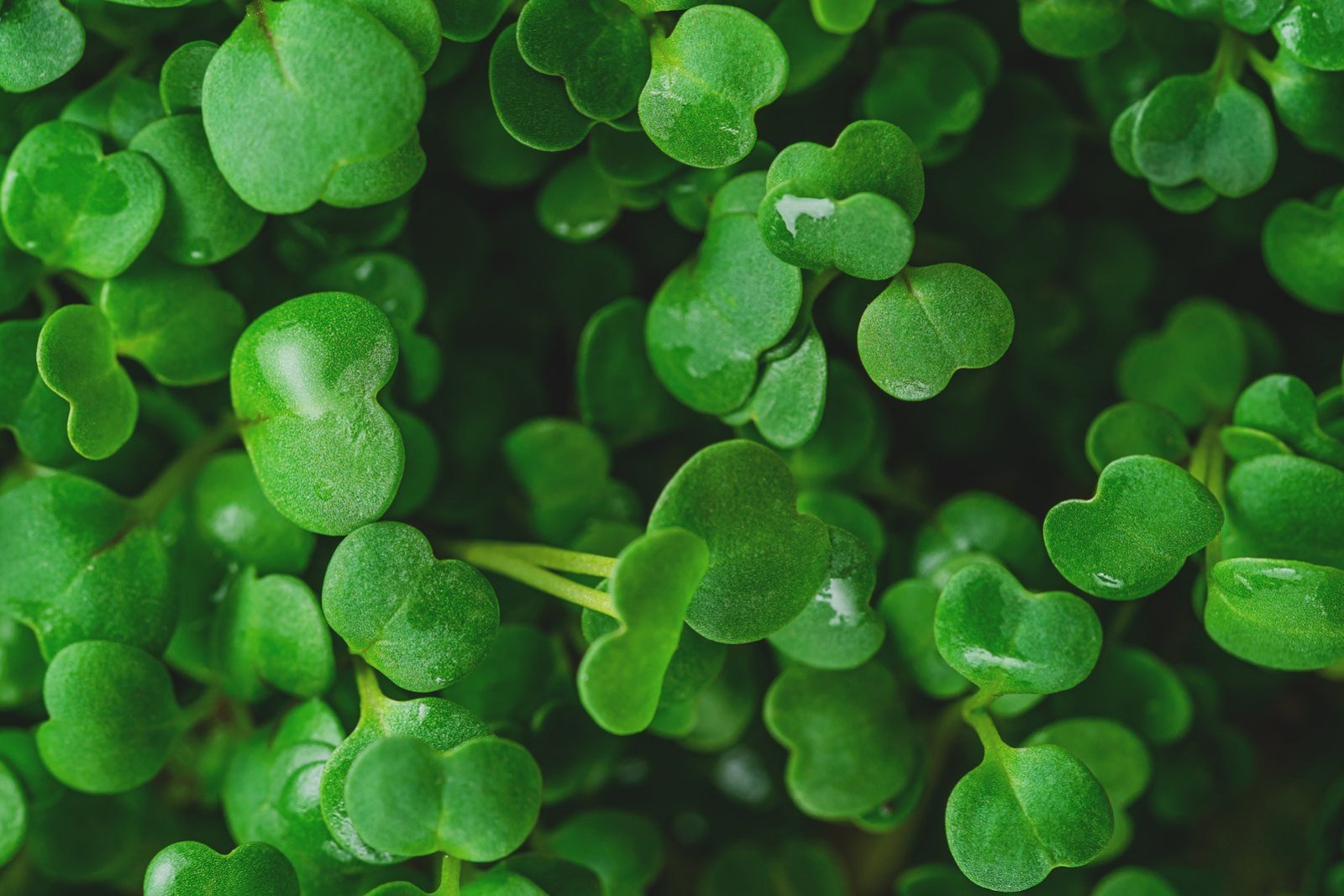
They are young broccoli plants, cut before they grow their adult leaves. Penn State Extension places broccoli in the cabbage family, the group that gives us most popular microgreens. Its relatives in that family include cauliflower, kale, kohlrabi, mustard and cress. Microgreens in general are harvested 7 to 21 days after they sprout, once the seed leaves have opened (Di Gioia, 2024).
Broccoli sits near the fast end of that range. Utah State University Extension lists it as ready in about 8 to 12 days (Beck, 2025).
What you buy is the stem and the first pair of leaves. Growers cut the seedlings just above the growing mix, so the roots stay behind (Di Gioia, 2024). The shoots are small, since broccoli has small seeds (Di Gioia, 2024). They have none of the florets you know from the grown plant.
You may see them sold alone or in a mixed pack with other greens. Read the label to check which crops you are getting.
| Feature | Broccoli microgreens |
|---|---|
| Days to harvest | About 8 to 12 |
| Flavor | Mild broccoli |
| Part you eat | Stem and seed leaves |
| Fridge life | Best within 3 to 5 days of harvest |
What do broccoli microgreens taste like?
Mild, fresh and a little like broccoli. Utah State University Extension describes the flavor in two words: “mild broccoli” (Beck, 2025). Oregon State University Extension puts broccoli in its “mild” group next to cabbage, kale, peas and sunflower (Oregon State University Extension Service, 2021).
Penn State ties the sharp taste of cabbage-family greens to natural compounds called glucosinolates (Di Gioia, 2024). In broccoli that bite is soft, so expect a fresh green taste rather than heat.
Shoppers seem to like them. In a Colorado State University taste panel, 99 consumers rated six microgreens, broccoli among them. All six earned high average liking scores. The clearest differences between them showed up in flavor and overall liking (Michell et al., 2020). The same panel found that people wary of new foods tended to rate microgreens lower.
That mild taste makes broccoli microgreens a safe first buy. Try them next to a spicier kind and you will learn your own range fast. Our flavor guide ranks the common kinds from mild to hot.
How do you use broccoli microgreens?

Raw, on almost anything, added right before you serve it. Penn State says microgreens are normally eaten raw in salads, appetizers and sandwiches, with meat or fish, or on pizza (Di Gioia, 2024).
Oregon State University Extension suggests using them anywhere you would use sprouts. That covers salads, sandwiches and a garnish on soup or a main dish (Pokorny, 2020). The same article notes that a little goes a long way. Oregon State’s Food Hero page adds that kids can rinse them and sprinkle them on meals (Oregon State University Extension Service, 2021).
Broccoli microgreens suit dishes where a strong green would take over. Scatter them on eggs, avocado toast, rice bowls or a plate of roasted vegetables. Tuck a handful into a wrap for crunch.
Heat wilts them in seconds, so add them at the end. If you want to try them warm, our cooking guide explains what happens to microgreens on the stove. For more ideas by meal, our everyday meals guide has a full list.
What does research say about broccoli microgreens?
Early studies show they carry useful nutrients, but no trial has tested health effects in people. Most of the work so far happens in labs.
An Idaho State University study measured minerals in broccoli microgreens and compared them with published values for the grown vegetable. The microgreens had more magnesium, manganese, copper and zinc, whichever way they were grown (Weber, 2017). That is a measure of what is in the greens, not of what happens in your body.
One small study did feed them to people. Eleven healthy adults at Oregon State University ate a single 16 gram (0.56 ounce) serving with breakfast. The greens held about as much glucoraphanin, a compound broccoli sprouts are known for, as earlier reports on sprouts. Researchers then found its breakdown products in the subjects’ urine (Bouranis et al., 2023).
The authors call this a foundation for future research, not proof of benefit. Our nutrition guide puts these findings next to other crops.
How do you pick a good pack of broccoli microgreens?
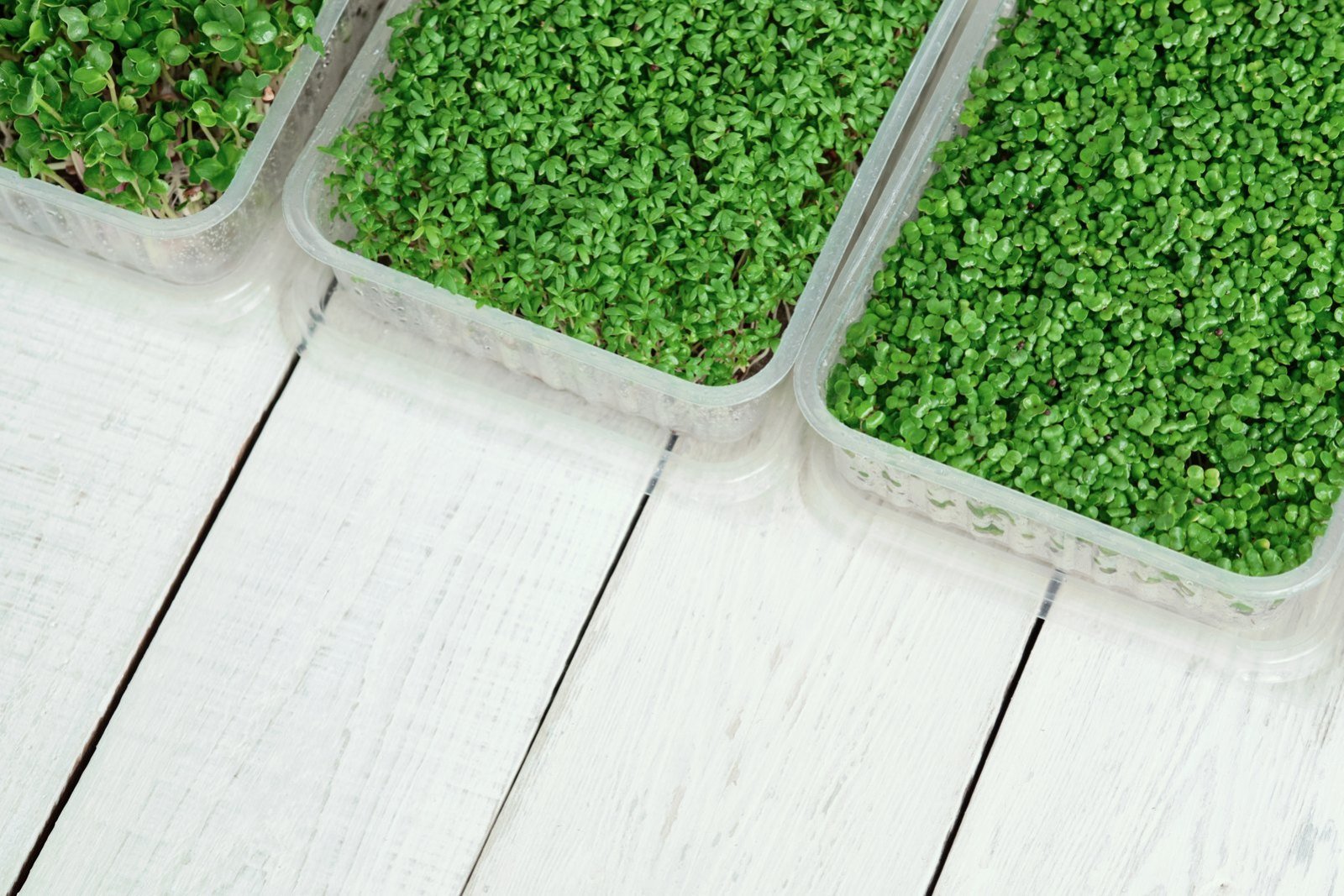
Choose a cold, dry pack with upright green leaves. The FDA advises buying produce that is not bruised or damaged. Pre-cut and packaged produce should be kept in the fridge case or on ice (FDA, 2024).
Moisture is the next thing to check. New Mexico State University says microgreens should be kept dry, since a damp pack is ideal for bacteria (New Mexico State University, n.d.). Skip clamshells with water pooled in the bottom or leaves pressed into a wet mat.
Freshness counts with microgreens. The same source says to eat them no later than 3 to 5 days after harvest. A harvest date on the label, or a grower who can tell you the day they were cut, helps you judge.
Buying from a local grower lets you ask when the greens were cut. You can find microgreens growers near you in the Microgreens 411 directory. Our guide to where to buy microgreens compares stores, markets and farms.
How should you store broccoli microgreens at home?
Put them straight in the fridge at 4°C (40°F) or below, still in their container. That temperature is the FDA’s limit for perishable produce, and it suggests a fridge thermometer to check it (FDA, 2024).
Keep them away from the counter. New Mexico State University warns that cut microgreens may not last more than a day or two outside a fridge. Wash them only when you are about to eat them, since early washing adds moisture and damages the leaves (New Mexico State University, n.d.). Our washing guide shows a gentle method. Once rinsed, Oregon State’s Food Hero page suggests wrapping greens in a paper towel inside a plastic bag and using them within 1 to 2 days (Oregon State University Extension Service, 2021).
Cold storage seems to hold one of their main compounds steady. In the Oregon State study, broccoli microgreens kept at 4°C (40°F) had similar glucoraphanin levels one day and six days after harvest (Bouranis et al., 2023).
Oregon State Extension says microgreens don’t store well, so plan to use them soon (Pokorny, 2020). Our storage guide covers containers and paper towels.
Wrap-up: broccoli microgreens in short
Broccoli microgreens are young broccoli seedlings with a mild, fresh taste. They are a gentle first pick for anyone new to microgreens, and they fit on eggs, bowls, sandwiches and salads.
Research on them is early. Studies have measured minerals and glucoraphanin, but no trial has tested health effects.
Buy them cold and dry, store them in the fridge and eat them within a few days of harvest. A local grower can tell you when your greens were cut. Search your town in the Microgreens 411 directory to find one. Coverage varies by region, so some areas have few listings so far.
Microgreens 411
Find a microgreens grower near you
Greens that travel less start fresher in your fridge. Find my local grower →
Frequently asked questions
Are broccoli microgreens the same as broccoli sprouts?
No. Sprouts are eaten whole, with roots and seed attached. Microgreens grow longer and are cut above the growing mix, so you eat only the stem and leaves (Di Gioia, 2024). Check the label before you buy, since the two can look alike in a small pack.
Which microgreens are spicier than broccoli?
Radish, mustard and arugula. Oregon State University Extension lists those three in its “spicy” group (Oregon State University Extension Service, 2021). Utah State University Extension describes radish microgreens as nutty and spicy (Beck, 2025). Mix a few into a pack of broccoli if you want more kick. Start with a small amount.
How do broccoli microgreens compare with kale microgreens?
Both come from the cabbage family and take a similar number of days to grow. Utah State University Extension describes kale as having a strong brassica flavor with a nutty edge, compared with the mild flavor of broccoli (Beck, 2025).
Why do some packs mix broccoli with other microgreens?
Penn State notes that growers sometimes combine different species in one pack to get a certain color or taste (Di Gioia, 2024). A mix lets a mild green like broccoli sit beside sharper or more colorful kinds. Read the label to see what is inside.
Does the growing method change the minerals in them?
It seems to. In the Idaho State study, compost-grown broccoli microgreens came out ahead of the mature vegetable on nine minerals. Across eight key minerals, they averaged 1.73 times its levels. Hydroponic greens led on fewer minerals (Weber, 2017).
What stops more people from buying microgreens?
In the Colorado State panel, shoppers named knowing little about microgreens, cost, access and shelf life as factors in whether they buy them (Michell et al., 2020). Buying from a nearby grower can help with the last two. People who liked the samples more were more likely to say they would buy microgreens.
References
Beck, S. (2025, February 20). Grow your own microgreens. Utah State University Extension. https://extension.usu.edu/yardandgarden/research/grow-your-own-microgreens
Bouranis, J. A., Wong, C. P., Beaver, L. M., Uesugi, S. L., Papenhausen, E. M., Choi, J., Davis, E. W., II, Da Silva, A. N., Kalengamaliro, N., Chaudhary, R., Kharofa, J., Takiar, V., Herzog, T. J., Barrett, W., & Ho, E. (2023). Sulforaphane bioavailability in healthy subjects fed a single serving of fresh broccoli microgreens. Foods, 12(20), 3784. https://doi.org/10.3390/foods12203784
Di Gioia, F. (2024, March 28). The ABCs of microgreens. Penn State Extension. https://extension.psu.edu/the-abcs-of-microgreens
Michell, K. A., Isweiri, H., Newman, S. E., Bunning, M., Bellows, L. L., Dinges, M. M., Grabos, L. E., Rao, S., Foster, M. T., Heuberger, A. L., Prenni, J. E., Thompson, H. J., Uchanski, M. E., Weir, T. L., & Johnson, S. A. (2020). Microgreens: Consumer sensory perception and acceptance of an emerging functional food crop. Journal of Food Science, 85(4), 926–935. https://doi.org/10.1111/1750-3841.15075
New Mexico State University. (n.d.). Eating microgreens. All About Microgreens. https://all-about-microgreens-d.nmsu.edu/consumers.html
Oregon State University Extension Service. (2021). Microgreens (Food Hero). https://extension.oregonstate.edu/imported-publication/microgreens
Pokorny, K. (2020, July 17). Microgreens add big flavor from a small footprint. Oregon State University Extension Service. https://extension.oregonstate.edu/news/microgreens-add-big-flavor-small-footprint
U.S. Food and Drug Administration. (2024, March 5). Selecting and serving produce safely. https://www.fda.gov/food/buy-store-serve-safe-food/selecting-and-serving-produce-safely
Weber, C. F. (2017). Broccoli microgreens: A mineral-rich crop that can diversify food systems. Frontiers in Nutrition, 4, 7. https://doi.org/10.3389/fnut.2017.00007