
Finding a local grower should take minutes, not an afternoon.
Some small farms sell only at markets or from the farm, so you won’t spot them in a store. A microgreens directory puts those growers in one place, sorted by town. This guide walks through Microgreens 411 the way a home cook or chef would use it. You’ll see how to search, what the filters do, how to read a grower’s profile and what to check before you order. It ends with what to try if your area has few listings. Every step describes the site as it works today.
Key Takeaway
Search Microgreens 411 by country, region and town or postal code, then choose growers located nearby or growers that deliver to you (Microgreens 411, n.d.-a). Town pages add filters for pickup, delivery, shipping, subscriptions and markets. Staff review every listing before it appears.
Below: searching, region and town pages, filters, profiles, checks before you order and what to do if few growers are listed near you.
Microgreens 411
Find a microgreens grower near you
Greens that travel less start fresher in your fridge. Find my local grower →
Table of Contents
- How do you search the Microgreens 411 directory?
- What does a region or town page show?
- How do the filters narrow your search?
- What is on a grower’s profile?
- How do you check a listing before you order?
- What if few growers are listed near you?
- Wrap-up: using the microgreens directory
- Frequently asked questions
- References
How do you search the Microgreens 411 directory?
Start on the Microgreens 411 home page and tell it where you are. The search box asks for a country, then a state, province or region, then a city or postal code. A button marked Show growers runs the search (Microgreens 411, n.d.-a).
Below the box sits a choice called Buying preference. Pick Located nearby to see growers based in or near your town. Pick Delivers here to see growers who say they deliver to your area (Microgreens 411, n.d.-a).
The site does not try to pin down your exact spot. The home page says it can tell your country but not your town, and it doesn’t guess. You can type a town or press Use my location instead (Microgreens 411, n.d.-a).
Prefer to look around first? The Browse all locations link opens a page that lists every country and region, with grower counts for each state (Microgreens 411, n.d.-b). That is the quickest way to see how deep the microgreens directory runs where you live. The table shows the main ways in.
| Way to search | What you get |
|---|---|
| Town or postal code | Growers based in or near that town |
| Delivers here | Growers that deliver to your area |
| Use my location | The closest town in the directory |
| Browse all locations | Every country and region, with grower counts |
What does a region or town page show?
A region page gives you the big picture. On 9 November 2026, the Vermont page listed 6 growers in 5 towns. It shows a map, a list of towns with a count beside each one and a list of every grower in the state (Microgreens 411, n.d.-d).
Each grower line packs in a lot. It names the town where the farm is based, says whether it offers pickup or delivery and counts the products listed. A Reviewed tag sits on each entry. Some lines read “pickup/delivery not provided” or “products not provided” where the grower hasn’t filled those in yet (Microgreens 411, n.d.-d).
The map is careful with privacy. Its key separates exact farm locations from approximate areas where the street is not shown (Microgreens 411, n.d.-d).
Town pages go one level deeper. The Burlington, Vermont, page lists 2 reviewed growers based in the town. It links to nearby towns in the same state, each with its own count (Microgreens 411, n.d.-e). If your own town comes up short, those links are the next place to look in the microgreens directory.
How do the filters narrow your search?
Filters sit on each town page, and they match the questions most buyers ask first. Under “How you’ll get it,” you can tick Pickup, Delivery, Shipping or Subscription. Under More, you can choose growers at an upcoming market or growers marked Certification checked. A Crops box lets you pick one or more crops (Microgreens 411, n.d.-e).
A switch near the top changes the whole list. On the Burlington page it reads “Based in Burlington,” with a link to switch to “Delivers to Burlington” (Microgreens 411, n.d.-e). The first view shows farms in town. The second shows growers who serve the town from somewhere else.
You can sort results by directory order or by name, and the page tells you how many growers match (Microgreens 411, n.d.-e).
Filters in any microgreens directory depend on the details growers give. A grower who left the delivery field blank may not show up under Delivery. If a filter returns nothing, clear it and read the full list. Our microgreens delivery guide compares the ways greens can reach you.
What is on a grower’s profile?
Click View profile and you get the grower’s full page. Take Uphill Farm in Rochester, Vermont. The header shows the town and says the street address is not published (Microgreens 411, n.d.-f).
Two labels come next. One reads “Reviewed by staff.” The other says ownership is not yet claimed and the details are not yet confirmed by the grower (Microgreens 411, n.d.-f). That tells you the facts came from staff research, not from the farm itself.
A Visit website button links to the farm’s own site. An About section describes the farm in a few lines. A Products list names each item with its pack size and price, or says “pack size not provided” and “Price: ask the grower” where those are missing (Microgreens 411, n.d.-f).
The Pickup and delivery section lists the options and says whether a subscription is offered. On this profile it lists pickup and adds a short note about ordering through the farm’s online store. A last section lists upcoming markets (Microgreens 411, n.d.-f). Read each profile in the microgreens directory from top to bottom before you contact anyone.
How do you check a listing before you order?
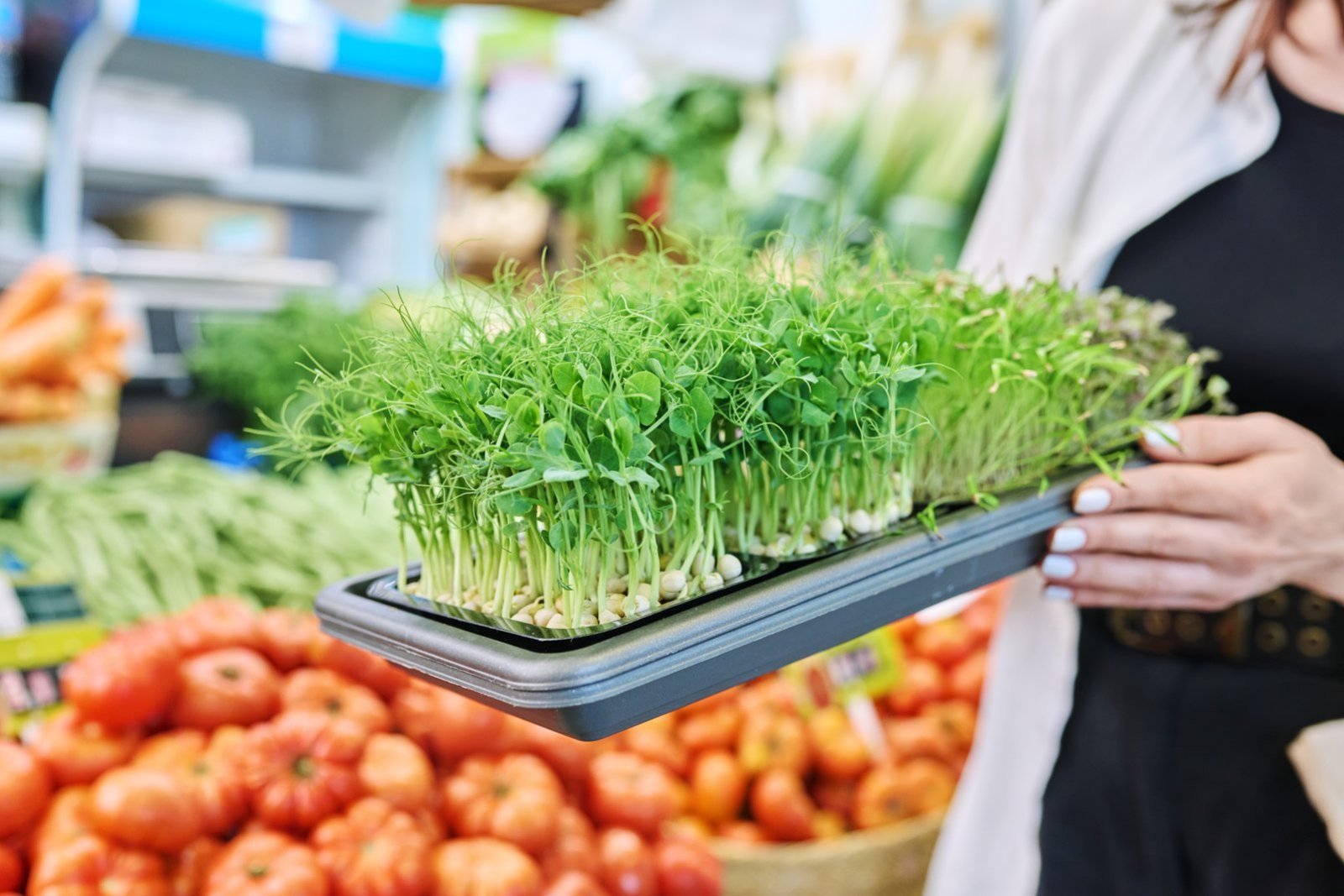
Treat the profile as a starting point, then confirm the details with the grower. Every microgreens directory listing on Microgreens 411 is reviewed by staff before it appears (Microgreens 411, n.d.-c). Unclaimed listings say plainly that the grower has not confirmed them yet (Microgreens 411, n.d.-f).
Start with the farm’s website. If the link works and the site shows this season’s products, the listing is likely current. Then check the details that matter for your order: price, pack size, pickup spot and delivery days.
Blank fields are questions to ask. “Price: ask the grower” means just that. Send a short message saying what you want, how much and when, and ask how the farm takes payment.
Markets let you check in person. Washington State’s Department of Agriculture suggests visiting your local farmers market to see what is for sale and meet the farmers. It adds that buyers can ask whether a farmer sells wholesale too (Washington State Department of Agriculture, 2026). Our farmers market guide covers what to look for at the stall. Once you buy, our storage guide explains how to keep the greens fresh.
What if few growers are listed near you?
Widen the search before you give up. Switch to Delivers here, then try the nearby towns on your state’s page (Microgreens 411, n.d.-a). Coverage varies a lot. On 9 November 2026, the browse page counted 124 growers in California and 113 in Florida, but 4 in Delaware and 2 in Washington, D.C. (Microgreens 411, n.d.-b).
Outside the United States, the lists are shorter. Canada showed 11 regions and England 41 council areas. Several countries, including France, Germany and Japan, showed none yet (Microgreens 411, n.d.-b).
The near-me page is open about gaps. Some towns carry a note that their region is not yet recorded by staff, so they have no page yet (Microgreens 411, n.d.-c).
Other free tools can fill in. USDA’s Local Food Directories let you search farmers markets, CSAs, food hubs and on-farm markets by zip code and product (USDA Agricultural Marketing Service, n.d.-a). Our guide to where to buy microgreens compares stores, markets and farms.
Know a grower who isn’t listed? Send them our guide to getting listed on Microgreens 411. Each new farm makes the microgreens directory more useful for the next buyer.
Wrap-up: using the microgreens directory
Using Microgreens 411 comes down to a few steps. Search by town or postal code, choose nearby growers or ones that deliver, then narrow the list with filters. Read each profile from top to bottom, and treat blank fields as questions for the grower.
Unclaimed listings come from staff research, so confirm prices and pickup details before you order. If your area is thin, try nearby towns or the delivery view.
Ready to look? Search your town in the Microgreens 411 directory to find growers near you. Coverage varies by region, so some areas have few listings so far.
Microgreens 411
Find a microgreens grower near you
Greens that travel less start fresher in your fridge. Find my local grower →
Frequently asked questions
Can you order microgreens through Microgreens 411?
Not on the pages we read. Profiles point you to the grower instead. A Visit website button opens the farm’s own site, and ordering notes describe how that farm takes orders (Microgreens 411, n.d.-f). Expect to arrange payment, pickup or delivery with the grower.
Does Use my location save where you are?
The near-me page says location is optional. It says your position stays in your browser, is only compared with town centres and is never stored. The site asks only after you press the button (Microgreens 411, n.d.-c). Typing a town name gets you to the same pages.
Can restaurants find wholesale growers on the site?
The home page has a link for kitchens and restaurants that reads “Find wholesale and commercial growers” (Microgreens 411, n.d.-a). Washington State’s farm to school guide notes that food hubs can help institutions buy from several farms at once, with distribution and invoicing handled for them (Washington State Department of Agriculture, 2026).
How can you check if a farm is certified organic?
Look it up in USDA’s Organic Integrity Database. It lists certified operations from accredited certifying agents. USDA says only certified operations can sell, label or represent products as organic, with some operations exempt or excluded from certification (USDA Agricultural Marketing Service, n.d.-b).
What is the difference between a CSA and a subscription?
USDA describes a CSA as a farm or group of farms offering regular, usually weekly, deliveries during a harvest season. Customers pay part or all of a fee in advance (USDA Agricultural Marketing Service, n.d.-a). A grower’s subscription may work the same way, so ask about the terms.
Can you find a market that accepts SNAP?
Yes, through USDA’s Local Food Directories. They let you search markets and farms by payment method and by whether they take part in federal nutrition programs such as SNAP (USDA Agricultural Marketing Service, n.d.-a). Check with the market before you go, since details can change.
References
Microgreens 411. (n.d.-a). Fresh microgreens, closer to home [Home page]. Retrieved November 9, 2026, from https://microgreens411.com/
Microgreens 411. (n.d.-b). Explore growers by location. Retrieved November 9, 2026, from https://microgreens411.com/growers
Microgreens 411. (n.d.-c). Where are you shopping? Retrieved November 9, 2026, from https://microgreens411.com/near-me
Microgreens 411. (n.d.-d). Microgreens growers in Vermont, United States. Retrieved November 9, 2026, from https://microgreens411.com/growers/us/vt
Microgreens 411. (n.d.-e). Microgreens in Burlington, VT. Retrieved November 9, 2026, from https://microgreens411.com/growers/us/vt/burlington
Microgreens 411. (n.d.-f). Uphill Farm. Retrieved November 9, 2026, from https://microgreens411.com/grower/uphill-farm
USDA Agricultural Marketing Service. (n.d.-a). Local food directory listings. U.S. Department of Agriculture. Retrieved November 9, 2026, from https://www.ams.usda.gov/services/local-regional/food-directories-listings
USDA Agricultural Marketing Service. (n.d.-b). Organic Integrity Database. U.S. Department of Agriculture. Retrieved November 9, 2026, from https://organic.ams.usda.gov/integrity/
Washington State Department of Agriculture. (2026, February 23). Finding farms. https://agr.wa.gov/departments/business-and-marketing-support/farm-to-school-toolkit/for-districts-school-nutrition-local-food/finding-farms