

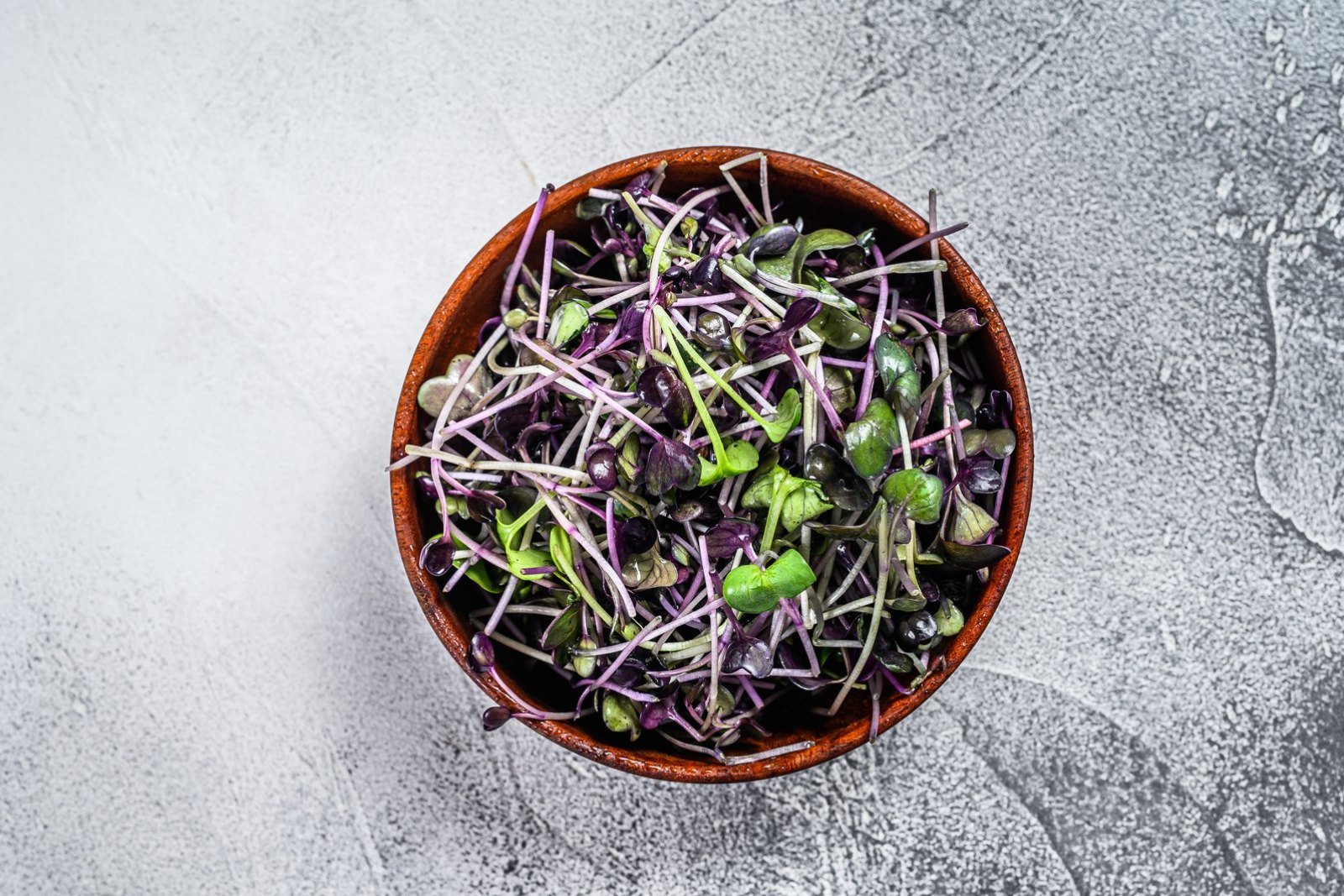
Microgreens sell for many times the price of spinach.
So are microgreens worth it, or are you paying for a trend? The honest answer depends on how you use them. This guide sets real prices from Penn State Extension and USDA side by side. Then it weighs what the money buys: nutrients measured in the lab, strong flavor, a short shelf life and the choice of where to shop. Each point comes with a source you can check. By the end, you can run a simple test of your own before you buy your next pack.
Key Takeaway
Microgreens cost far more per pound than everyday greens. A Penn State example price of $1.75 per half ounce works out to $56 a pound (Sánchez & Berghage, 2025). They are worth it when you use small amounts for flavor and color and finish the pack within a few days.
Below: how prices compare, what the nutrition research shows, what you get in flavor, how shelf life and place of purchase change the value, and how to test it yourself.
Microgreens 411
Find a microgreens grower near you
Greens that travel less start fresher in your fridge. Find my local grower →
Table of Contents
- How much more do microgreens cost than other greens?
- Are microgreens worth it for the nutrients?
- What do you get for the money in flavor?
- How does shelf life change the value?
- Does where you buy microgreens change the value?
- How can you test whether microgreens are worth it for you?
- Wrap-up: are microgreens worth it?
- Frequently asked questions
- References
How much more do microgreens cost than other greens?
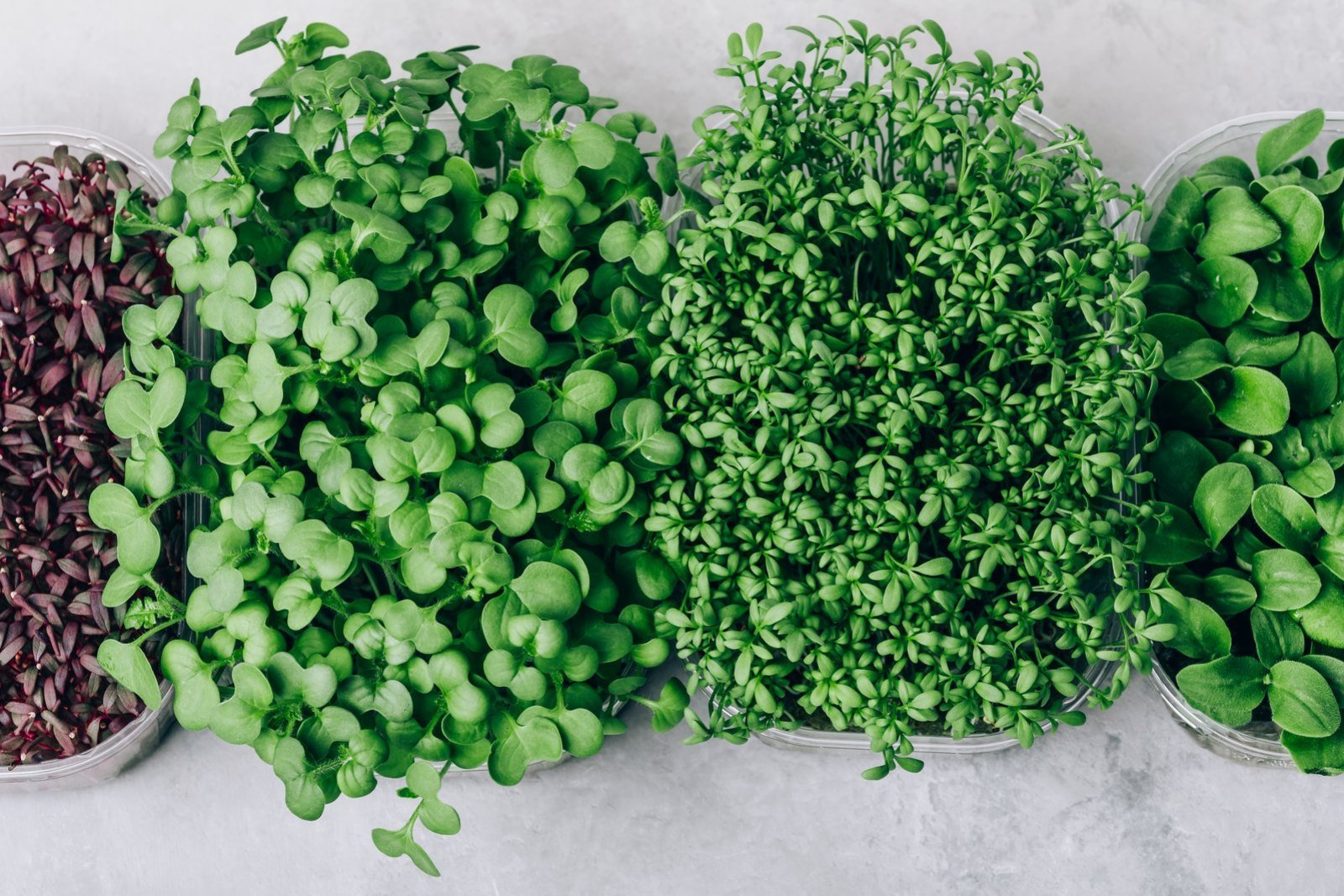
A lot more, per pound. Penn State Extension gives two example prices from growers. One is $1.75 for a half-ounce bag sold direct to buyers. The other is $40 a pound in large totes sold wholesale (Sánchez & Berghage, 2025). That direct price works out to $3.50 an ounce, or $56 a pound.
Now compare everyday greens. USDA’s Economic Research Service put fresh spinach in a bag or clamshell at $4.50 a pound in 2023 (USDA Economic Research Service, n.d.-b). Full heads of romaine averaged $2.44 a pound that year (USDA Economic Research Service, n.d.-a). By weight, the Penn State direct price is more than 12 times the spinach price.
Store prices for microgreens spread wide. For a 2021 shopper survey, researchers priced 2-ounce packs at $6.49 to $16.99, based on grocery checks at the time (Ricks et al., 2023).
So are microgreens worth it on price per pound alone? No. Our guide to why microgreens cost so much shows where that money goes. The rest of the value comes from how you use them.
| Greens (source, year) | Price per pound |
|---|---|
| Microgreens sold direct (Penn State example, 2025) | $56 |
| Microgreens sold wholesale (Penn State example, 2025) | $40 |
| Fresh spinach, bagged (USDA, 2023) | $4.50 |
| Romaine lettuce, full heads (USDA, 2023) | $2.44 |
Are microgreens worth it for the nutrients?
Maybe, but the research has limits. A study of 25 commercial microgreens measured vitamins and carotenoids in the lab. Levels varied widely by crop. Compared with published values for mature leaves, the microgreen seed leaves had higher nutrient densities (Xiao et al., 2012).
Those values were given per 100 grams of greens, which is far more than most people put on a plate. Per gram, you may get more. Per meal, it depends on how much you eat. Our look at the 40 times claim checks a figure you may see in ads.
Human research is thin. In a Colorado State trial, 24 healthy middle-aged and older adults ate 2 cups a day of beet microgreens and of red cabbage microgreens, two weeks of each. Nearly all doses were eaten, and stomach symptoms did not get worse overall. The team saw no changes in blood vessel measures or gut bacteria variety, and said health studies are still needed (Lee et al., 2025). No trial has shown a health benefit yet. Our nutrition guide covers the research crop by crop.
This article is general information, not medical advice. Ask your doctor or pharmacist about your own situation.
What do you get for the money in flavor?
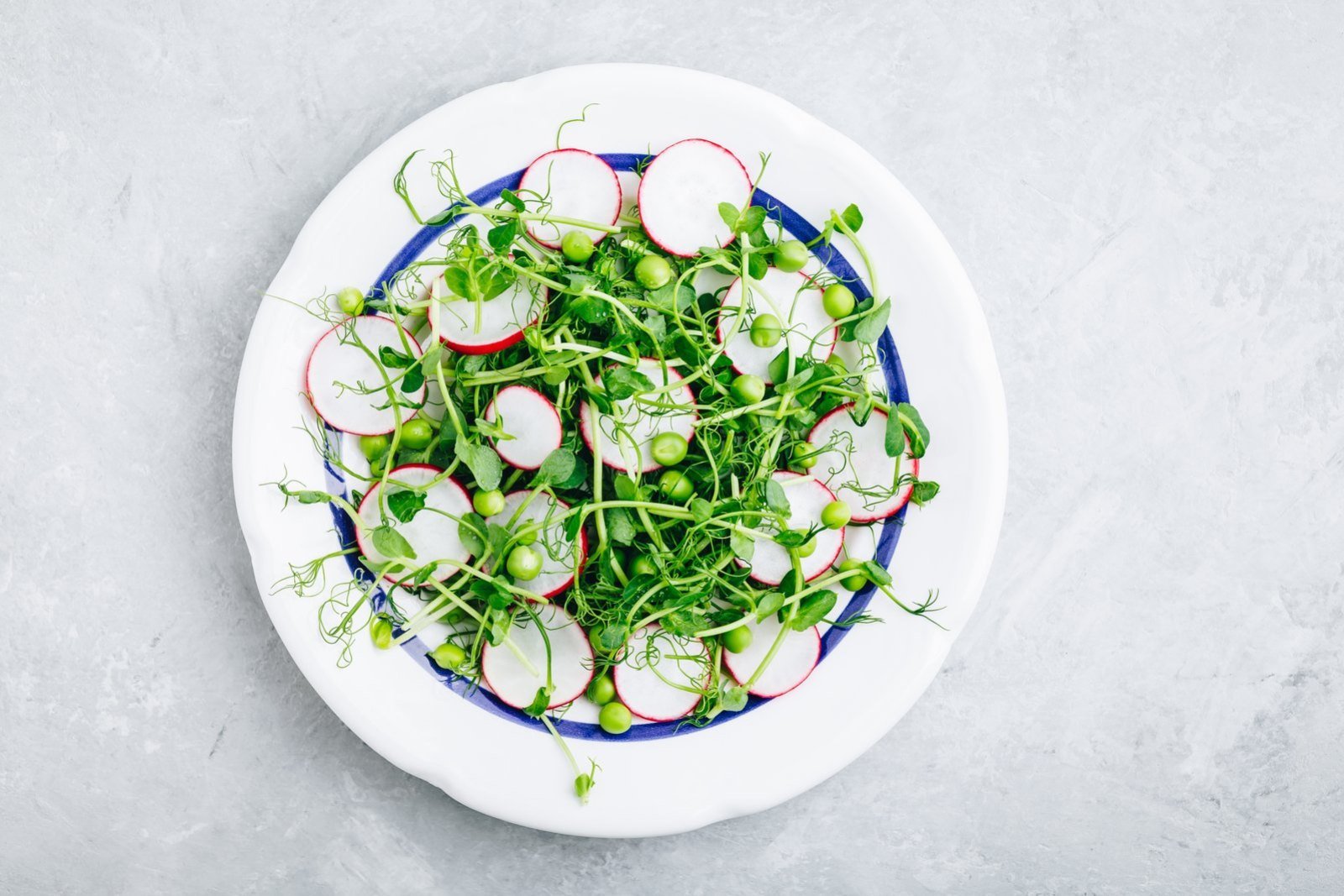
Strong taste in a small amount. Researchers describe microgreens as small but with “surprisingly intense flavors,” vivid colors and crisp textures (Xiao et al., 2012). That intensity means a small amount can carry a dish, and that is where much of the value sits.
Most people seem to like them. In a Colorado State taste panel, 99 consumers rated six kinds: arugula, broccoli, bull’s blood beet, red cabbage, red garnet amaranth and tendril pea. All six got high average liking scores, though flavor and overall liking differed by kind. People who liked them more said they were more likely to buy them (Michell et al., 2020).
The same panel found that people wary of new foods tended to give lower scores (Michell et al., 2020). So are microgreens worth it if you are not sure you will like them? Start small, with a kind that matches a vegetable you already enjoy. Our flavor guide sorts common kinds from mild to hot, so you can pick a first pack you will finish.
How does shelf life change the value?
A pack you throw away is the most expensive kind. New Mexico State University advises eating microgreens no later than 3 to 5 days after harvest. It says cut microgreens won’t last more than a day or two outside a fridge (New Mexico State University, n.d.).
Growers can stretch that window. Penn State says dark storage at 5°C (41°F) can extend shelf life to 10 to 14 days, compared with 2 to 4 days at room conditions (Sánchez & Berghage, 2025). How long the pack sat before you bought it decides how much of that time is left for you.
Shoppers notice this. In the Colorado State panel, people said cost, access, freshness and shelf life shaped whether they would buy microgreens (Michell et al., 2020).
The fix is simple planning. Buy a size you will finish, keep it cold and dry, and wash it right before you eat it. NMSU says washing early adds moisture that can shorten shelf life (New Mexico State University, n.d.). Our storage guide has the details.
Does where you buy microgreens change the value?
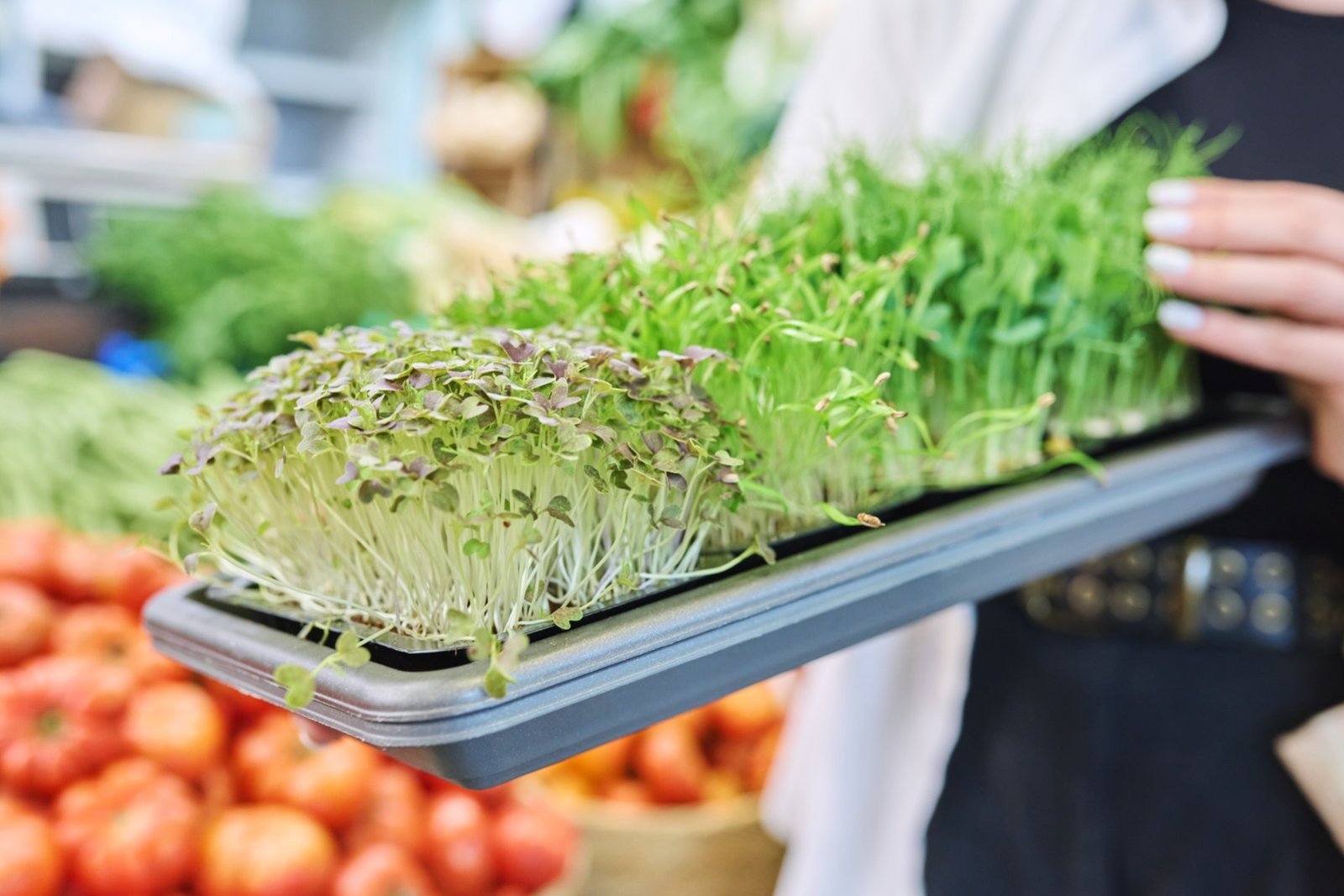
It can, both in freshness and in how shoppers value them. In a survey of 574 U.S. shoppers, people preferred buying microgreens at a farmers market over a supermarket. They valued the farmers market pack at $7.52 more per 2-ounce package (Ricks et al., 2023). That is a measure of how much people valued it, not a price anyone paid.
Freshness is the practical side. NMSU notes that cutting is a big stress for the plant. It suggests waiting to cut microgreens until you are ready to eat them, if possible (New Mexico State University, n.d.). Buying close to harvest, or buying a living tray you cut at home, follows that advice. Our living versus cut guide compares the two.
A local grower can tell you when the greens were cut. Our farmers market guide covers what to ask at a stall. To find farms near you, search your town in the Microgreens 411 directory. So are microgreens worth it from a local farm? Fresher greens give you more days to use them, so a local pack can stretch your money further.
How can you test whether microgreens are worth it for you?
Run a one-week test with one small pack. Pick a kind you think you will like. Plan three or four meals that already need a fresh topping, such as eggs, soup, sandwiches or tacos.
Then do the math. Take the Penn State example of $1.75 for half an ounce (Sánchez & Berghage, 2025). If that bag tops four plates, each plate carries about 44 cents of greens. If half the bag goes to waste, the cost per plate you ate doubles. These are worked examples, not standard serving sizes.
Next, weigh what the greens added. Did a plain meal taste better? Did you reach for vegetables more that week? USDA counts 2 cups of raw leafy greens as one cup equivalent of vegetables (Stewart et al., 2024). A topping of microgreens is a small part of that, so keep your everyday vegetables in the cart.
If the answer is yes, buy that size again. If not, try a different kind or skip them. Our cost per serving guide compares microgreens with spinach, kale and herbs.
Wrap-up: are microgreens worth it?
By the pound, microgreens cost many times more than spinach or romaine. Lab tests show high nutrient levels per gram, but no trial has shown a health benefit in people yet. Their real value is strong flavor and color in small amounts.
They pay off when you buy a size you will finish, keep it cold and use it within days. A fresh pack from a nearby farm gives you more days to do that.
Want to try a local pack? Search your town in the Microgreens 411 directory to find growers near you. Coverage varies by region, so some areas have few listings so far.
Microgreens 411
Find a microgreens grower near you
Greens that travel less start fresher in your fridge. Find my local grower →
Frequently asked questions
Are organic microgreens worth paying more for?
That is your call. In one 2021 survey of U.S. shoppers, an organic label did not raise what people would pay for microgreens. It lowered it by $3.80 a pack. The authors suggest the short growing time may make microgreens seem sustainable without organic methods (Ricks et al., 2023).
Does it matter where microgreens were grown?
To some shoppers, yes. The same survey found people preferred microgreens from their own state over ones from California, valuing the California pack $2.79 lower. There was no difference between home-state and Mexican microgreens (Ricks et al., 2023). Ask a grower where and when the greens were cut.
Which microgreens do tasters like most?
It varies by study. A study from Argentina and Spain of 14 cabbage-family microgreens found cauliflower the most accepted by consumers. Its scoring system ranked radish, cauliflower and broccoli as the most promising kinds overall (Bafumo et al., 2024). Your own taste is the test that counts.
How much do everyday greens cost per serving?
USDA put raw bagged spinach at $0.69 per cup equivalent in 2023. Whole romaine heads came to $0.54. Boiled spinach from the same fresh bags came to $1.93, since cooking shrinks it (USDA Economic Research Service, n.d.-a, n.d.-b).
How many vegetables should adults eat each day?
The Dietary Guidelines call for 2.5 cup equivalents of vegetables a day on a 2,000-calorie diet. USDA says about 90 percent of people eat too few. In 2022, ERS found a full day of fruit and vegetables could cost about $2.50 to $3.00 (Stewart et al., 2024).
Is the microgreens market growing?
By industry estimates, yes. Global microgreens sales were put at about $1.8 billion in 2021, with a forecast to top $2 billion by 2028 (Allied Analytics LLP, 2021, as cited in Ricks et al., 2023). Use has spread far beyond high-end restaurants since the 1980s and 1990s (Ricks et al., 2023).
References
Bafumo, R. F., Alloggia, F. P., Ramirez, D. A., Maza, M. A., Fontana, A., Moreno, D. A., & Camargo, A. B. (2024). Optimal Brassicaceae family microgreens from a phytochemical and sensory perspective. Food Research International, 193, 114812. https://doi.org/10.1016/j.foodres.2024.114812
Lee, S. Y., Michell, K. A., Butler, M. M., Smith, B. T., Woolf, E. K., Holmes, S. C., Grabos, L. E., Vazquez, A. R., Isweiri, H., Bunning, M., Uchanski, M. E., Rao, S., Newman, S. E., Weir, T. L., & Johnson, S. A. (2025). Feasibility and tolerability of daily microgreen consumption in healthy middle-aged/older adults: A randomized, open-label, controlled crossover trial. Nutrients, 17(3), 467. https://doi.org/10.3390/nu17030467
Michell, K. A., Isweiri, H., Newman, S. E., Bunning, M., Bellows, L. L., Dinges, M. M., Grabos, L. E., Rao, S., Foster, M. T., Heuberger, A. L., Prenni, J. E., Thompson, H. J., Uchanski, M. E., Weir, T. L., & Johnson, S. A. (2020). Microgreens: Consumer sensory perception and acceptance of an emerging functional food crop. Journal of Food Science, 85(4), 926–935. https://doi.org/10.1111/1750-3841.15075
New Mexico State University. (n.d.). Eating microgreens. All About Microgreens. Retrieved November 9, 2026, from https://all-about-microgreens-d.nmsu.edu/consumers.html
Ricks, J., Secor, W., & Campbell, B. L. (2023). Consumer preference for microgreens in the presence of LED lights and information treatments. HortScience, 58(3), 327–332. https://doi.org/10.21273/HORTSCI16948-22
Sánchez, E., & Berghage, R. (2025, December 16). Growing microgreens. Penn State Extension. https://extension.psu.edu/growing-microgreens
Stewart, H., Hyman, J., & Young, S. (2024, September 9). Satisfying fruit and vegetable recommendations possible for under $3 a day, data analysis shows. Amber Waves. U.S. Department of Agriculture, Economic Research Service. https://www.ers.usda.gov/amber-waves/2024/september/satisfying-fruit-and-vegetable-recommendations-possible-for-under-3-a-day-data-analysis-shows
USDA Economic Research Service. (n.d.-a). Romaine lettuce: Average retail price per pound and per cup equivalent, 2023 [Data set]. Fruit and Vegetable Prices. Retrieved November 9, 2026, from https://www.ers.usda.gov/data-products/fruit-and-vegetable-prices
USDA Economic Research Service. (n.d.-b). Spinach: Average retail price per pound and per cup equivalent, 2023 [Data set]. Fruit and Vegetable Prices. Retrieved November 9, 2026, from https://www.ers.usda.gov/data-products/fruit-and-vegetable-prices
Xiao, Z., Lester, G. E., Luo, Y., & Wang, Q. (2012). Assessment of vitamin and carotenoid concentrations of emerging food products: Edible microgreens. Journal of Agricultural and Food Chemistry, 60(31), 7644–7651. https://doi.org/10.1021/jf300459b