

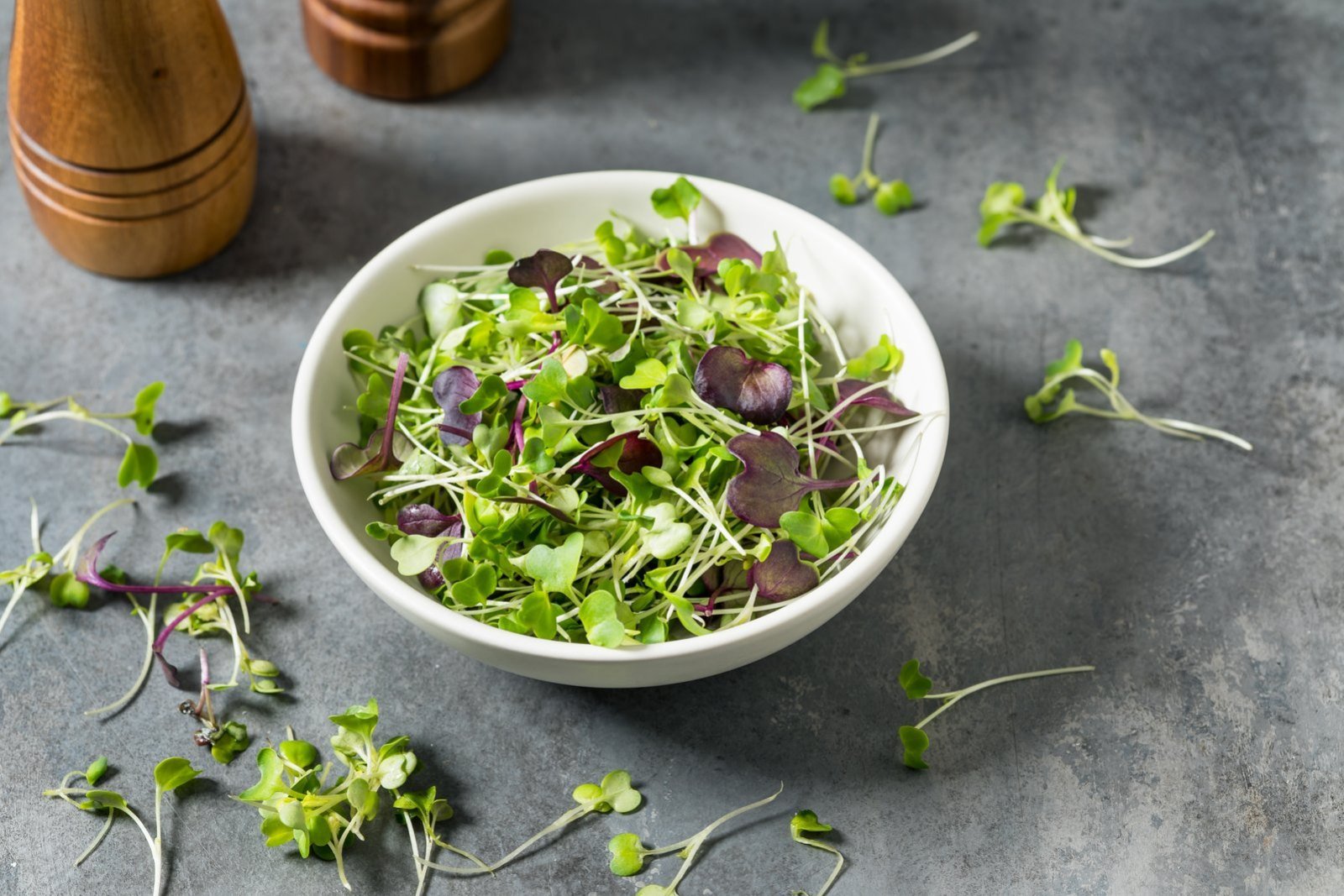
You have probably seen the claim.
Microgreens have 40 times more nutrients than the grown vegetable. The line shows up on farm stands, in ads and all over social media. It sounds great, and it would make a small pack worth a lot. But where did the number come from, and does it hold up? This guide traces the microgreens 40 times more nutrients claim back to the study behind it. Then it checks what later research found, so you can judge the next label you read for yourself.
Key Takeaway
Not as a rule. The “four to 40 times” figure comes from a 2012 university news story about lab tests on 25 microgreens (University of Maryland, 2012). Later studies found smaller gaps, and some found none. Microgreens can be nutrient-dense, but the edge depends on the crop and the nutrient.
Below: where the number started, what was measured, what later studies found, why results vary, what it means per serving and how to read claims.
Microgreens 411
Find a microgreens grower near you
Greens that travel less start fresher in your fridge. Find my local grower →
Table of Contents
- Where does the 40 times claim come from?
- What did the 2012 study actually measure?
- Do newer studies find the same big gap?
- Why do the numbers vary so much from study to study?
- Does more per gram mean more on your plate?
- How should you read nutrition claims when you buy microgreens?
- Wrap-up: the 40 times claim, in short
- Frequently asked questions
- References
Where does the 40 times claim come from?
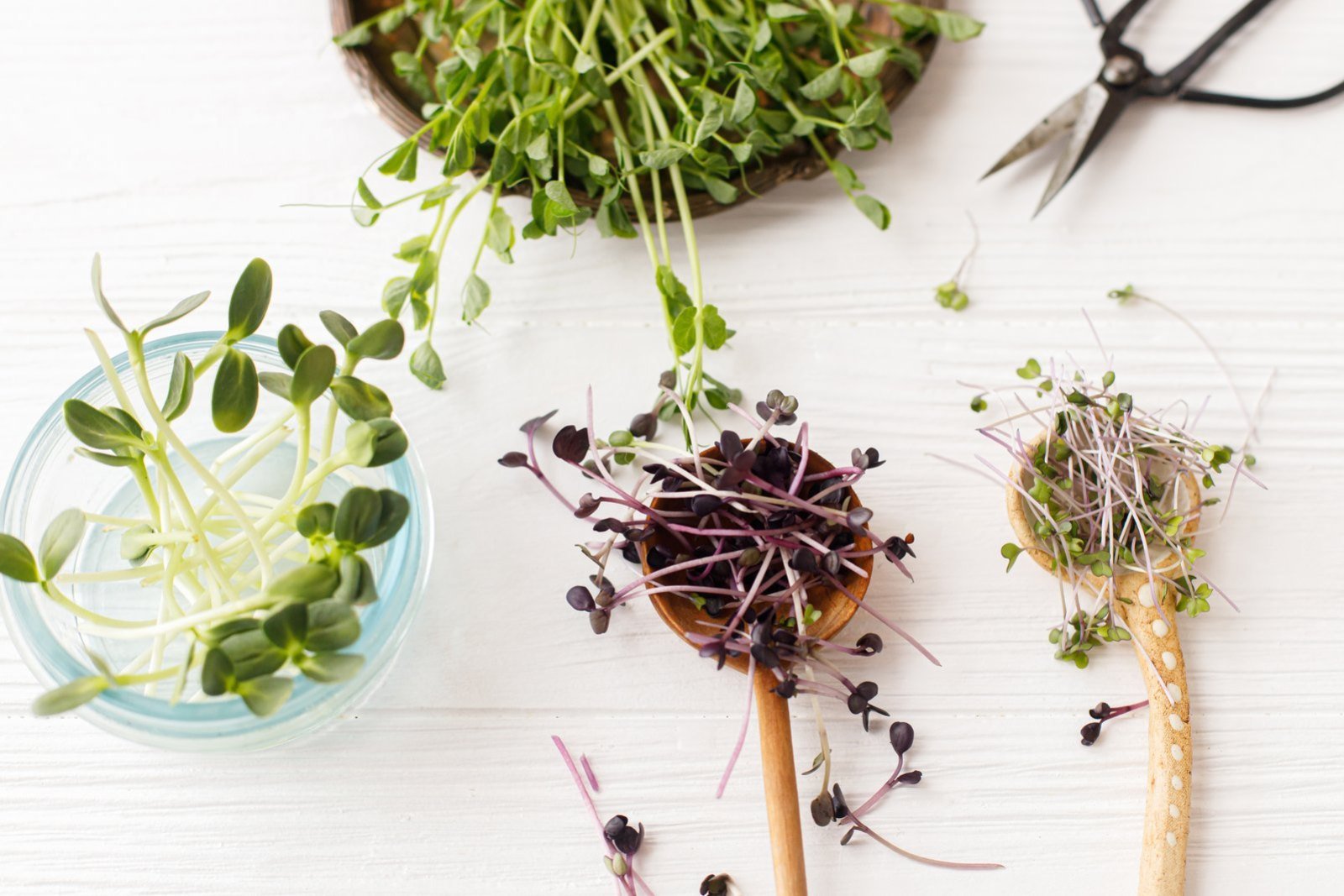
It comes from a 2012 university news story, not from one line in the study. Researchers at the University of Maryland and the USDA tested 25 kinds of microgreens, including cilantro, celery, red cabbage, green basil and arugula. They looked at vitamins C, E and K and beta carotene. The university’s news page reported that the microgreens held “four to 40 times” more nutrients than their mature counterparts (University of Maryland, 2012).
The study itself ran in the Journal of Agricultural and Food Chemistry. Its abstract says the microgreen seed leaves had “higher nutritional densities” than mature leaves listed in the USDA nutrient database (Xiao et al., 2012). The abstract gives no single multiplier.
That is how the microgreens 40 times more nutrients line was born. The top of a range became the headline. Over time many sellers dropped the “four to” part and kept the 40. A later study of broccoli microgreens noted that popular websites had spread the 4 to 40 times finding (Weber, 2017).
The table shows what the 2012 work did and did not test.
| Question | 2012 study (Xiao et al.) |
|---|---|
| Crops tested | 25 commercial microgreens |
| Nutrients measured | Vitamins C, E and K, plus carotenoids |
| Compared with | USDA database values for mature leaves |
| Tested in people? | No, lab tests on the greens only |
What did the 2012 study actually measure?
It measured how much of each vitamin sat in a set weight of fresh greens. It did not measure anything in people. The results swung widely from crop to crop. Vitamin C ranged from 20.4 to 147.0 mg per 100 grams of fresh greens. Alpha-tocopherol, a form of vitamin E, ranged from 4.9 to 87.4 mg per 100 grams (Xiao et al., 2012).
So one microgreen could hold several times more of a vitamin than another. That spread is a big part of why a single “40 times” figure misleads.
The comparison method matters too. The team did not grow mature plants next to the microgreens and test both. They set their microgreen results against published values for mature leaves (Xiao et al., 2012). Those database values came from other samples, grown and handled in other ways.
The researchers were careful about this. Qin Wang, one of the leads, said more research was needed on other varieties, along with “updated comparative research” on mature plants. Zhenlei Xiao advised moderation and suggested adding them to a sandwich, soup or salad (University of Maryland, 2012).
Do newer studies find the same big gap?
Some find a gap, but most report far smaller numbers than 40 times. A 2017 study grew broccoli microgreens three ways and compared eight minerals with published values for raw broccoli florets. Compost-grown microgreens averaged 1.73 times the minerals of the mature vegetable. The two hydroponic batches averaged 0.86 and 0.95, slightly below the florets (Weber, 2017). Our broccoli microgreens guide covers taste and buying tips for that crop.
A 2022 study of 11 lettuce types compared three growth stages side by side. Vitamin C was 42% higher and phenolic compounds 79% higher in the early stages than in adult lettuce (Martínez-Ispizua et al., 2022). That is a real gain, but nowhere near 40 times.
Celery tells a mixed story. Across 20 types, the microgreens had more nitrogen, phosphorus, calcium, sodium and sulfur. Mature leaves had more potassium, zinc, copper and manganese, and iron showed no real difference (Singh et al., 2023).
The fair summary: microgreens are often denser in some nutrients, by modest margins. The gap depends on the crop and the nutrient.
Why do the numbers vary so much from study to study?
The crop is only one part of it. How the greens are grown changes the result a lot. In the broccoli study, the same seed gave different mineral levels on compost than on hydroponic pads. Compost-grown greens had more of nine elements, including potassium, calcium, iron and zinc (Weber, 2017).
Light changes things too. Lithuanian researchers grew mustard and kale microgreens under six mixes of blue and red LED light. More blue light went with higher levels of most of the minerals they tracked (Brazaitytė et al., 2021).
Variety counts. In the lettuce study, red-leaf types stood out for antioxidants. One crisphead type ran well below the adult average for vitamin C and phenolics (Martínez-Ispizua et al., 2022).
Then there is the comparison side. A database value for a mature vegetable is one number from one set of samples. It was not measured on the same plants as the microgreens it gets compared with.
So when a seller quotes the microgreens 40 times more nutrients figure, ask which crop and which nutrient. A number with no crop attached tells you very little.
Does more per gram mean more on your plate?
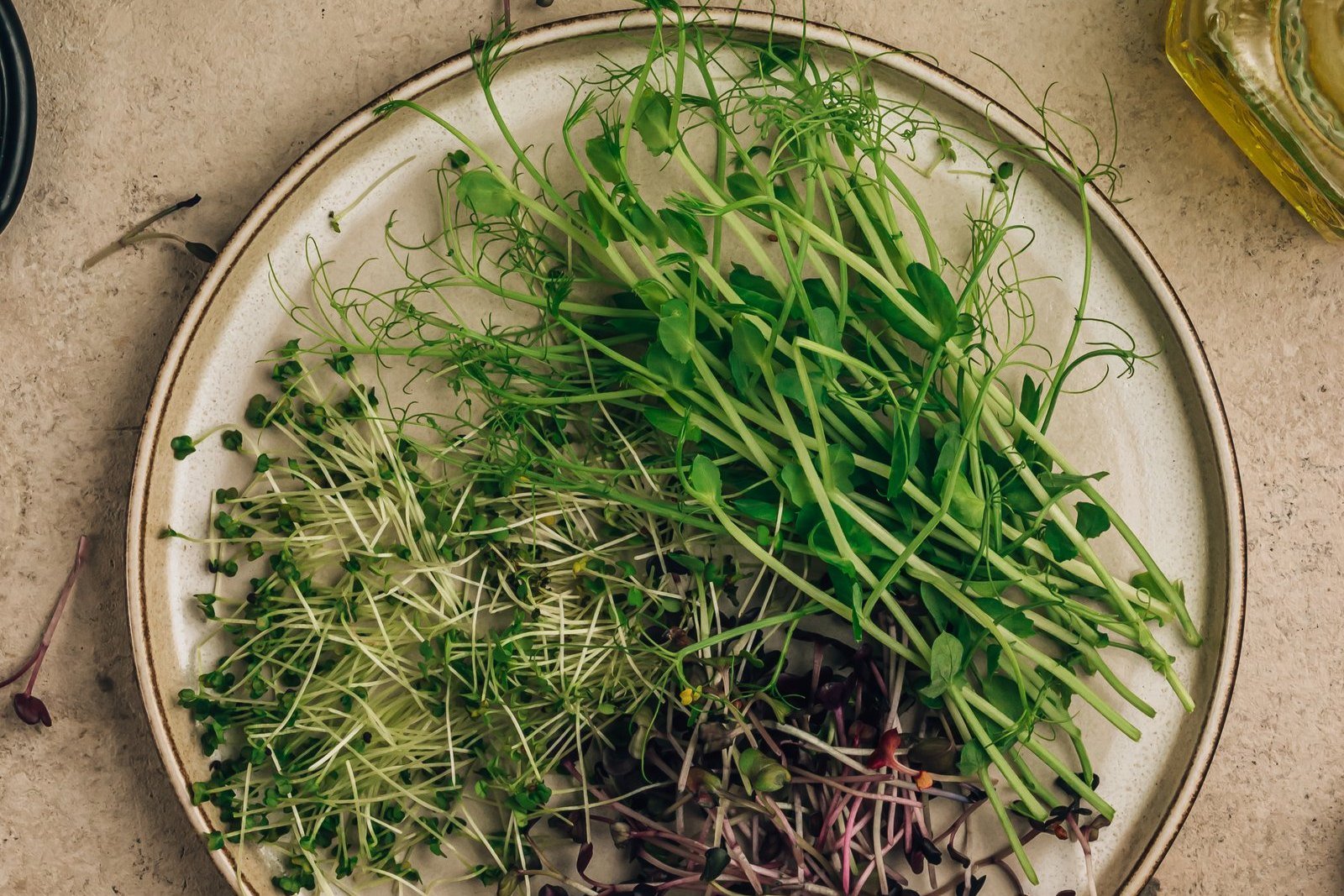
Not always. Nutrient density is measured per gram, and most people eat microgreens in small amounts. A garnish is a pinch, and a vegetable side dish is a full serving.
The broccoli study did this math. It used a 91 gram serving of raw broccoli florets as the yardstick. Even with compost-grown microgreens at 1.73 times the minerals, you would need about 53 grams of them to match that one serving (Weber, 2017). That is a lot more than a light sprinkle on a plate.
Health effects are a separate question from nutrient levels. A USDA team fed mice high-fat diets with red cabbage microgreens or mature red cabbage. Both forms helped the mice gain less weight. Mice eating the microgreens had lower “bad” LDL cholesterol (Suszkiw, 2017).
The scientists stopped short of a human claim. They said how microgreen compounds benefit human health “remains to be determined” (Suszkiw, 2017). Lab numbers describe the greens, not what happens in your body. Our nutrition guide walks through the research crop by crop.
How should you read nutrition claims when you buy microgreens?
Read them as a starting point, then ask for details. A fair claim names the crop, the nutrient and what it was compared with. A line like “more vitamin C than mature red cabbage” can be checked. A bare “40 times more nutrients” can’t.
Penn State Extension says microgreens vary a lot in their minerals and plant compounds. It suggests a mix of kinds can add a variety of colors and nutrients to a weekly healthy diet, in line with the Dietary Guidelines for Americans (Di Gioia, 2024). That framing is sounder than chasing one big multiplier.
At the market, judge the greens you can see. Pick packs that look fresh and feel cold. Our guide to where to buy microgreens compares stores, markets and farms. You can search the Microgreens 411 directory for growers near you and ask them which crops they grow. Our guide to microgreens vs. mature vegetables lines up the studies that compare the two.
This article is general information, not medical advice. Ask your doctor or pharmacist about your own situation.
Wrap-up: the 40 times claim, in short
The 40 times figure traces back to a 2012 news story about lab tests on 25 microgreens. The top of a “four to 40 times” range became the headline. Later studies found smaller gaps, and for some nutrients the mature plant came out ahead.
Microgreens can be a nutrient-dense vegetable. The size of the edge depends on the crop, the nutrient and how they were grown, and you eat them in small amounts.
Enjoy them for flavor, color and variety. Want to buy from a nearby farm? Search your town in the Microgreens 411 directory. Coverage varies by region, so some areas have few listings so far.
Microgreens 411
Find a microgreens grower near you
Greens that travel less start fresher in your fridge. Find my local grower →
Frequently asked questions
Which microgreens topped the 2012 study?
Each nutrient had a different leader. Red cabbage had the most vitamin C, cilantro the most carotenoids, garnet amaranth the most vitamin K and green daikon radish the most vitamin E (Xiao et al., 2012). No single crop led in all four groups.
Do red cabbage microgreens have more plant compounds than mature red cabbage?
In the USDA mouse work, the red cabbage microgreens had more polyphenols and glucosinolates than mature red cabbage (Suszkiw, 2017). Researchers study both groups of compounds for health. The team did not show that these compounds caused the effects they saw in the mice.
Are microgreens more nutritious than sprouts?
No single answer covers every crop. A 2022 review says sprouted seeds and microgreens are often more nutrient-dense than unsprouted seeds or grown vegetables (Ebert, 2022). The two are grown and eaten in different ways. Our sprouts guide explains the difference.
Are some microgreens an excellent source of vitamins?
A 2020 Italian study scored micro cauliflower, micro broccoli and micro broccoli raab. All three rated as an excellent source of vitamins A and E, above 20% of the daily reference value. Each beat its mature counterpart on the study’s overall nutrient score (Renna et al., 2020).
Should you cook microgreens to get their nutrients?
Qin Wang, one of the 2012 Maryland researchers, said microgreens are too delicate for cooking and should be eaten raw after a light wash (University of Maryland, 2012). Our cooking guide looks at when a little heat works.
How long do packed microgreens keep?
Not long. In one Italian study, fresh-cut microgreens kept no more than ten days at 5°C (41°F) (Paradiso et al., 2018). The 2012 Maryland news story put their shelf life at two to five days. Our shelf life guide has storage tips.
References
Brazaitytė, A., Miliauskienė, J., Vaštakaitė-Kairienė, V., Sutulienė, R., Laužikė, K., Duchovskis, P., & Małek, S. (2021). Effect of different ratios of blue and red LED light on Brassicaceae microgreens under a controlled environment. Plants, 10(4), 801. https://doi.org/10.3390/plants10040801
Di Gioia, F. (2024, March 28). The ABCs of microgreens. Penn State Extension. https://extension.psu.edu/the-abcs-of-microgreens
Ebert, A. W. (2022). Sprouts and microgreens: Novel food sources for healthy diets. Plants, 11(4), 571. https://doi.org/10.3390/plants11040571
Martínez-Ispizua, E., Calatayud, Á., Marsal, J. I., Cannata, C., Basile, F., Abdelkhalik, A., Soler, S., Valcárcel, J. V., & Martínez-Cuenca, M.-R. (2022). The nutritional quality potential of microgreens, baby leaves, and adult lettuce: An underexploited nutraceutical source. Foods, 11(3), 423. https://doi.org/10.3390/foods11030423
Paradiso, V. M., Castellino, M., Renna, M., Gattullo, C. E., Calasso, M., Terzano, R., Allegretta, I., Leoni, B., Caponio, F., & Santamaria, P. (2018). Nutritional characterization and shelf-life of packaged microgreens. Food & Function, 9(11), 5629–5640. https://doi.org/10.1039/c8fo01182f
Renna, M., Stellacci, A. M., Corbo, F., & Santamaria, P. (2020). The use of a nutrient quality score is effective to assess the overall nutritional value of three microgreens. Foods, 9(9), 1226. https://doi.org/10.3390/foods9091226
Singh, M., Nara, U., Rani, N., Pathak, D., Kaur, K., & Sangha, M. K. (2023). Comparison of mineral composition in microgreens and mature leaves of celery (Apium graveolens L.). Biological Trace Element Research, 201(8), 4156–4166. https://doi.org/10.1007/s12011-022-03483-1
Suszkiw, J. (2017, June). Microgreen study shows health benefits. AgResearch Magazine. U.S. Department of Agriculture, Agricultural Research Service. https://agresearchmag.ars.usda.gov/2017/jun/microgreen/
University of Maryland, Department of Nutrition and Food Science. (2012, September 6). Mighty microgreens. https://nfsc.umd.edu/news/mighty-microgreens
Weber, C. F. (2017). Broccoli microgreens: A mineral-rich crop that can diversify food systems. Frontiers in Nutrition, 4, 7. https://doi.org/10.3389/fnut.2017.00007
Xiao, Z., Lester, G. E., Luo, Y., & Wang, Q. (2012). Assessment of vitamin and carotenoid concentrations of emerging food products: Edible microgreens. Journal of Agricultural and Food Chemistry, 60(31), 7644–7651. https://doi.org/10.1021/jf300459b