

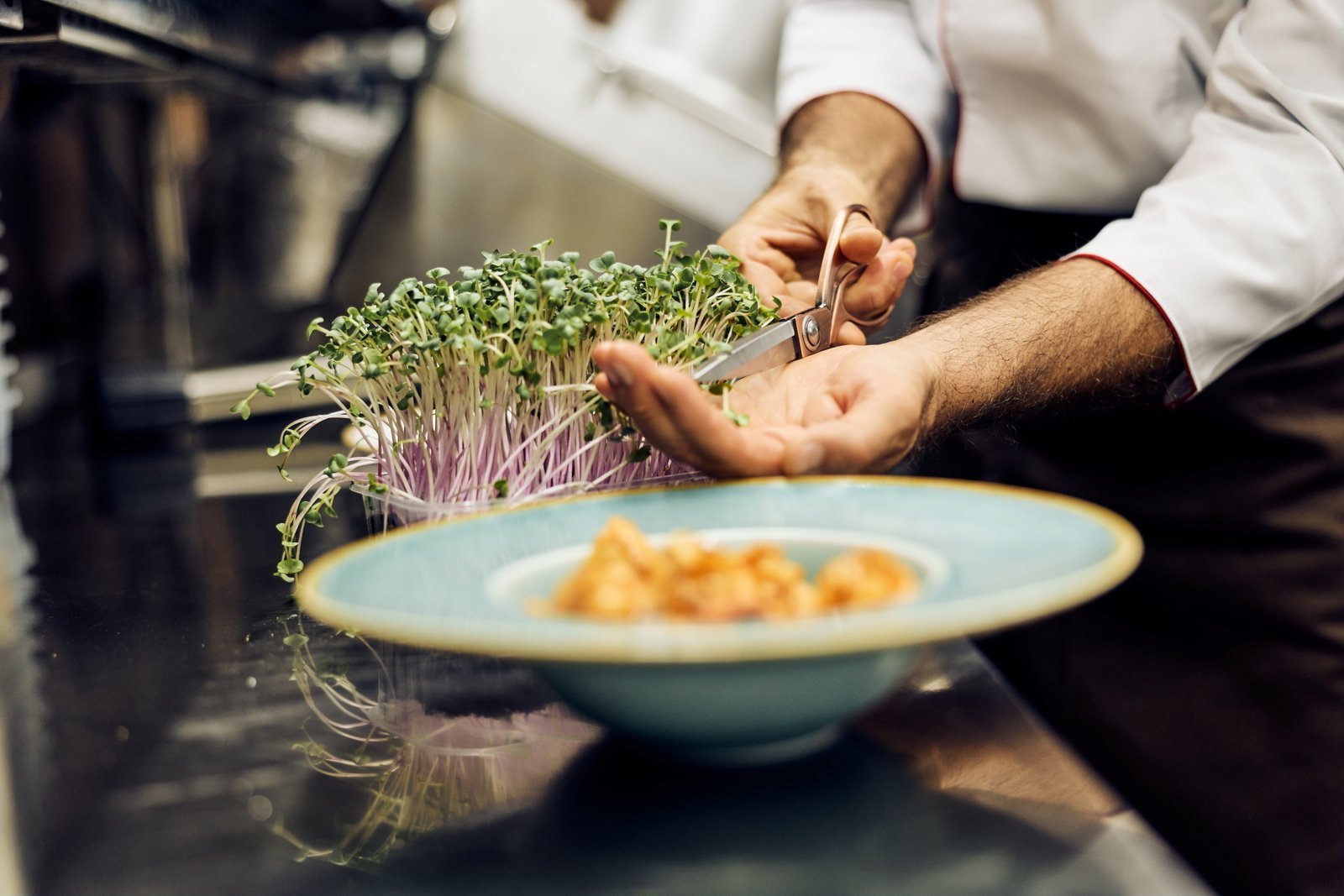
A microgreen garnish costs less than most chefs guess.
The trick is doing the math by weight, not by the pack. Growers price microgreens per ounce, and a garnish weighs only a few grams. Once you turn one into the other, the number per plate gets small and easy to track. This guide walks through microgreens cost per plate with real, dated prices from growers and a New York distributor. It shows the simple formula, a worked table, and the hidden costs that push the number up. Use it to price a dish or to compare suppliers.
Key Takeaway
For common microgreens priced near $3 an ounce, a 5 gram garnish costs about 53 cents. Specialty crops at $6.25 an ounce push the same garnish to about $1.10 (MicroFreshly, n.d.). Weigh your real portion, then divide your price per ounce by 28.35 grams.
Below: what chefs pay per ounce, the formula, how many plates a pack covers, what changes the number, waste and how to cut it.
Microgreens 411
Find a microgreens grower near you
Greens that travel less start fresher in your fridge. Find my local grower →
Table of Contents
- What do restaurants pay for microgreens per ounce?
- How do you work out microgreens cost per plate?
- How many plates does one pack cover?
- What changes the price you pay?
- How does waste change the real cost?
- How can a kitchen keep garnish costs down?
- Wrap-up: microgreens cost per plate, in short
- Frequently asked questions
- References
What do restaurants pay for microgreens per ounce?
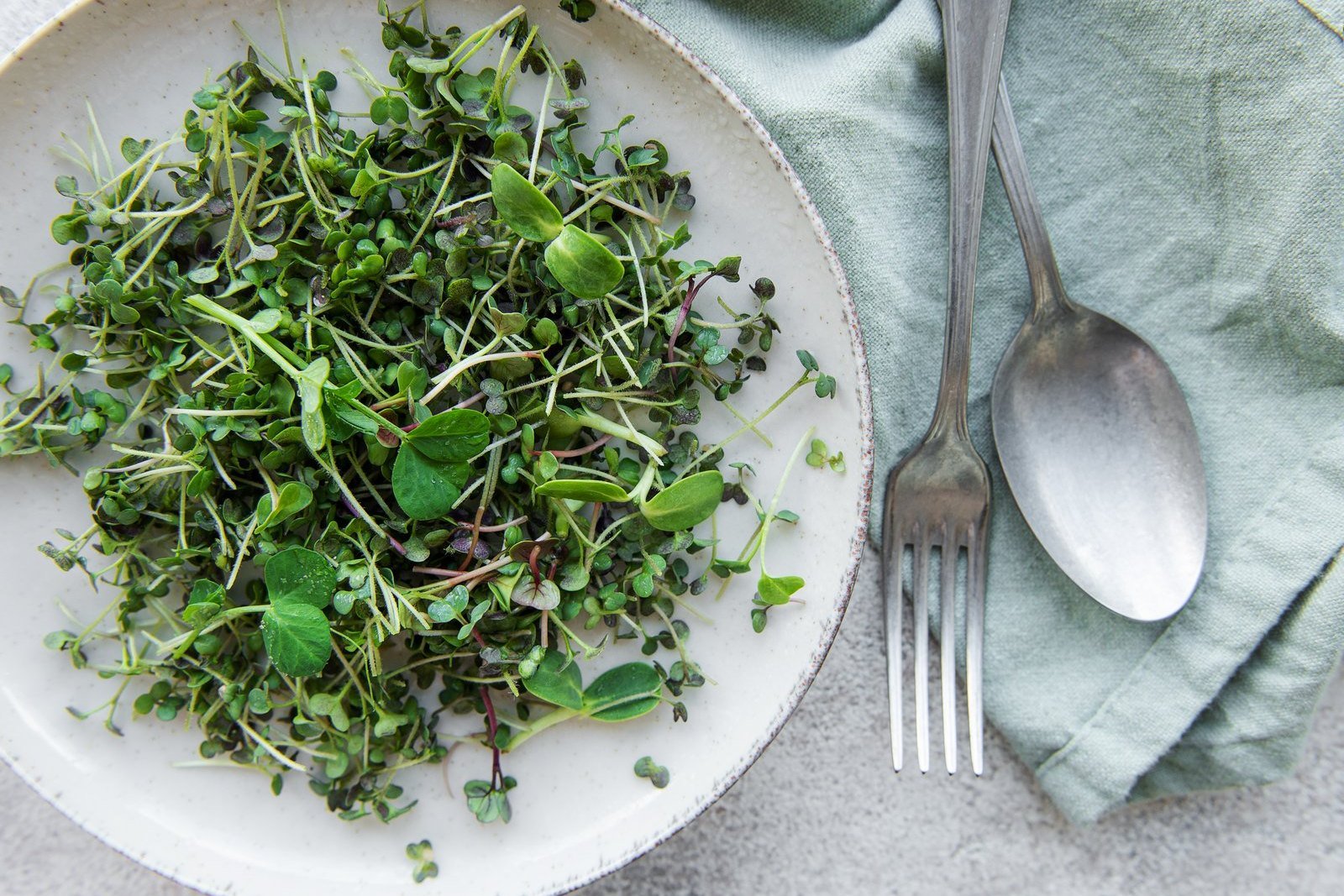
Most published restaurant prices for common crops land between about $2.50 and $4 an ounce. A grower who built more than 50 wholesale accounts puts common crops like radish, broccoli and arugula at $2.50 to $4.00 an ounce at the restaurant level. Specialty crops such as basil, shiso and cilantro run $3.00 to $8.00 (Corwin, 2026).
Real price lists sit inside that range. MicroFreshly lists 4 ounce packs of sunflower, pea shoots, broccoli and radish at $15, or $3.75 an ounce. Its top tier, with basil, shiso and amaranth, is $25 for 4 ounces, or $6.25 an ounce (MicroFreshly, n.d.). Piedmont Microgreens in Durham, North Carolina, charged restaurants $18 for 6 ounces of common kinds in 2024, or $3 an ounce (Corwin, 2024).
A New York distributor recorded rainbow microgreens at $24.95 for 8 ounces on 12 February 2026, about $3.12 an ounce (Foodomarket, 2026). All prices here were read on 5 November 2026, and any of them can change.
| Source | Price per ounce |
|---|---|
| Piedmont Microgreens, common kinds (2024) | $3.00 |
| Foodomarket NYC, rainbow mix (Feb 2026) | $3.12 |
| MicroFreshly, common tier | $3.75 |
| MicroFreshly, specialty tier | $6.25 |
How do you work out microgreens cost per plate?
Divide your price per ounce by 28.35 to get the price per gram. Then multiply by the grams on one plate. That is the whole formula.
Take Piedmont’s $3 an ounce. Divide by 28.35 and you get about 10.6 cents a gram. A 3 gram garnish costs about 32 cents. A 5 gram garnish costs about 53 cents. A 10 gram pile on a salad costs about $1.06.
At MicroFreshly’s $3.75 tier, the same 5 grams costs about 66 cents. At its $6.25 specialty tier, it costs about $1.10. At $8 an ounce, the top of the specialty range, 5 grams costs about $1.41.
There is no standard garnish weight. Chefs plate by eye, and a “pinch” on one line can be twice the size of a pinch on another. So weigh it. Plate ten garnishes the way your cooks do, weigh them on a gram scale and take the average. That one number makes your microgreens cost per plate real instead of a guess. Recheck it when a new cook joins the line.
How many plates does one pack cover?
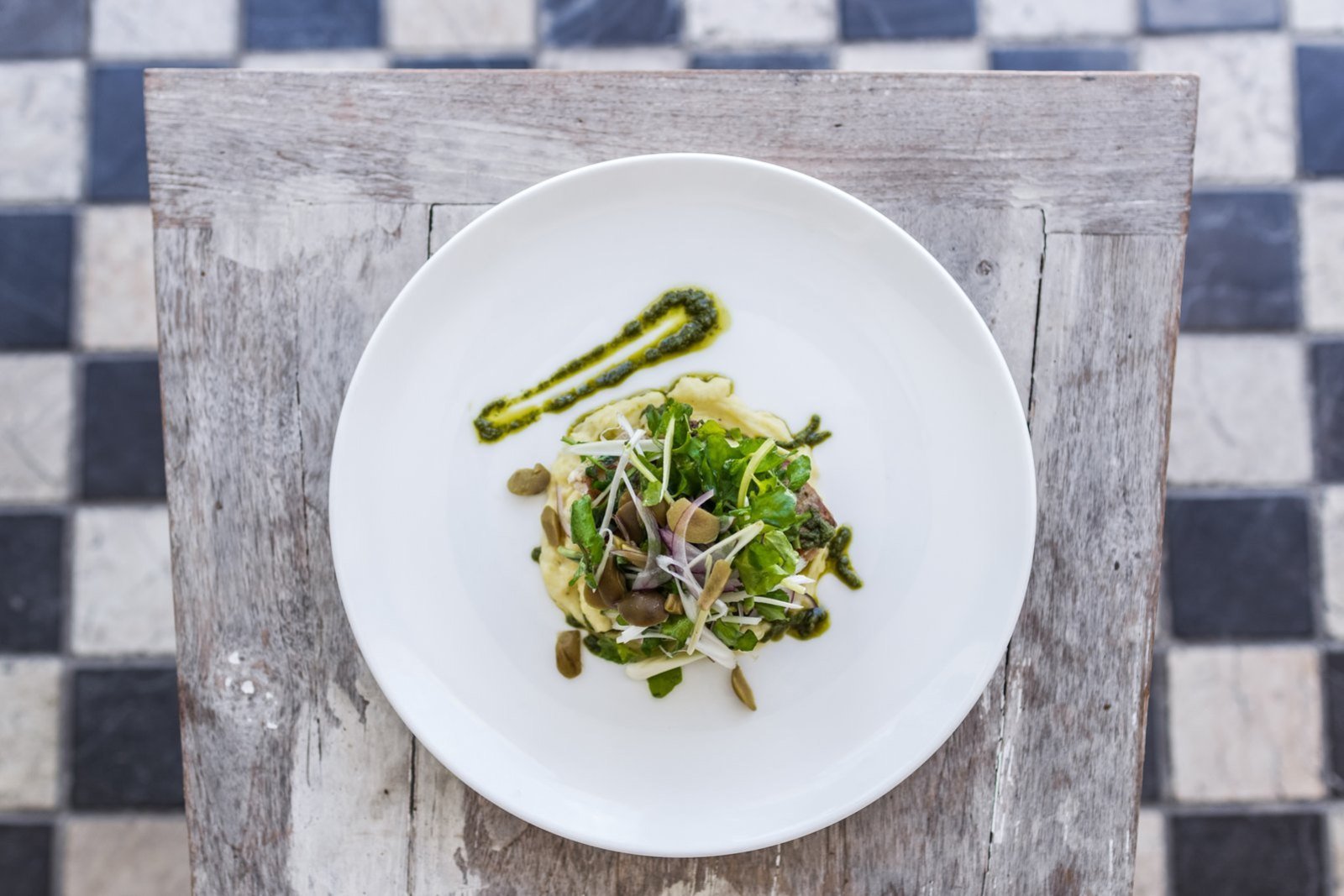
More than you might think, if the portion stays small. A 4 ounce pack holds about 113 grams. At 5 grams a plate, that is about 23 garnishes. At 3 grams, it is about 38.
An 8 ounce pack holds about 227 grams, or about 45 plates at 5 grams each. Restaurants buying direct often want that size. One grower writes that chefs go through volume fast and don’t want to open six small containers during service. The exception is specialty crops, which he suggests selling in 2 ounce packs (Corwin, 2026). A 2 ounce pack covers about 11 plates at 5 grams.
Pack size should follow your covers, not the other way around. If you plate 40 garnished entrees a night, an 8 ounce pack lasts about one service. If you plate ten, a smaller pack or a specialty 2 ounce pack wastes less.
One seller in southeast Pennsylvania gives an example. A restaurant serving 150 covers garnishes 60% of entrees, which is 90 plates. At 50 cents a plate, that comes to $45 a night (microGREEN FX, n.d.). Your own counts will differ.
What changes the price you pay?
The crop is the biggest factor. Fast, easy crops cost less. Specialty crops cost more for good reasons. One grower notes that basil takes 20 or more days to grow, and nasturtium seed costs 10 to 20 times what radish seed costs (Corwin, 2026).
Who you buy from matters next. MicroFreshly offers a 33% distributor discount, which drops its common tier to $10.05 for 4 ounces. That discount needs an order of $350 or more (MicroFreshly, n.d.). At that price, a 5 gram garnish costs about 44 cents.
Location plays a part. Piedmont’s own pricing guide tells readers to weigh their cost of living when they compare its Durham prices with their own area (Corwin, 2024). A price that looks high in one city can be normal in another.
Pack size shifts the math too. Specialty crops often come in smaller packs, so the price per ounce runs higher. Our wholesale price guide tracks what restaurants pay by crop. To compare local growers on price and pack size, search the Microgreens 411 directory and ask each one for a chef price list.
How does waste change the real cost?
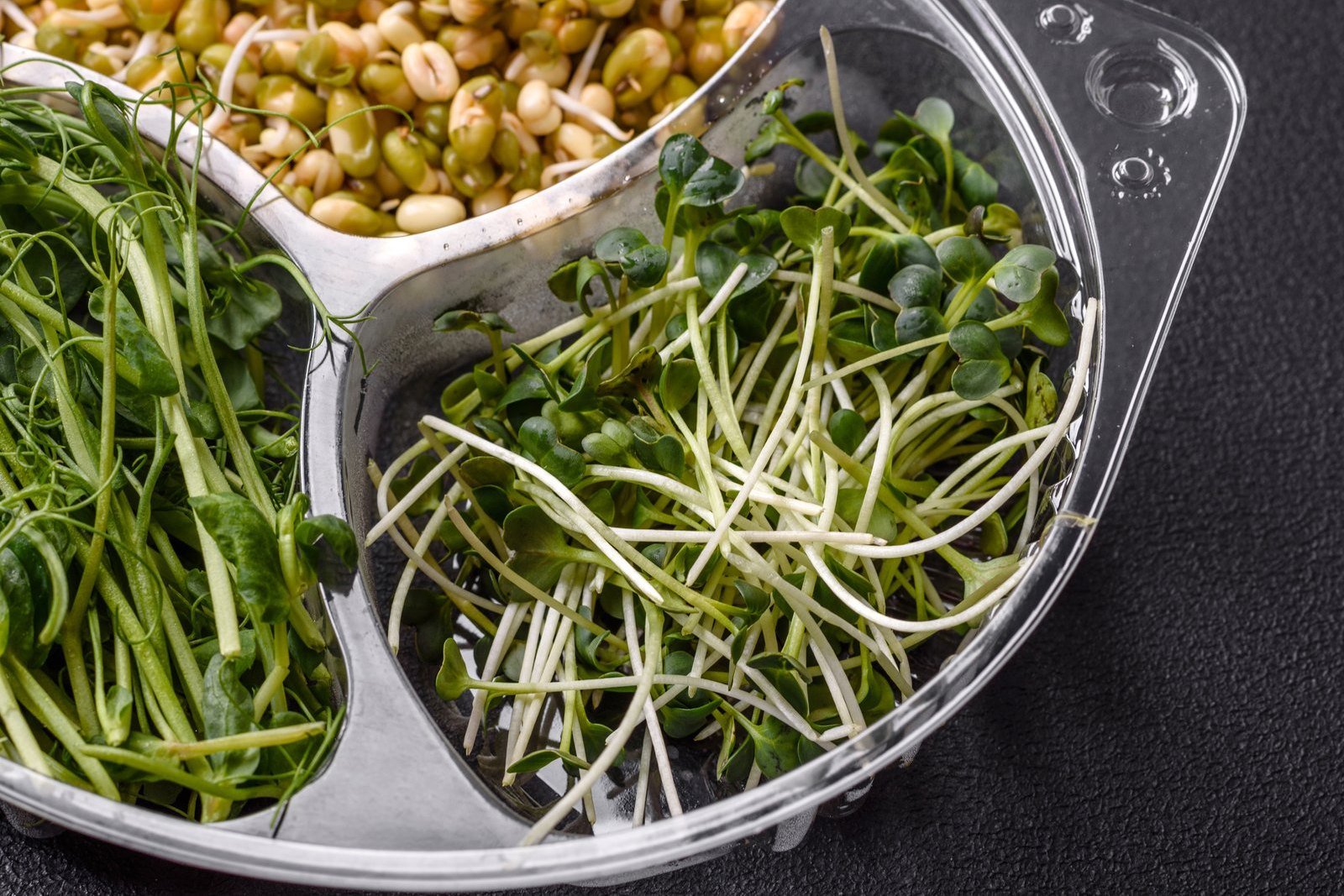
Waste is where the cheap garnish gets expensive. If you throw out a quarter of every pack, you pay for four portions and plate three. That raises your true cost by a third.
Run the earlier example with waste. At $3.75 an ounce, a 5 gram garnish costs about 66 cents. If 25% of the pack goes in the bin, the real cost per plated garnish rises to about 88 cents.
Shelf life drives most of that waste. An Italian study found packaged fresh-cut microgreens kept no more than ten days at 5°C (41°F) (Paradiso et al., 2018). A 2012 University of Maryland news story put microgreen shelf life at just two to five days (University of Maryland, 2012).
So the cheapest price per ounce is not always the cheapest plate. A smaller, more frequent delivery can beat a bigger pack that wilts. Our shelf life guide covers how long common kinds keep and how to tell when a pack has turned.
How can a kitchen keep garnish costs down?
Start with a standard portion. Pick a weight for each dish, show it to the line and spot check it on a scale. That keeps your microgreens cost per plate steady from shift to shift.
Next, match orders to covers. Order what your counts say you will use before the pack loses quality, and lean on standing orders once you know your pace. Talk to the grower about delivery days. Penn State Extension says growers who give chefs small samples, storage and handling instructions and recipe ideas build stronger ties (Kelley, 2025). Ask for those. Good handling advice cuts waste.
Then use the whole pack. Leftover microgreens can go into a staff meal, a salad or a sauce before they fade. Our menu guide lists dishes that use more than a pinch.
Last, compare the garnish to what it does for the dish. Penn State notes that chefs look for eye-catching ingredients, and microgreens can give a plate a “wow factor” (Kelley, 2025). Whether that is worth 50 cents is your call.
Wrap-up: microgreens cost per plate, in short
Published restaurant prices for common microgreens run near $3 to $4 an ounce, and specialty crops cost more. Divide your price per ounce by 28.35, then multiply by your real portion in grams.
At those prices, a 5 gram garnish costs about 53 to 66 cents, and specialty crops roughly double it. Waste can add a third or more, so weigh portions, match orders to covers and use the whole pack.
Looking for a grower who sells to restaurants near you? Search your town in the Microgreens 411 directory. Coverage varies by region, so some areas have few listings so far.
Microgreens 411
Find a microgreens grower near you
Greens that travel less start fresher in your fridge. Find my local grower →
Frequently asked questions
Do chefs charge more for a dish with microgreens on it?
One southeast Pennsylvania grower claims a garnish costing 25 to 75 cents can raise how much guests think a dish is worth by $8 to $12 (microGREEN FX, n.d.). That is a seller’s claim, not a study. Test it on your own menu before you raise prices.
Are microgreens cheaper by the pound than by the ounce?
Often, yes. Big packs and distributor deals usually cost less per ounce. Piedmont Microgreens charged wholesale buyers $14 for 8 ounces in 2024, or $1.75 an ounce, against $3 an ounce for its restaurant packs (Corwin, 2024).
Which microgreens cost the most for restaurants?
Slow or tricky crops. On one 2024 price list, sorrel sold to restaurants at $22 for a single ounce. Basil, chard, parsley and shiso sold at $16 for 2 ounces, or $8 an ounce (Corwin, 2024).
Do restaurants buy living trays instead of cut microgreens?
Some kitchens do, since a living tray lets the line cut to order. The cost math changes, so price a tray by the grams you actually harvest from it. Our guide to living trays in a restaurant kitchen compares the two side by side.
Should a restaurant buy from a local grower or a distributor?
Each has a place. Penn State Extension notes that independent restaurants are often more flexible partners for small growers than chains (Kelley, 2025). Our supplier guide covers what to ask before you choose.
Are pea and sunflower shoots cheaper per plate?
Per ounce, usually. One grower prices basic pea and sunflower shoots for chefs at $1.50 to $3.00 per ounce (Corwin, 2026). Shoots are bigger and heavier, so weigh a shoot garnish before you compare plates. Our guide to why microgreens are expensive explains what drives prices.
References
Corwin, G. (2024, July 11). Microgreens pricing: A beginner’s guide for what to charge. Microgreen Manager. https://microgreenmanager.com/blog/microgreens-pricing-guide
Corwin, G. (2026, April 16). How to price microgreens: A framework for chefs, retailers, and distributors. Microgreen Manager. https://microgreenmanager.com/blog/microgreen-pricing-workbook
Foodomarket. (2026). Rainbow microgreens wholesale price NYC [Price recorded February 12, 2026]. Retrieved November 5, 2026, from https://www.foodomarket.com/en-us/products/fruits-and-vegetables/rainbow-microgreens
Kelley, K. (2025, June 4). Marketing microgreens. Penn State Extension. https://extension.psu.edu/marketing-microgreens
microGREEN FX. (n.d.). Wholesale microgreens for restaurants and chefs. Retrieved November 5, 2026, from https://microgreenfx.com/wholesale/restaurants/
MicroFreshly. (n.d.). Wholesale microgreens pricing and product tiers. Retrieved November 5, 2026, from https://www.microfreshly.com/wholesale-pricing
Paradiso, V. M., Castellino, M., Renna, M., Gattullo, C. E., Calasso, M., Terzano, R., Allegretta, I., Leoni, B., Caponio, F., & Santamaria, P. (2018). Nutritional characterization and shelf-life of packaged microgreens. Food & Function, 9(11), 5629–5640. https://doi.org/10.1039/c8fo01182f
University of Maryland, Department of Nutrition and Food Science. (2012, September 6). Mighty microgreens. https://nfsc.umd.edu/news/mighty-microgreens