

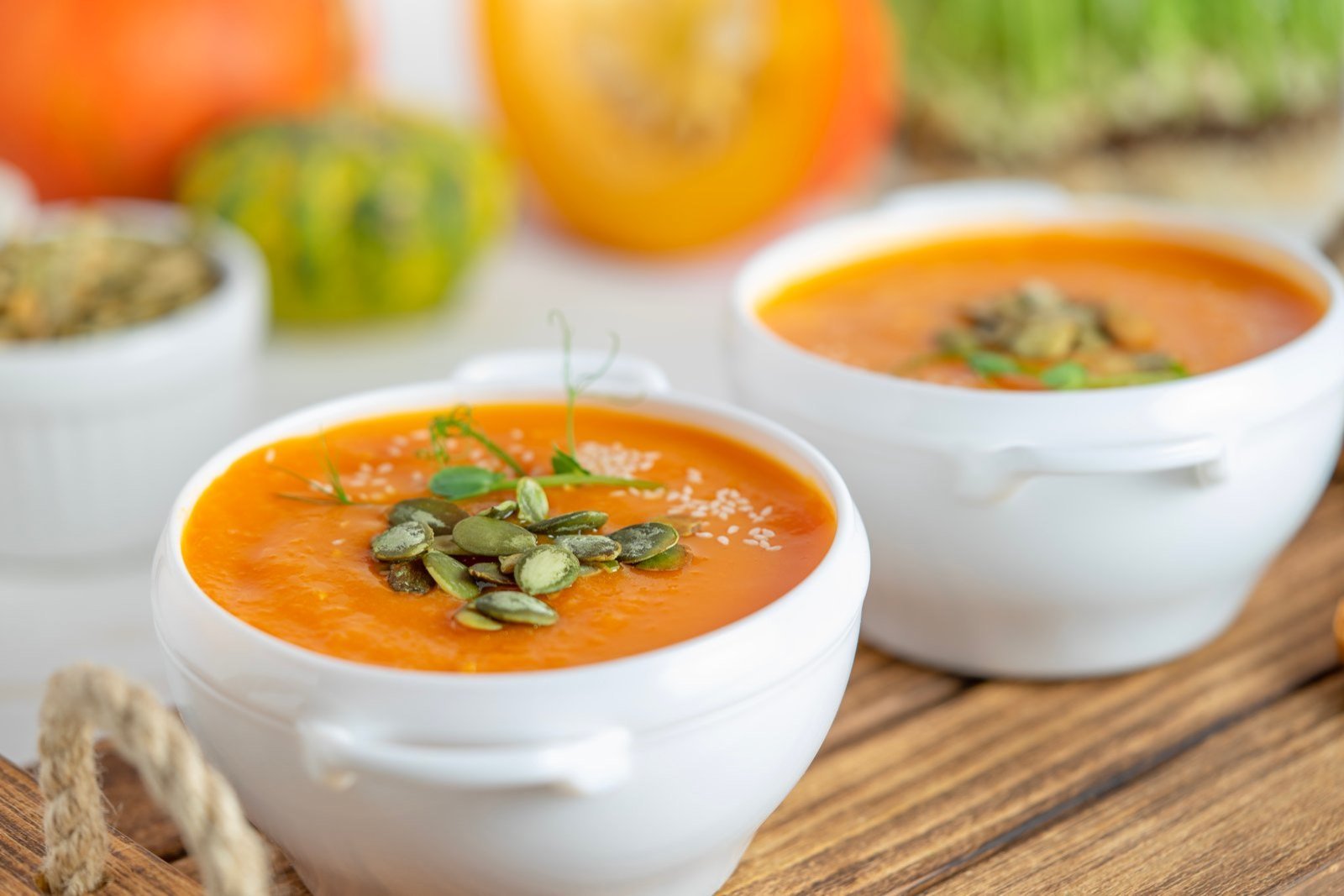
Microgreens can brighten a heavy holiday plate.
Thanksgiving food leans rich and brown, with turkey, gravy and stuffing filling most plates. A small handful of crisp greens adds color and a fresh bite on top. You don’t need a new menu to use them. Most of the work is picking the right kind, buying at the right time and adding them at the last minute. This guide gathers Thanksgiving microgreens recipes and serving ideas from extension cooks and federal food safety staff. Every claim has a source behind it, so you can plan the meal with confidence.
Key Takeaway
Microgreens fit Thanksgiving best as a raw topping added just before serving. Oregon State University’s Food Hero lists autumn squash bisque, parsnip soup and pumpkin ricotta stuffed shells among recipes that taste great with microgreens (Food Hero, n.d.-a). Buy them early in the holiday week, keep them cold and wash them right before the meal.
Below: which dishes suit microgreens, which kinds taste best, how to add them to sides, how to handle them near the turkey, when to buy and where to find a grower.
Microgreens 411
Find a microgreens grower near you
Greens that travel less start fresher in your fridge. Find my local grower →
Table of Contents
- Which Thanksgiving dishes go well with microgreens?
- Which microgreens taste best with Thanksgiving flavors?
- How do you add microgreens to holiday soups and sides?
- Can microgreens go on the turkey or in the stuffing?
- When should you buy microgreens for Thanksgiving?
- Where can you find microgreens for the holiday table?
- Wrap-up: Thanksgiving microgreens recipes, in short
- Frequently asked questions
- References
Which Thanksgiving dishes go well with microgreens?
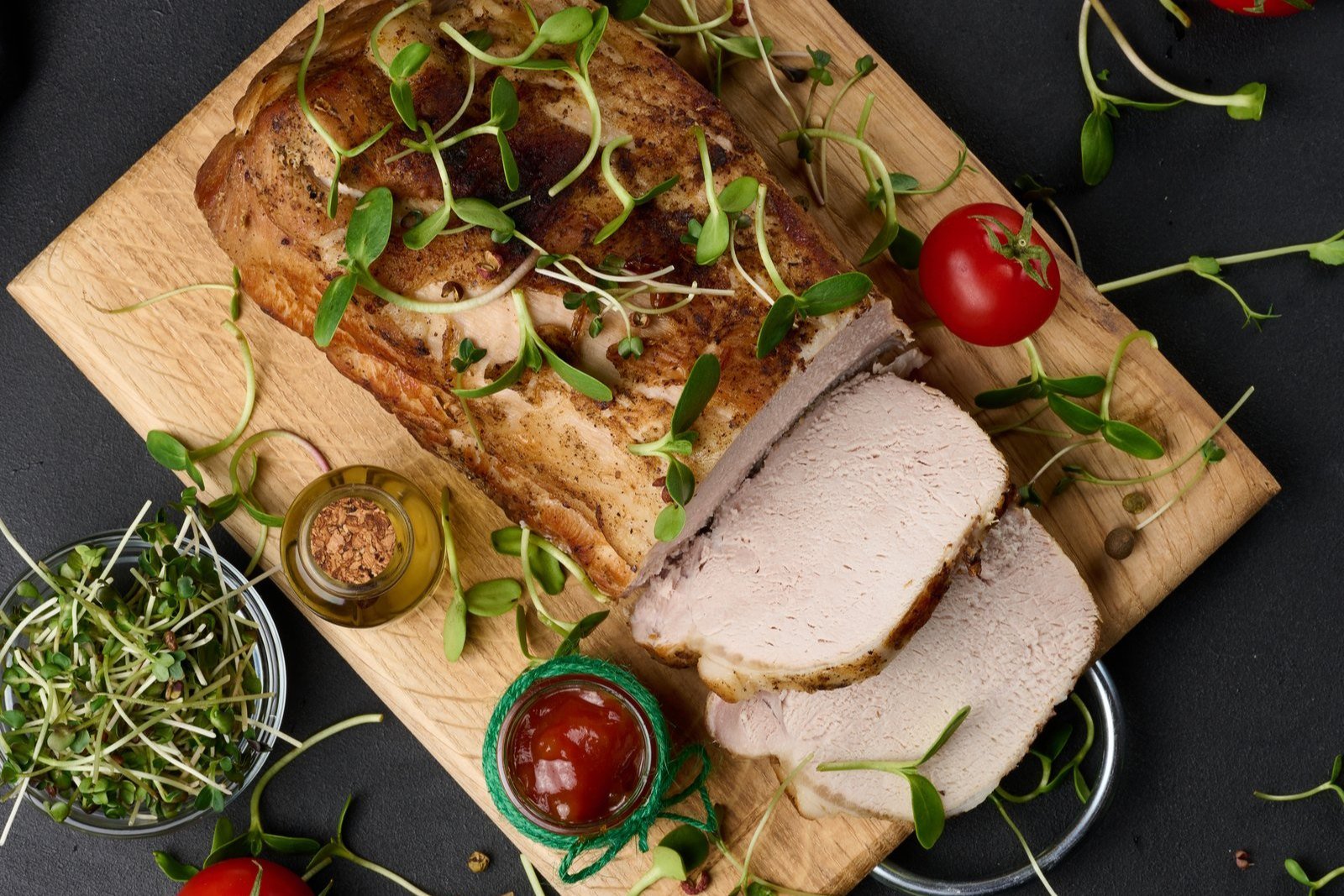
Soups, roasted sides and any dish you can top at the last minute. Oregon State University Extension runs Food Hero, a free recipe site. It keeps a list of recipes that taste great with microgreens added (Food Hero, n.d.-a). Several of them suit a fall table, including autumn squash bisque with ginger, parsnip soup and pumpkin ricotta stuffed shells.
Extension experts describe the same kind of use. Penn State says microgreens are normally eaten raw in salads, appetizers and sandwiches, or served with meat or fish (Di Gioia, 2024). An Oregon State horticulturist says you can use them anywhere you’d use sprouts, including as a garnish on soup or an entrée (Pokorny, 2020).
So the turkey platter, a bowl of soup and the next day’s sandwich all qualify. The table lists the fall dishes from the Food Hero microgreens list. They make easy starting points for Thanksgiving microgreens recipes. Our microgreens recipes guide has more ideas for the rest of the year.
| Dish | What the source says |
|---|---|
| Autumn squash bisque with ginger | Squash, pears and ginger; makes 10 cups; freezes well |
| Parsnip soup | Parsnips and potato blended smooth; makes 6 cups |
| Pumpkin ricotta stuffed shells | Pumpkin and ricotta filling; makes 12 shells |
| Turkey and other entrées | Penn State and Oregon State suggest microgreens with meat or as a garnish |
Which microgreens taste best with Thanksgiving flavors?
Pick by flavor: peppery kinds for rich food, milder kinds for sweet dishes. Penn State says the most popular microgreens come from the broccoli family, such as radish, arugula, kale and mustard. Their pungent taste comes mainly from natural compounds called glucosinolates (Di Gioia, 2024).
Oregon State Extension names a few easy choices. Mustard or radish microgreens give a spicy kick, and sunflower microgreens have a nutty flavor. Some kinds have red or yellow stems, which look pretty on a plate (Pokorny, 2020).
Here is one way to match them to the menu. These pairings are our suggestions, not a tested rule. A peppery radish or mustard microgreen can cut through gravy, stuffing and dark turkey meat. Nutty sunflower shoots sit well on squash or sweet potatoes. A mixed pack gives you color and a spread of flavors in one purchase.
Taste a few leaves before dinner so the heat level doesn’t surprise anyone. A little goes a long way with the spicy kinds. Our flavor guide ranks the common kinds from mild to hot, which helps when you plan Thanksgiving microgreens recipes for a crowd.
How do you add microgreens to holiday soups and sides?
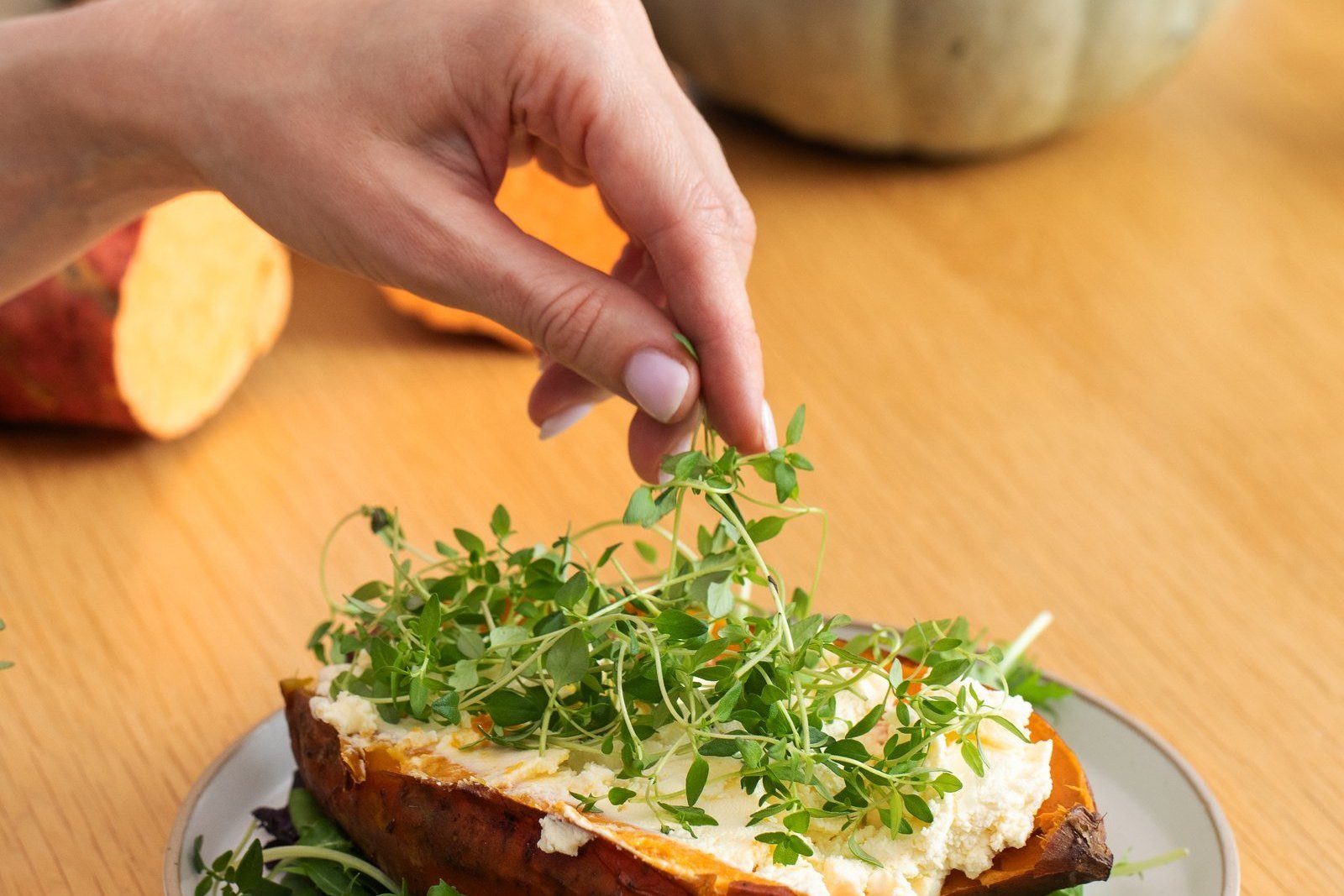
Cook the dish first, then add microgreens on top just before it goes to the table. Penn State says microgreens are normally eaten raw (Di Gioia, 2024), so they belong on the finished food rather than in the pot.
Food Hero’s autumn squash bisque shows the idea. It cooks 2 pounds of winter squash with onion, pears, garlic, ginger and thyme in broth. The pot simmers until the squash is tender, about 35 to 40 minutes, and then the soup is puréed. The recipe ends with a spoonful of yogurt on each serving (Food Hero, n.d.-b). A small pinch of microgreens can sit beside that yogurt for color.
The parsnip soup works the same way. It blends parsnips, potato, onion and celery with vegetable broth into a creamy soup (Food Hero, n.d.-c). The pumpkin ricotta stuffed shells bake for 30 minutes under foil and 15 minutes more uncovered (Food Hero, n.d.-d). Let the shells come out of the oven before you add any greens.
The same habit fits mashed potatoes, roasted squash or green beans. Wash the microgreens, pat them dry and scatter them right before serving. Our guide to using microgreens in everyday meals has more serving tips.
Can microgreens go on the turkey or in the stuffing?
Yes on the platter after carving, but keep them away from raw turkey. The USDA Food Safety and Inspection Service (FSIS) says to keep raw turkey apart from ready-to-eat foods and foods that won’t be cooked later, such as vegetables, fruits and side dishes (U.S. Department of Agriculture, Food Safety and Inspection Service [FSIS], 2026). Raw microgreens belong in that group. Prep them on a clean board, away from where the turkey was handled.
The turkey itself must reach a safe internal temperature of 74°C (165°F), measured with a food thermometer in the breast, wing and thigh (FSIS, 2026). Scatter microgreens over the sliced meat only after it is cooked and carved.
Stuffing is a different case. FSIS does not recommend stuffing a whole turkey. It advises cooking stuffing separately and says the center of any stuffing must reach 74°C (165°F) (FSIS, 2026). If you want microgreens with the stuffing, put them on top of the baked dish at the table. Microgreens are normally eaten raw (Di Gioia, 2024), so the top of the dish is the better spot.
After the turkey prep, wash cutting boards, utensils and counters with soap and hot water, then sanitize them, as FSIS advises (FSIS, 2026).
When should you buy microgreens for Thanksgiving?
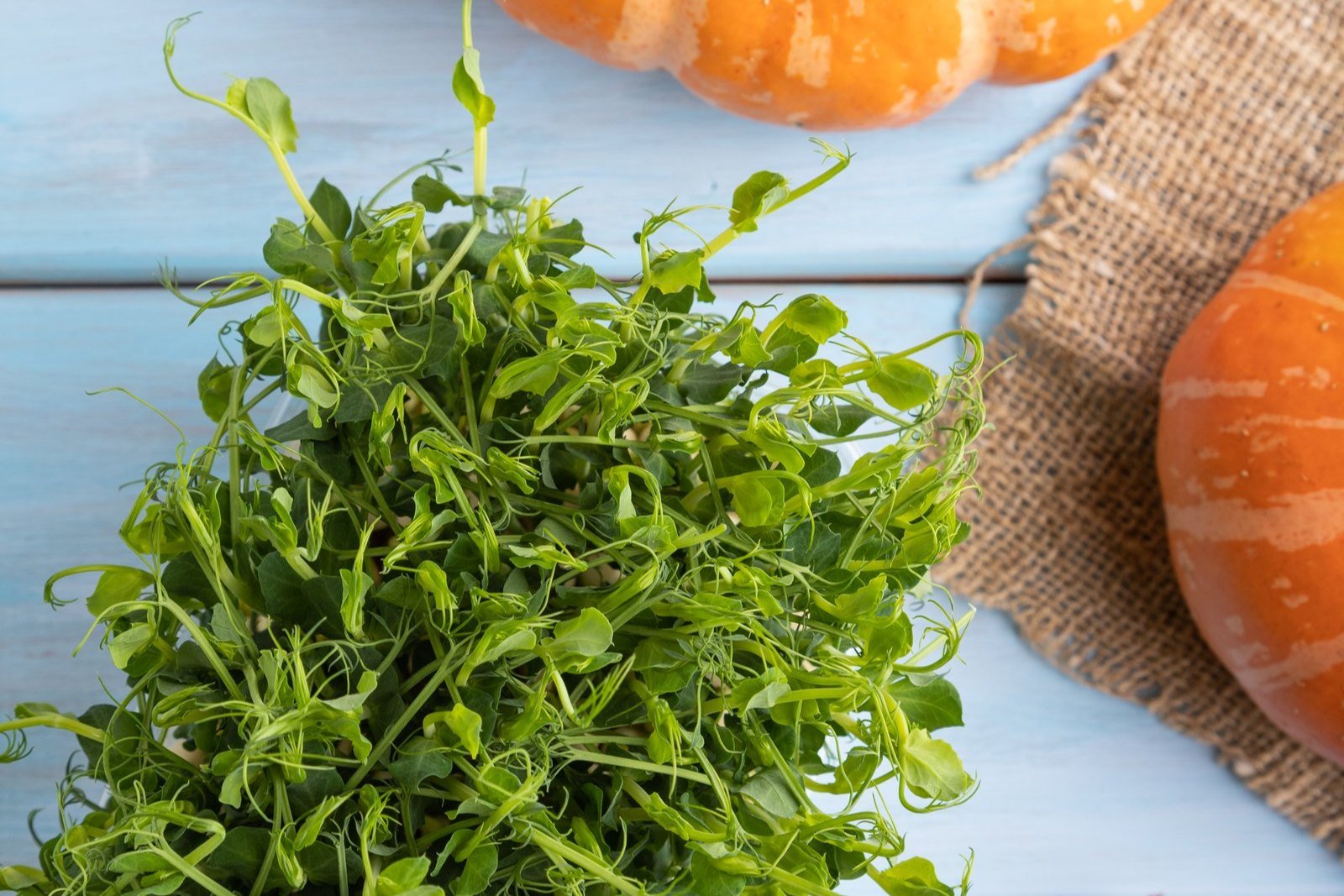
Buy them close to the holiday, ideally early in Thanksgiving week. Thanksgiving falls on Thursday, 26 November 2026. New Mexico State University advises eating microgreens no later than 3 to 5 days after harvest (New Mexico State University, n.d.). Counting back from the 26th, a pack harvested on Saturday the 21st or later fits that window.
Ask the grower when the greens were cut. The person who harvested them can give you a date that a store sticker may not show. Keep the pack cold from the moment you buy it. NMSU says cut microgreens should not be expected to last more than a day or two outside a refrigerator (New Mexico State University, n.d.). FSIS puts the safe fridge temperature below 4°C (40°F) (FSIS, 2026).
Don’t wash them when you get home. NMSU says to wash microgreens when you prepare the meal, not any sooner. Early washing damages the leaves and adds moisture that can shorten shelf life (New Mexico State University, n.d.). Our storage guide covers the fridge details, and our washing guide covers the rinse.
Where can you find microgreens for the holiday table?
From a local grower, a farmers market or a grocery store. Buying from a farm lets you ask about the harvest date, which matters for a meal planned days ahead. The Microgreens 411 directory lists growers by location, so you can search your town and order before the holiday rush. Our guide to where to buy microgreens compares the options.
Think about leftovers when you order. FSIS says to refrigerate leftovers, side dishes included, within two hours of cooking. Thanksgiving leftovers are safe in the fridge for up to four days, or until the Monday after the holiday. Reheat them to 74°C (165°F) before eating (FSIS, 2026). Add fresh microgreens after reheating, not before.
That gives a spare handful a second job. Pile it into a turkey sandwich on Friday, which fits Penn State’s note that microgreens suit sandwiches and meat dishes (Di Gioia, 2024). A bowl of reheated squash soup works too. Size your order to the meal plus a day or two of leftovers, since the 3 to 5 day window from NMSU still applies.
Wrap-up: Thanksgiving microgreens recipes, in short
Microgreens work at Thanksgiving as a raw, last-minute topping. Food Hero’s fall recipes, such as squash bisque, parsnip soup and pumpkin stuffed shells, give you easy places to start. Pick peppery kinds for rich food and milder ones for sweet sides.
Buy early in the week, keep the pack cold and wash the greens right before dinner. Keep them away from raw turkey, and add them to leftovers only after reheating.
Want greens cut close to the holiday? Search your town in the Microgreens 411 directory to find growers near you. Coverage varies by region, so some areas have few listings so far.
Microgreens 411
Find a microgreens grower near you
Greens that travel less start fresher in your fridge. Find my local grower →
Frequently asked questions
Should you rinse the turkey before roasting?
No. FSIS says washing or rinsing raw turkey is risky, since bacteria can spread around the kitchen and onto other foods. If you rinse it anyway, clean and sanitize the sink and nearby counters before you keep cooking (FSIS, 2026).
How long does a frozen turkey take to thaw?
In the refrigerator, FSIS says to allow about 24 hours for every 4 to 5 pounds. Cold water is faster, at about 30 minutes per pound, with the water changed every 30 minutes. A turkey thawed in cold water must be cooked right away (FSIS, 2026).
When should you buy a fresh turkey?
FSIS says to buy a fresh turkey only one or two days before Thanksgiving. A maker’s tag with a date that covers the holiday lets you buy sooner. Without a tag, the Tuesday or Wednesday of that week is the earliest. Freeze a fresh bird you bring home sooner (FSIS, 2026).
Can you make the squash soup ahead of time?
Yes. Food Hero describes its autumn squash bisque with ginger as a soup that freezes well. The recipe tells you to refrigerate leftovers within 2 hours, so cool it promptly, then thaw and warm it through on the day you serve it (Food Hero, n.d.-b).
Is there a hotline for turkey questions on Thanksgiving Day?
Yes. The USDA Meat and Poultry Hotline is open on Thanksgiving Day from 8 a.m. to 2 p.m. The number is 1-888-674-6854, and its food safety specialists answer questions about handling meat, poultry and egg products (FSIS, 2026).
How long do frozen Thanksgiving leftovers keep?
FSIS says leftovers kept in the freezer stay at best quality for two to six months. Divide them into smaller portions and use covered, shallow containers, which helps them cool faster before they go into the freezer or fridge (FSIS, 2026).
References
Di Gioia, F. (2024, March 28). The ABCs of microgreens. Penn State Extension. https://extension.psu.edu/the-abcs-of-microgreens
Food Hero. (n.d.-a). Microgreens [Recipe category]. Oregon State University Extension Service. https://foodhero.org/recipes/recipe-categories/microgreens
Food Hero. (n.d.-b). Autumn squash bisque with ginger. Oregon State University Extension Service. https://foodhero.org/recipes/autumn-squash-bisque-ginger
Food Hero. (n.d.-c). Parsnip soup. Oregon State University Extension Service. https://foodhero.org/recipes/parsnip-soup
Food Hero. (n.d.-d). Pumpkin ricotta stuffed shells. Oregon State University Extension Service. https://foodhero.org/recipes/pumpkin-ricotta-stuffed-shells
New Mexico State University. (n.d.). Eating microgreens. All About Microgreens. https://all-about-microgreens-d.nmsu.edu/consumers.html
Pokorny, K. (2020, July 17). Microgreens add big flavor from a small footprint. Oregon State University Extension Service. https://extension.oregonstate.edu/news/microgreens-add-big-flavor-small-footprint
U.S. Department of Agriculture, Food Safety and Inspection Service. (2026, November 5). Your safe Thanksgiving guide. https://www.fsis.usda.gov/food-safety/safe-food-handling-and-preparation/poultry/your-safe-thanksgiving-guide