
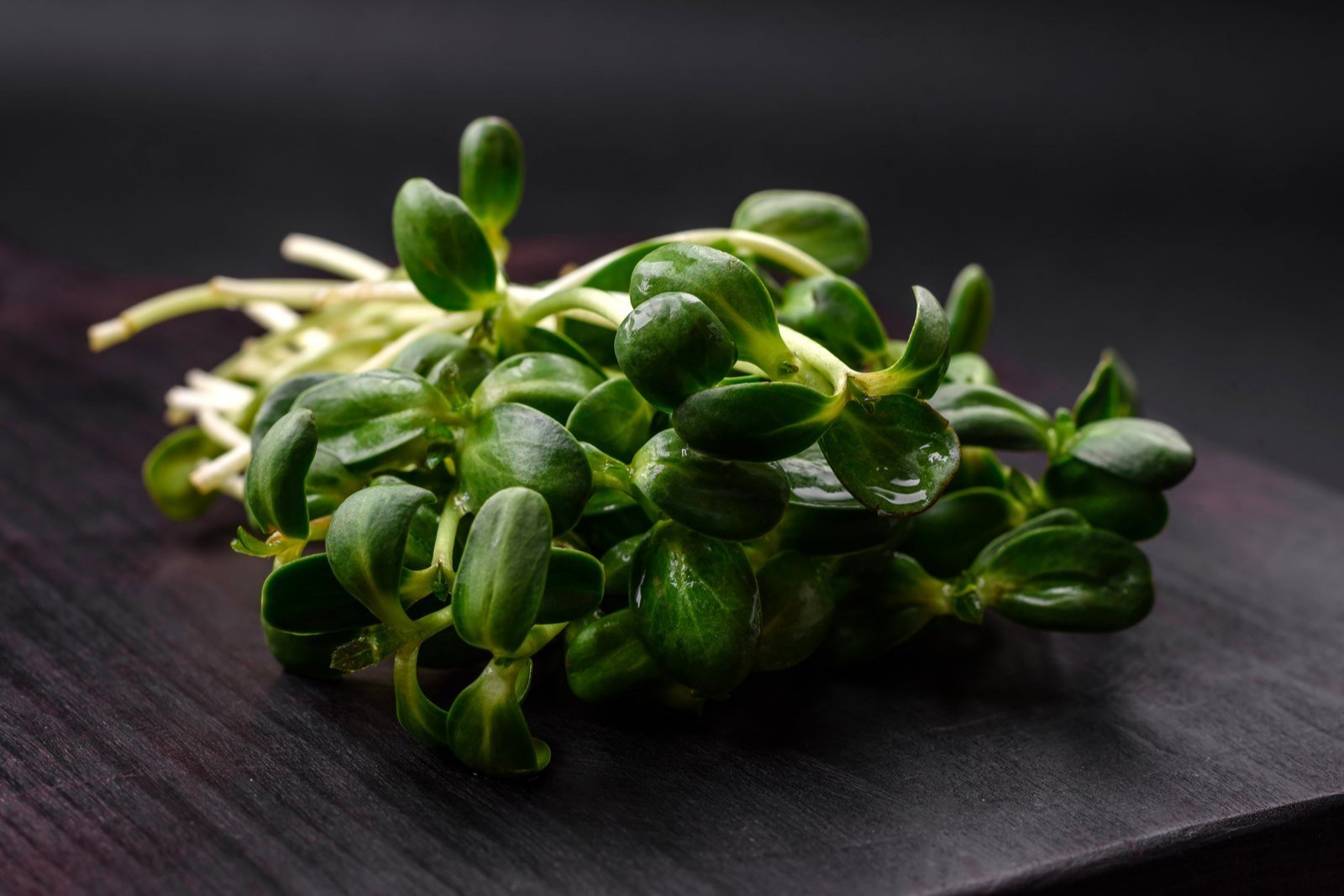
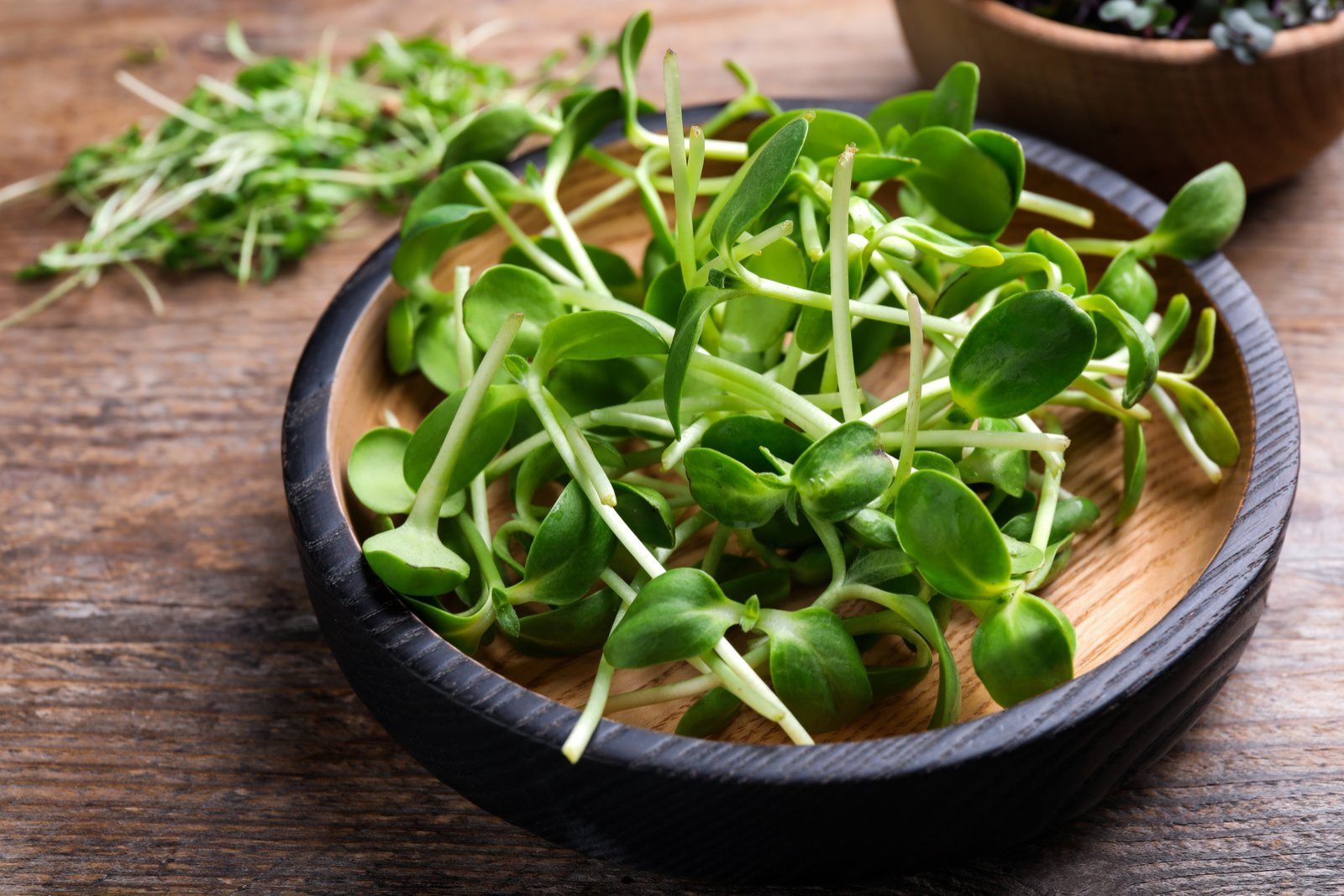
Sunflower shoots are the big, crunchy cousins in the microgreen case.
They are young sunflower plants, cut soon after their first two leaves open. Their mild flavor makes them easy to like, even for people who find radish or mustard greens too sharp. Maybe you have seen them in a clamshell and wondered what to do with them. This guide covers sunflower microgreens from a buyer’s side, with a source behind each claim. You will get taste notes, simple ways to use them, what labs have measured, and how to choose and keep a fresh pack.
Key Takeaway
Sunflower microgreens are young sunflower plants; in one USDA trial they were ready 10 days after seeding (Di Gioia et al., 2023). Their flavor is mild and nutty. Eat them raw, add them just before serving, and buy packs that are cold and dry.
Below: what they are, how they taste, ways to use them, what labs have measured, how to pick a good pack and how to store it.
Microgreens 411
Find a microgreens grower near you
Greens that travel less start fresher in your fridge. Find my local grower →
Table of Contents
What are sunflower microgreens?
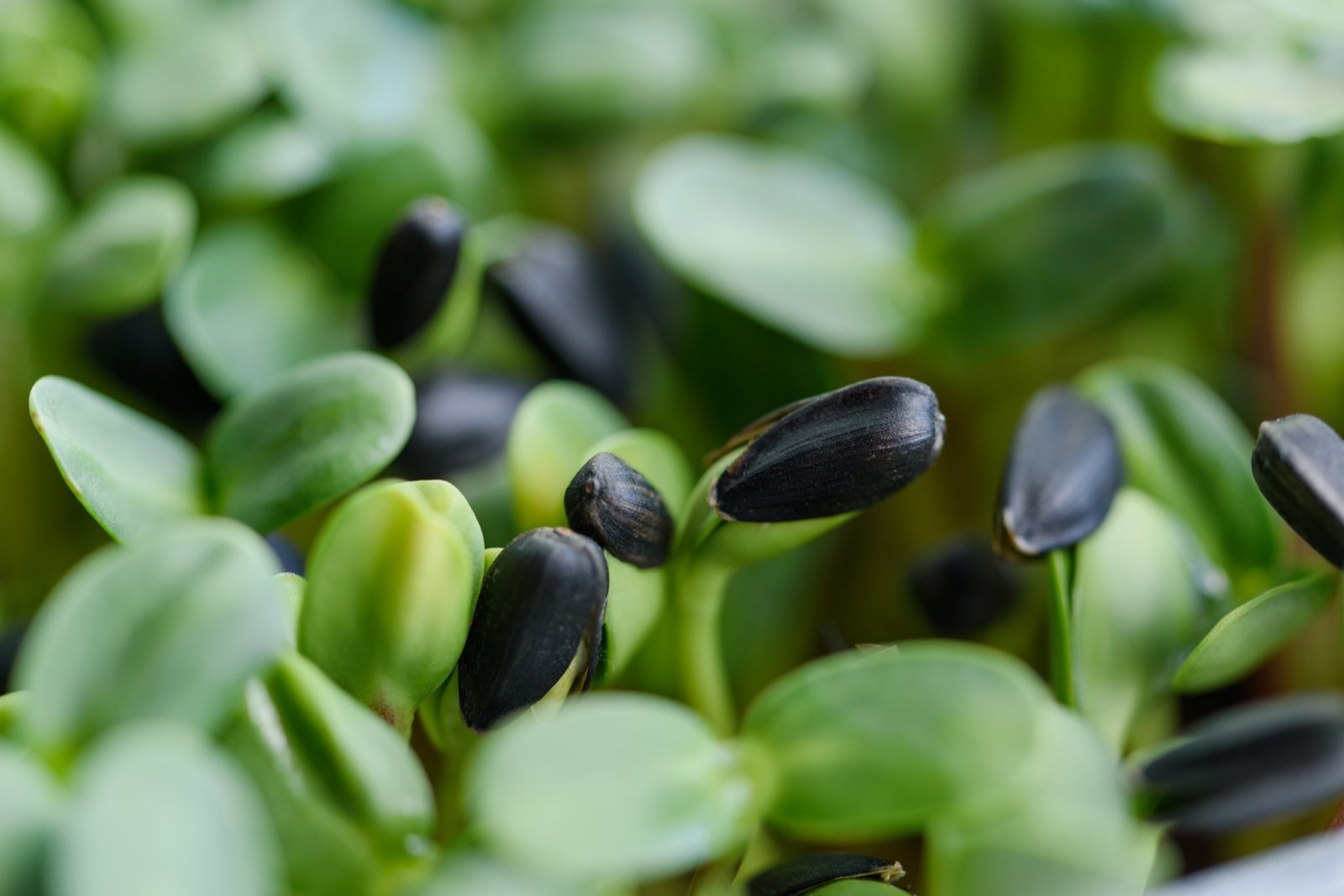
They are young sunflower plants, cut above the growing mix soon after the seed leaves open. Penn State Extension says microgreens can be harvested 7 to 21 days after germination, once those first leaves have fully developed (Di Gioia, 2024). In a USDA trial of 17 microgreen species, ‘Black oil’ sunflower was harvested 10 days after seeding (Di Gioia et al., 2023).
Size is what sets them apart. Penn State notes that large-seeded crops like pea and sunflower grow larger shoots than small-seeded crops like broccoli (Di Gioia, 2024). In the USDA trial, one sunflower shoot weighed about 390 milligrams on average, which put it in the top group of the 17 species (Di Gioia et al., 2023). Penn State’s photos label them “sunflower shoots,” so both names point to the same crop.
You eat the stem and leaves. Sprouts are a different product, since you eat the whole sprout (Di Gioia, 2024). Our sprouts guide explains the gap between the two.
The table below sums up the basics for buyers.
| Feature | Sunflower microgreens |
|---|---|
| Days to harvest in one USDA trial | 10 days after seeding |
| Flavor | Mild and nutty |
| Size | Large shoots from a large seed |
| How most people eat them | Raw, added just before serving |
What do sunflower microgreens taste like?
Mild and nutty. Oregon State University Extension says sunflower microgreens “offer a nutty flavor” (Pokorny, 2020). Food Hero, an OSU Extension program, puts sunflower in its mild group next to broccoli, cabbage, chard, kale and peas. Arugula, mustard and radish sit in its spicy group (Food Hero, 2021).
That places sunflower at the gentle end of the range. If radish microgreens taste too hot to you, sunflower is a softer place to start. Our flavor guide ranks the common kinds from mild to hot.
Texture is the other half of the appeal. Bigger shoots mean more crunch per bite than tiny greens like broccoli. A USDA lab trial points the same way. Sunflower held 94.34 grams of dry matter per kilogram of fresh greens, in the top group of the 17 species tested (Di Gioia et al., 2023). In plain terms, a little less of each bite is water.
If a market grower offers a taste, take it. One bite tells you more than any label can.
How do you use sunflower microgreens?
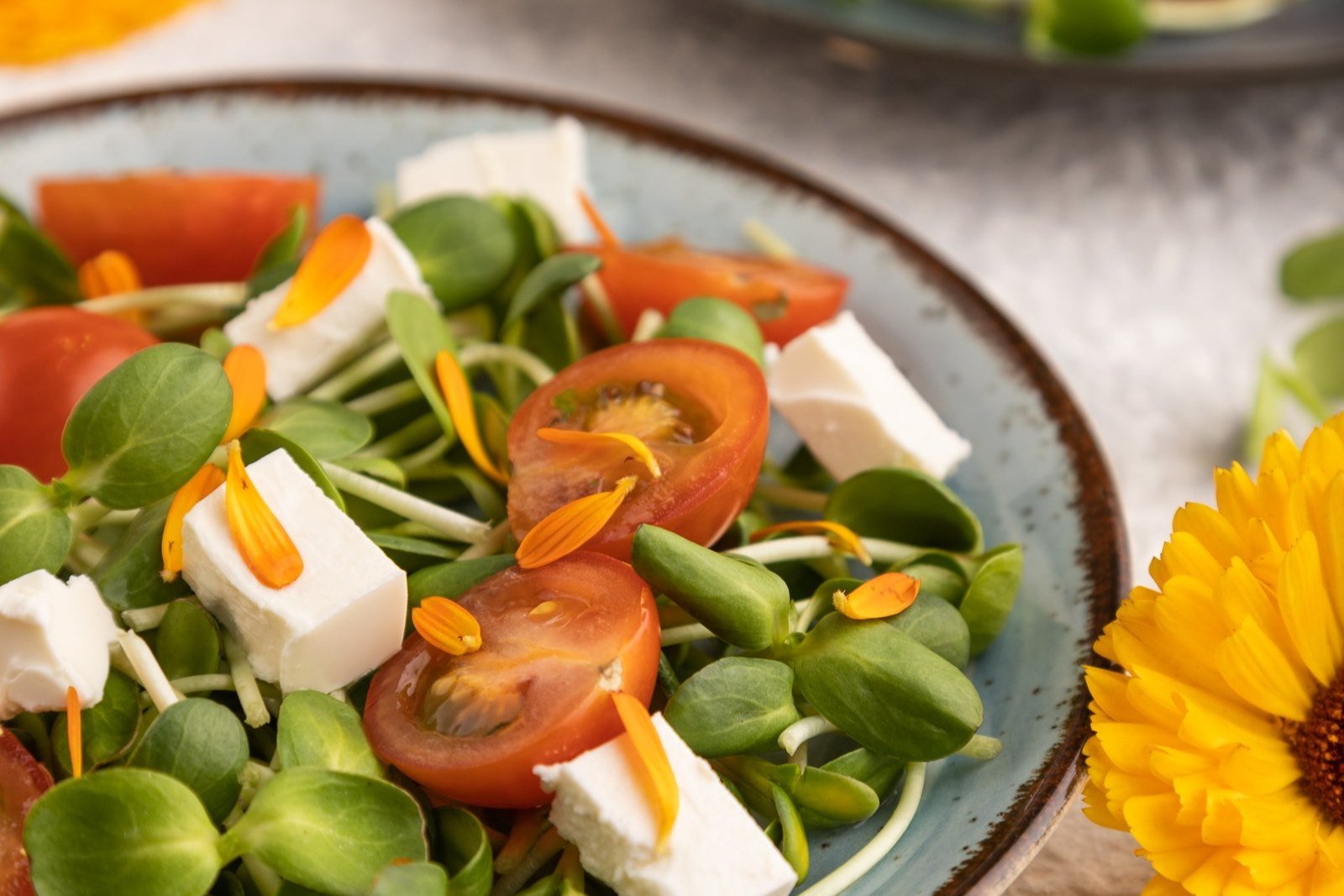
Raw, and right before serving. Penn State says microgreens are normally eaten raw in salads, appetizers and sandwiches, with meat or fish, or on pizza (Di Gioia, 2024). Another Penn State guide adds tacos and fillings for ravioli, pierogi and empanadas (Sánchez & Berghage, 2025).
OSU Extension horticulturist Brooke Edmunds suggests using microgreens anywhere you would use sprouts. That means salads, sandwiches, or a garnish on soup or a main dish (Pokorny, 2020). She adds that a little goes a long way.
The larger size of sunflower shoots gives you a few extra options. Try them as the base of a small side salad with a light dressing. Tuck a handful into a wrap or a grilled cheese after it comes off the pan. On soup, add them at the table so the heat does not wilt them first.
Mild greens pair well with strong flavors, so try them next to sharp cheese, smoked fish or a spicy sauce. Our everyday meals guide has more ideas. Our recipes page has full dishes.
What nutrients are in sunflower microgreens?
Labs have measured several minerals, but the numbers swing with how the crop is grown. In the USDA trial, sunflower was the only one of 17 species that did not build up high nitrate levels. The same study rated it a good source of copper and zinc (Di Gioia et al., 2023).
That trial found the lowest potassium and calcium of the group in sunflower: 101.3 and 41.76 milligrams per 100 grams of fresh greens. The plants were fed a nutrient solution with no added trace minerals (Di Gioia et al., 2023). A lab in Turkey tested six microgreens and found that sunflower had the most calcium of its group (Balik et al., 2025). Same crop, opposite ranking. Results like these describe the samples tested, not every pack you buy.
All of these are lab measures of the greens. No trial has tested whether eating sunflower microgreens changes anyone’s health. Our nutrition guide covers the wider research. For a closer read of the sunflower numbers, see the Microgreens World sunflower nutrition review.
This article is general information, not medical advice. Ask your doctor or pharmacist about your own situation.
How do you pick a good pack?
Cold, dry and fresh. The FDA advises choosing produce that is not bruised or damaged. For packaged produce, it says to pick only items kept refrigerated or surrounded by ice (U.S. Food and Drug Administration, 2024).
Check the pack before you pay. Leaves should look green and firm, with no slimy patches or water pooled inside the lid. New Mexico State University says a moist setting is perfect for the bacteria that can cause foodborne illness, so dry is better (New Mexico State University, n.d.).
Freshness counts with any microgreen. NMSU advises eating microgreens no later than 3 to 5 days after harvest (New Mexico State University, n.d.). So ask the grower when the tray was cut, or look for a harvest date on the label. A local grower can answer that question on the spot. NMSU notes that cutting is a big stress for the plant, and cut greens are wounded tissue that can spoil sooner (New Mexico State University, n.d.).
Search your town in the Microgreens 411 directory to find growers near you who sell sunflower microgreens. Our where-to-buy guide compares stores, markets and delivery.
How should you store and wash them?
Keep them cold and dry, and wash them only right before you eat them. The FDA says to keep perishable produce at 4°C (40°F) or below (U.S. Food and Drug Administration, 2024). NMSU warns not to expect cut microgreens to last more than a day or two outside the fridge (New Mexico State University, n.d.).
Food Hero suggests wrapping microgreens in a paper towel inside a plastic bag. It gives them 1 to 2 days in the fridge that way (Food Hero, 2021). Treat that as a rough guide, since store packs vary.
Cold makes a clear difference for this crop. In a 2026 packaging study, sunflower microgreens lost their green color more slowly at 4°C (39°F) than at 12°C (54°F) (Azarpazhooh et al., 2026). The researchers used special sealed packs, so home results will differ.
Wash right before eating, not when you get home. NMSU explains that early washing damages the leaves and adds moisture (New Mexico State University, n.d.). The FDA advises running water, with no soap or produce wash (U.S. Food and Drug Administration, 2024). Our washing guide covers the steps. Our storage guide covers the fridge.
Wrap-up: sunflower microgreens in short
Sunflower microgreens are young sunflower plants with big, crunchy shoots and a mild, nutty taste. Eat them raw and add them just before serving, on salads, sandwiches, wraps, tacos or soup.
Lab tests show useful minerals, but the numbers change with how the crop is grown. No trial has tested health effects in people.
Buy packs that are cold and dry, ask when they were cut, keep them in the fridge and wash them right before eating.
Want some from a nearby farm? Search your town in the Microgreens 411 directory to find growers near you. Coverage varies by region, so some areas have few listings so far.
Microgreens 411
Find a microgreens grower near you
Greens that travel less start fresher in your fridge. Find my local grower →
Frequently asked questions
Do people on a PKU diet need to count them?
Yes, according to one study. Researchers in Latvia measured 140 milligrams of phenylalanine per 100 grams in sunflower microgreens. They said microgreens should be measured within a phenylalanine-restricted diet (Lubina et al., 2025). Check with your metabolic dietitian.
Have sunflower microgreens been linked to Salmonella?
A 2026 study in Brazil tested 122 commercial microgreen samples and detected Salmonella in sunflower and radish samples (Xavier et al., 2026). It is one more reason to buy from careful growers. Our food safety guide explains the risks.
Can I eat them if I am allergic to sunflower seeds?
Ask your doctor before you try them. We found no study on allergy to the microgreen itself. Penn State’s general advice is to exclude any species you may have an allergic reaction to (Di Gioia, 2024).
Do sunflower microgreens contain fat?
Some. A 2024 lab study of five oilseed microgreens found the highest triglyceride levels, the main storage form of fat, in rapeseed and sunflower (Castellaneta et al., 2024). It measured dried greens, not effects in people, and gave no serving figures.
How much vitamin C do they have?
In the 2026 packaging study, sunflower microgreens averaged between about 57 and 70 milligrams of vitamin C per 100 grams, depending on the pack type (Azarpazhooh et al., 2026). The best pack kept 23% more vitamin C than the plain control bag.
Are sunflower microgreens grown from bird seed?
They should not be. OSU Extension advises against bird seed or treated seed for microgreens, since bird seed is not meant for people to eat (Pokorny, 2020). If you are unsure, ask the grower where their seed comes from.
References
Azarpazhooh, E., Sharayei, P., Sabeghi, Y., Zare, F., Rui, X., & Ramaswamy, H. S. (2026). Modified atmosphere packaging of sunflower microgreens (Helianthus annuus) for quality and postharvest shelf-life extension. Sustainable Food Technology, 4(1), 1045–1056. https://doi.org/10.1039/d5fb00575b
Balik, S., Elgudayem, F., Dasgan, H. Y., Kafkas, N. E., & Gruda, N. S. (2025). Nutritional quality profiles of six microgreens. Scientific Reports, 15(1), 6213. https://doi.org/10.1038/s41598-025-85860-z
Castellaneta, A., Höring, M., Losito, I., Leoni, B., Santamaria, P., Calvano, C. D., Cataldi, T. R. I., Matysik, S., & Liebisch, G. (2024). Exploration of the lipid profile of edible oleaginous microgreens by mass spectrometry-based lipidomics. Journal of Agricultural and Food Chemistry, 72(20), 11438–11451. https://doi.org/10.1021/acs.jafc.3c09347
Di Gioia, F. (2024, March 28). The ABCs of microgreens. Penn State Extension. https://extension.psu.edu/the-abcs-of-microgreens
Di Gioia, F., Hong, J. C., Pisani, C., Petropoulos, S. A., Bai, J., & Rosskopf, E. N. (2023). Yield performance, mineral profile, and nitrate content in a selection of seventeen microgreen species. Frontiers in Plant Science, 14, 1220691. https://doi.org/10.3389/fpls.2023.1220691
Food Hero. (2021, February 10). Microgreens [Garden tip sheet]. Oregon State University Extension Service. https://foodhero.org/microgreens-garden-tips
Lubina, O., Daly, A., Auzenbaha, M., Gailite, L., Laktina, S., & Macdonald, A. (2025). Nutritional profiling of foods for phenylketonuria. Scientific Reports, 15(1), 22538. https://doi.org/10.1038/s41598-025-06633-2
New Mexico State University. (n.d.). Eating microgreens. All About Microgreens. https://all-about-microgreens-d.nmsu.edu/consumers.html
Pokorny, K. (2020, July 17). Microgreens add big flavor from a small footprint. Oregon State University Extension Service. https://extension.oregonstate.edu/news/microgreens-add-big-flavor-small-footprint
Sánchez, E., & Berghage, R. (2025, December 16). Growing microgreens. Penn State Extension. https://extension.psu.edu/growing-microgreens
U.S. Food and Drug Administration. (2024, March 5). Selecting and serving produce safely. https://www.fda.gov/food/buy-store-serve-safe-food/selecting-and-serving-produce-safely
Xavier, I. B., Viana, A. C. de M., Perim, M. D., Kim, P., Barão, C. E., Figueiredo, H. C. P., Magnani, M., Lacerda, I. C. A., & Alvarenga, V. O. (2026). Salmonella in microgreens: Quantitative modeling of Salmonella Enteritidis in a controlled environment system. Food Research International, 235, 119209. https://doi.org/10.1016/j.foodres.2026.119209